Two labels on your estimate, category and class, quietly decide what gets dried, what gets torn out, and what your adjuster expects to see. Here's what they mean in plain terms.
Restorers rate every water loss two ways. The category describes how contaminated the water is: Category 1 is clean water, Category 2 is gray water, and Category 3 is black water such as sewage or floodwater. The class describes how much water there is to evaporate and how hard the materials will be to dry, from Class 1 (small and quick) to Class 4 (specialty drying of dense materials like hardwood, plaster, and concrete).
Both ratings come from the ANSI/IICRC S500 Standard for Professional Water Damage Restoration, the industry's consensus procedural standard. You don't need to read the standard to make good decisions, but it helps to know what the two labels mean, because together they decide what can be dried in place, what has to come out, how the crew protects itself and your family, and what goes into the file your insurer reviews. They're also why a sewage cleanup looks so different from a clean-water water damage restoration job, even when the square footage is identical.
Category vs. Class: Two Different Questions
Keep them apart. Category answers "how dirty is this water, and how risky is it to touch?" Class answers "how much water soaked in, into what, and how much evaporation will it take to get it out?" A small toilet overflow can be Category 2 and Class 1. A burst supply line that ran all night through a hardwood hallway can be Category 1 and Class 4. One label never substitutes for the other.
The Three Categories of Water Damage
| Category | Common name | Typical sources | What it usually means for porous materials |
|---|---|---|---|
| Category 1 | Clean water | Broken supply line, failed refrigerator or ice-maker line, sink or tub overflow with clean water | Often dried in place if extraction and drying start promptly |
| Category 2 | Gray water | Washing machine or dishwasher discharge, toilet bowl overflow with urine but no feces | Carpet pad typically replaced; other materials cleaned, treated, and dried case by case |
| Category 3 | Black water | Sewage, toilet backflow from beyond the trap, rising floodwater and surface runoff entering from outside | Soaked porous materials such as carpet, pad, drywall, and insulation are generally removed rather than dried |
Category 1: clean water
Category 1 water comes from a sanitary source and doesn't carry a meaningful contamination risk at the moment it escapes. The textbook example is a supply line: the braided hose under a sink or toilet, a refrigerator line, a pinhole in a copper or galvanized pipe. In Daly City's 1940s to 1960s Doelger-era homes, aging galvanized supply pipe is a frequent source. Category 1 losses offer the best odds of drying carpet, drywall, and framing in place, as long as extraction and drying begin quickly.
Category 2: gray water
Category 2 water carries enough contamination to cause discomfort or illness if people touch or swallow it. Washing machine and dishwasher discharge belong here because they carry detergent, food residue, and whatever came off the laundry. So does a toilet bowl overflow that contains urine but no feces. Gray-water jobs add cleaning and antimicrobial steps to the drying plan, and carpet pad soaked by gray water is typically discarded because it can't be cleaned reliably. An overflowing washer is one of the most common gray-water calls we see, and our washing machine overflow page covers it.
Category 3: black water
Category 3 water is grossly contaminated and can carry bacteria, viruses, and other pathogens. Sewage is the obvious case, including a toilet that backs up from beyond the trap, meaning the water came up from the drain line rather than out of the bowl. Rising floodwater and storm runoff entering from outside belong here too, because water picks up soil, sewer overflow, fuel, and chemicals on its way in. That matters for ground-level garages and in-law units on the Peninsula, where an atmospheric-river storm can push runoff under a garage door; our flood damage cleanup work is almost always handled as Category 3.
The EPA recommends calling in a professional experienced with contaminated water when damage was caused by sewage or other contaminated water. If you're dealing with a backup right now, start with our sewage backup safety steps.
How Clean Water Turns Into Gray or Black Water
Category isn't locked in at the moment of the leak. Water deteriorates as it sits and as it touches contaminated materials, so a clean-water loss can be reclassified later. The usual ways it happens:
- Time and warmth. Water left standing for a day or two, sooner in a warm room, gives bacteria time to multiply, especially in carpet and pad.
- Contact with dirty materials. Clean water that flows across a soiled carpet, through a crawl space with exposed soil, or under a pet area picks up whatever is there.
- Travel through the building. Water running down inside a wall cavity or through a ceiling can collect dust, debris, and rodent droppings along the way.
- Odor and visible growth. A sour or musty smell, or growth on surfaces, is a sign the water is no longer what it was when it escaped.
This is the practical reason restoration companies push to start fast. A Category 1 loss caught on day one is mostly a drying job. The same loss discovered on day four may need to be handled like Category 2 or 3, with more removal and more cleaning.
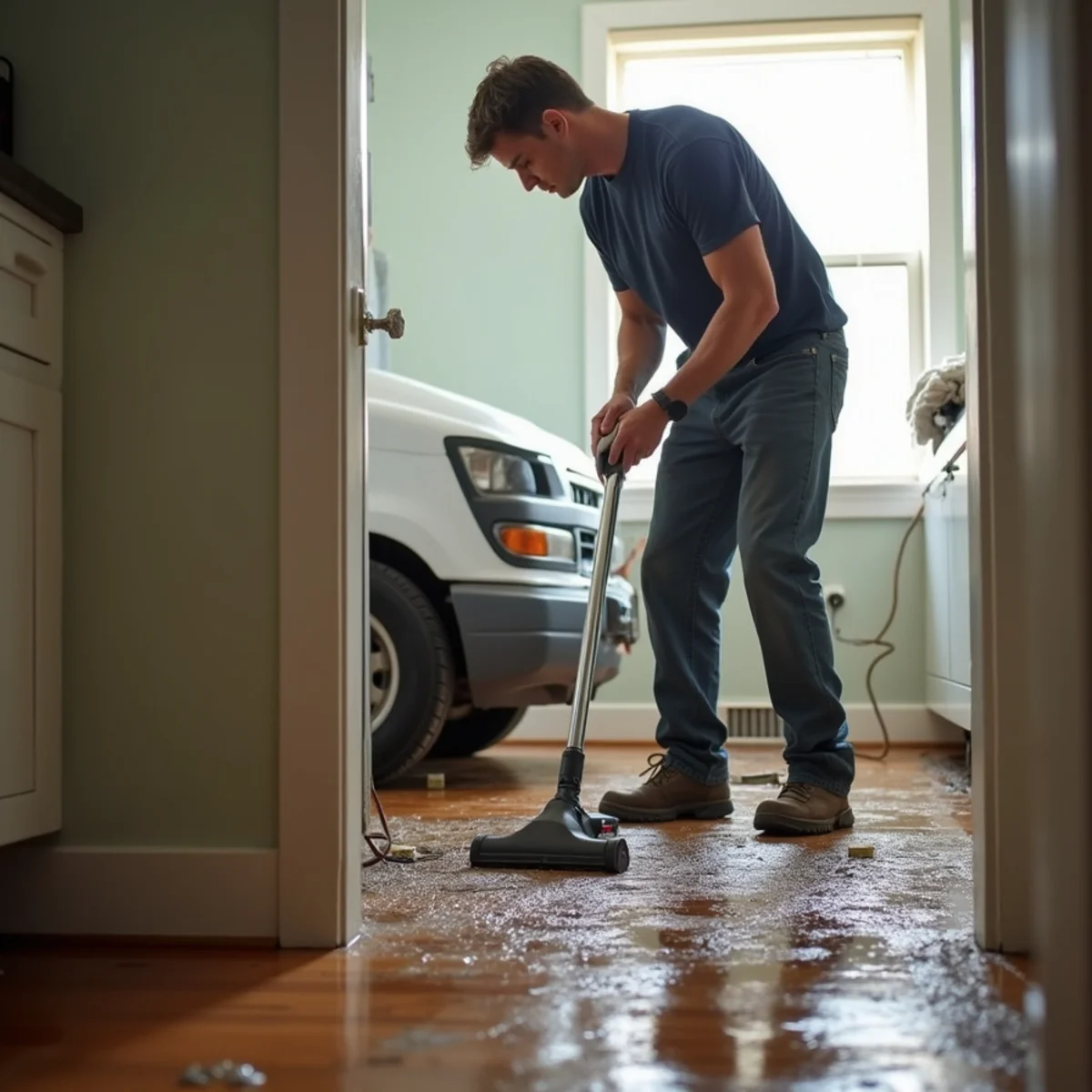
The Four Classes of Water Damage
Class describes the evaporation load: how much water has to be pulled out of the structure and how stubbornly the materials hold it. It drives how much drying equipment goes in and how long it runs. The standard's exact definitions have been refined over successive editions, so treat the descriptions below as plain-language summaries rather than the standard's own wording.
| Class | Evaporation load | Typical picture | What it means for drying |
|---|---|---|---|
| Class 1 | Lowest | Part of a room wet, mostly low-absorbency surfaces like vinyl or sealed concrete, little water wicked into walls | Least equipment and the shortest drying time |
| Class 2 | Moderate | A whole room affected, carpet and pad wet, water wicked a short way up the drywall | More air movers and dehumidification; baseboards often removed to vent the walls |
| Class 3 | Highest | Large volume or water from above: ceilings, walls, insulation, carpet, and subfloor saturated | Heavy equipment load; ceilings and wall cavities may need to be opened |
| Class 4 | Specialty drying | Water held deep in dense, low-permeance materials such as hardwood, plaster, brick, stone, or concrete | Longer drying with specialty methods: low-grain or desiccant dehumidifiers, floor drying mats, wall-cavity injection |
Why Class 4 takes longer
Dense materials give up water slowly. A hardwood floor that drew water in through its seams, the plaster-and-lath walls in older San Francisco and Daly City houses, and the slab-on-grade concrete floors common in parts of Westlake all hold moisture well below the surface. Air movers blowing across the top don't reach it, so crews build a bigger moisture difference between the material and the surrounding air, using low-grain refrigerant or desiccant dehumidifiers, drying mats that pull air through hardwood, or systems that push dry air into wall cavities. Our hardwood floor water damage page covers the flooring side in more detail.
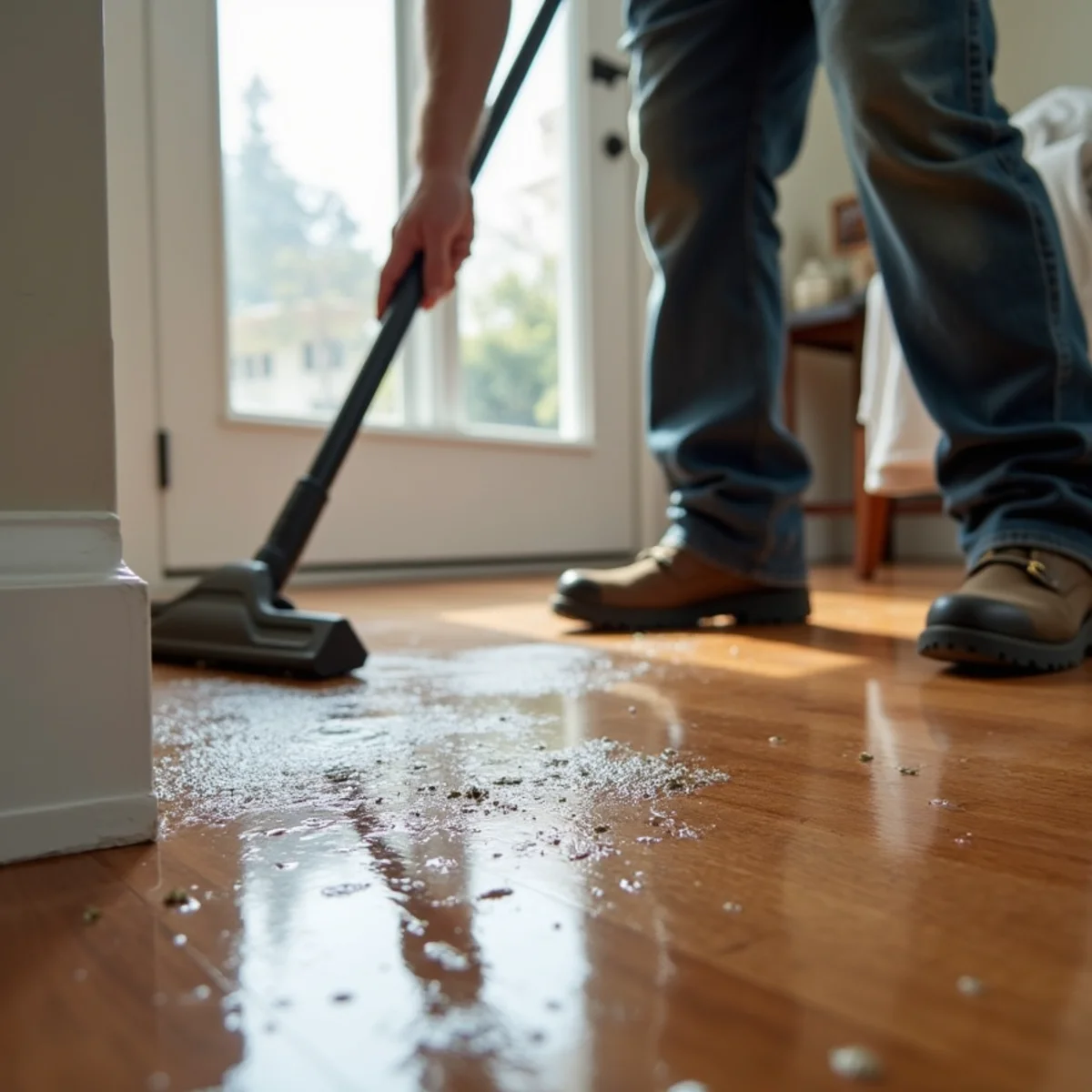
Why Category and Class Change What Can Be Saved
Put the two ratings together and you have the outline of the whole job.
- What stays and what goes. Category sets the default for porous materials: dried in place on clean water, cleaned and treated case by case on gray water, removed on black water. Class then tells the crew how hard the remaining materials will be to dry.
- Protective equipment. Clean-water work needs basic gloves and eye protection. Gray water adds stricter hygiene. Black water calls for full protective equipment, meaning gloves, boots, eye protection, a respirator, and protective suits, plus containment so contamination isn't tracked through the house.
- Antimicrobial treatment. Antimicrobials don't replace removing contaminated material, but they're routinely applied after cleaning on Category 2 and 3 losses, using EPA-registered products according to the label. Our sanitization and disinfection service covers this step.
- Who should stay out. On Category 3 losses, young children, pregnant people, older adults, and anyone with asthma or a weakened immune system should generally stay away from the affected area until it's been cleaned.
- How long drying takes. Class sets the equipment count and the timeline. Our guide on how long water damage takes to dry breaks down the variables.
One more thing neither scale covers: homes built before the 1980s can contain asbestos in materials such as drywall joint compound, textured ceilings, and older flooring, and lead in older paint. These aren't water categories, but they change how demolition has to be done, so ask whether materials will be tested before anything is cut out.
Why Category and Class Matter to Your Insurance Claim
Adjusters read the category and class to judge whether a scope makes sense. A Category 3 determination is what justifies removing drywall and carpet that might otherwise be dried. A Class 3 or 4 determination justifies more equipment for more days. Without documentation, those decisions can look like overreach, and the conversation with your adjuster gets harder. A well-documented file usually includes:
- Photos of the source: the failed supply line, the backed-up cleanout, the waterline on the garage wall.
- The stated category and class, with the reason for each.
- A moisture map and daily readings compared against a dry reference.
- Photos of materials before and after removal.
- When the loss was discovered, since time affects category.
Keep in mind that category describes the water, not the coverage. Whether a loss is covered depends on the cause and your policy. Floodwater from outside, for example, is typically excluded from standard homeowners policies and handled by separate flood insurance, and sewer backup coverage is often an add-on endorsement. For how mitigation paperwork and rebuild estimates fit together on a claim, see our comparison of water mitigation vs. restoration.
Not sure which category you're dealing with? Treat it as the more serious one until someone checks. Call Water Damage Daly City at (201) 277-9344 for a free inspection. We'll identify the source, classify the water and the loss, take moisture readings, and explain in plain terms what can be saved and what can't before any work begins.
Frequently asked questions
A small gray-water spill on a hard, non-porous floor, like a dishwasher leak on tile caught right away, is often manageable with gloves, a wet-vac, and a disinfecting clean. It gets harder when gray water soaks into carpet, pad, drywall, or a subfloor, because those materials hold contamination where cleaning products can't reach. If anything porous got wet, the water sat for more than a day, or someone in the home has asthma or a weakened immune system, a professional assessment is the safer call.
Not automatically. Rain may start out fairly clean, but after running across a roof, through an attic full of insulation and dust, and down inside a wall, it can carry debris and contamination. Water that enters from the ground, such as runoff under a door or groundwater through a foundation, is generally handled as Category 3. A technician looks at the whole path the water took, not just where it started, before assigning a category.
It's one of the biggest factors. Carpet wet with clean water and dried promptly can often be saved, though the pad underneath is frequently replaced. Carpet soaked by gray water is evaluated case by case, and the pad is typically discarded. Carpet and pad soaked by sewage or floodwater are generally removed, because contamination works into the backing and fibers where cleaning can't reliably reach. How long the water sat matters as much as where it came from.
The inspecting technician makes the call on site, based on the source, how long the water sat, what it touched, and moisture readings across the affected area. Your adjuster reviews that determination, which is why it should be backed by photos and readings. If you disagree, ask the technician to walk you through the evidence. The category can also change during a job if new information turns up, such as a second source or contamination that wasn't visible at first.