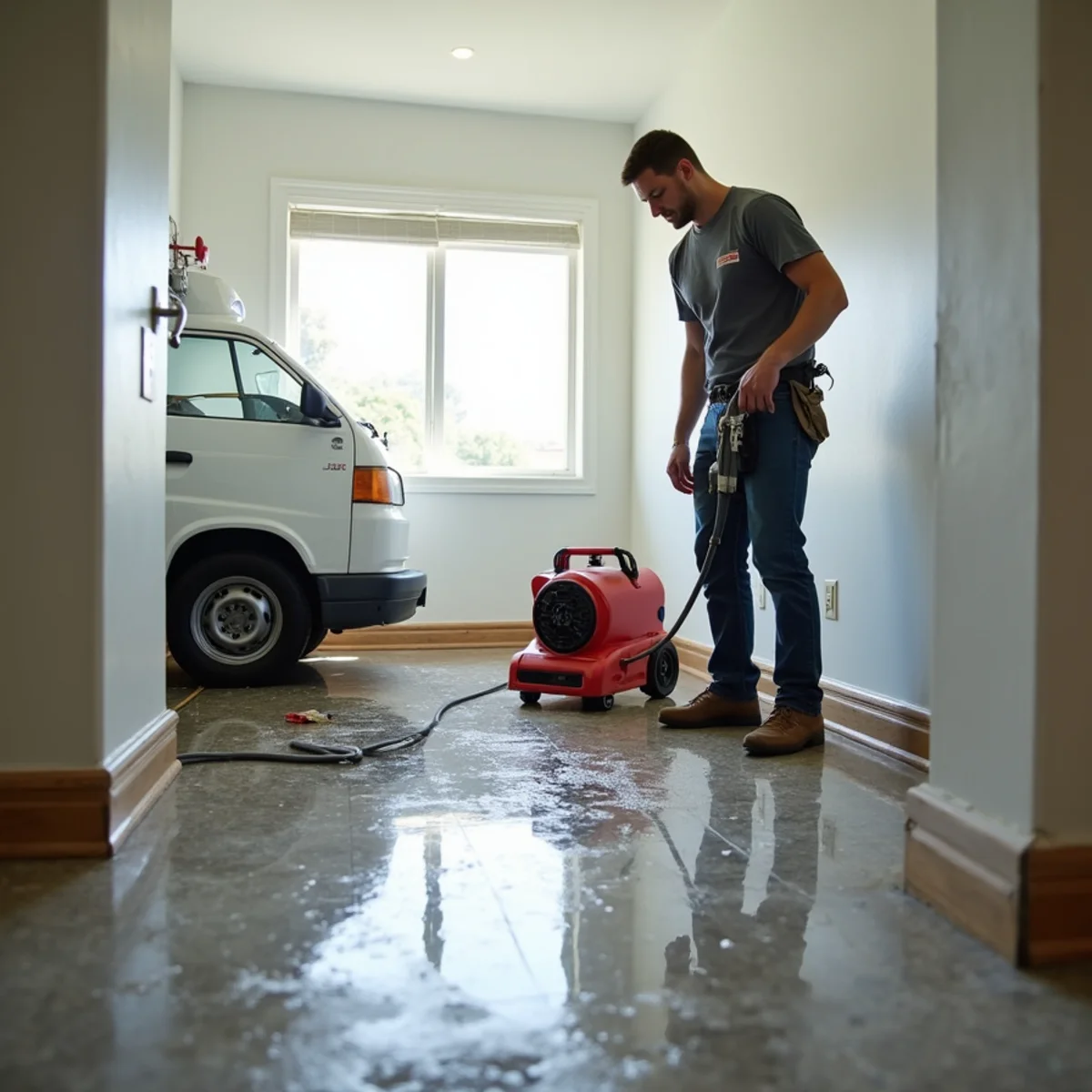
Structural Drying & Dehumidification in Daly City, CA
On-site in ~60 minutes Licensed & insured IICRC-certified
Get a Free Estimate
Use the form or call our 24-hour hotline at (201) 277-9344.
4.9 / 5 rating
Based on 127 reviews
- IICRC Certified
- Licensed, Bonded & Insured
- 24/7 Emergency Service
- On-Site in ~60 Min
Trusted Structural Drying & Dehumidification in Daly City
Structural drying is the part of water damage recovery that pulls moisture out of the building materials themselves — the framing, subfloor, drywall, and insulation — and it's what we do around the clock across Daly City. The standing water is gone. The floor looks dry. You run a hand across it and it feels fine, so you assume the worst is over. It usually isn't. The water you can see is only the part that's easy to remove; the rest has already wicked into the subfloor, climbed up the drywall, and settled into wall cavities and framing where a towel and a shop vac will never reach it.
That trapped moisture is where the real trouble starts, and Daly City's climate makes it worse. We sit in the fog belt, where the marine layer rolls over Westlake and St. Francis Heights and holds indoor humidity high all year. Wet framing here doesn't air-dry the way it might inland — it stays saturated, cups and warps, and feeds mold, which can take hold in damp material in as little as 24 to 48 hours. A job that stops at extraction leaves that hidden water behind the walls to rot the structure quietly for weeks, and by the time the musty smell arrives the damage is already done.
Structural drying is the invisible half of the job, and it's the half we take seriously. We map the moisture with thermal-imaging cameras and meters, then build a controlled drying environment with axial air movers and LGR dehumidifiers that draw water out of the materials — not just off the surface — and we prove the structure is dry with logged readings tied to the IICRC S500 standard. If your home or business flooded and you're not sure the structure is truly dry, call us at (201) 277-9344 for a free moisture inspection.
What’s included
- Map hidden moisture with thermal-imaging cameras and penetrating moisture meters before a single fan goes down, so drying targets the wet zones and not the whole room
- Set axial air movers to sweep a moving sheet of air across wet floors, walls, and framing, breaking the still layer that lets moisture sit
- Run LGR (low-grain refrigerant) dehumidifiers sized to the room's water load, pulling the airborne moisture down and draining it off
- Build a contained drying chamber with poly sheeting so the equipment fights the water loss instead of the fog-belt humidity leaking in from the rest of the house
- Track relative humidity and grain depression with hygrometers so we know the dehumidifiers are actually gaining on the water, not treading it
- Take daily moisture readings at fixed, marked points and log every number, so progress is measured rather than guessed
- Dry wall cavities and subfloors in place with cavity ventilation where we can, avoiding the demolition of material that will dry
- Confirm every affected material has reached the documented dry standard before we pull equipment and sign off
When to call for structural drying
Catching these early keeps a small problem from becoming a major one.
The surface is dry but the smell isn't
A musty, earthy odor days after a leak almost always means moisture is still trapped in the drywall, insulation, or subfloor. That smell is microbial growth already feeding on damp cellulose, and your nose catches what your eyes can't.
Baseboards and trim are cupping or lifting
Wood swells as it absorbs water and shrinks as it dries, so it moves visibly at the edges. Warped baseboards, buckled laminate, or fresh gaps opening at the trim tell you the framing behind them is still wet.
Someone told you to just point a household fan at it
A box fan moves a little air but does nothing to lower humidity, so the water simply evaporates into the room and re-absorbs into other materials. In a foggy, closed-up house that spreads the moisture around instead of removing it.
A stain keeps coming back after you paint over it
If a water stain bleeds through fresh paint, the surface behind it is still releasing moisture and minerals. The material has to be dried to standard before any primer or repair will actually hold.
The room feels clammy or the windows keep fogging
Elevated indoor humidity and condensation on glass and cold walls mean the space is holding more moisture than it can shed on its own. In the fog belt that stalled air is exactly what lets hidden dampness linger and mold start.
The floor sounds hollow or feels soft underfoot
A subfloor that flexes, creaks, or gives slightly as you walk has usually absorbed water at the seams and glue lines. Left wet, particleboard and OSB swell and lose their grip on the fasteners, and the flooring above it starts to fail.
How we handle structural drying
- 1
Read the moisture, don't guess it
We start with thermal imaging and penetrating and non-penetrating moisture meters to find exactly where the water traveled and how deep it soaked. Drywall that looks dry often reads soaked two feet up. We map the wet zones, mark them, and set baseline numbers to dry back to.
- 2
Design the drying plan to S500
Following IICRC S500, we classify the water and the damage class, then calculate how many air movers and dehumidifiers the space actually needs from the affected square footage and the materials involved. Under-drying invites mold; over-drying wastes days and power. The math is what keeps the job honest.
- 3
Contain the drying environment
We often close the wet area off with poly sheeting so the equipment works on a defined space instead of the whole house. In damp Daly City this matters more than most places — a sealed chamber keeps marine humidity from bleeding back in and quietly stalling the dry.
- 4
Place air movers and dehumidifiers as a system
Axial air movers are angled to lift moisture off surfaces and keep it circulating; LGR dehumidifiers capture that moisture from the air and drain it away. Neither works alone — placement, spacing, and airflow direction matter as much as horsepower, and we adjust both as materials release water.
- 5
Monitor daily and adjust
We return each day to take readings at the same marked points, log the drop, and reposition equipment as zones dry. This is where the fog belt earns respect: high ambient humidity means we watch grain depression and material readings closely and tune the setup rather than letting it run blind.
- 6
Verify and document the dry standard
When the affected materials match the moisture readings of unaffected areas of your home, the structure is dry — not before. We record the final numbers, remove the equipment, and hand you the moisture logs and thermal images your insurer will recognize.
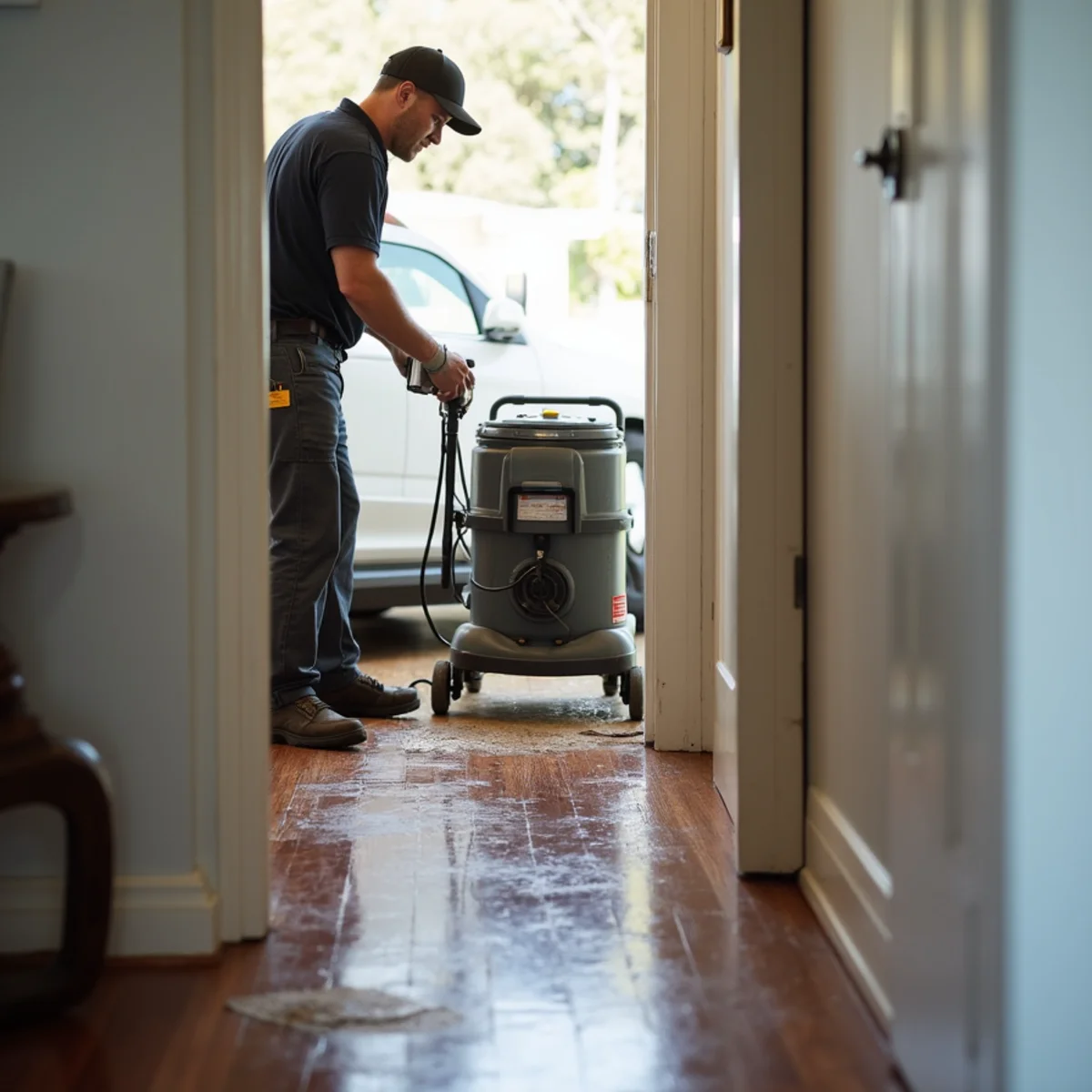
What goes into your estimate
Every water loss is different, so we never quote blind. After a free inspection we give you a clear, itemized estimate. These are the factors that move the price:
- The class of water damage — how much water was present and how much of the structure it reached
- Total square footage that needs drying and how many rooms or levels are involved
- The materials affected — dense hardwood, plaster, and a concrete slab hold water far longer than open drywall
- How long the water sat before drying began; a delayed start means deeper saturation and more equipment for more days
- The number of air movers and dehumidifiers required and the days they run
- Ambient humidity and airflow in the space, which the fog belt can push higher and slow drying
- Whether hidden moisture in wall cavities or under flooring requires controlled access to reach
- Whether the delay allowed mold to start, adding containment and antimicrobial treatment to the scope
Why Daly City trusts us for this
We dry to a number, not to a hunch
Anyone can point a fan at a wet floor. We prove the structure is dry with logged moisture readings tied to the IICRC S500 standard, so you're not left wondering what's still wet behind the drywall a month from now.
We understand fog-belt drying
Drying a home in damp, foggy Daly City is not the same as drying one in a dry inland valley. We build contained drying environments and watch the humidity numbers so the marine layer over Westlake and Serramonte doesn't stall the job halfway through.
Documentation your insurer accepts
Our daily logs, moisture maps, and thermal images give your claim the evidence it needs to move. We bill insurance directly and back the drying with a written workmanship guarantee.
We save materials when we can
Fast, correct drying often lets us rescue hardwood, subfloor, and framing that a slower approach would force us to tear out. Less demolition means less rebuild, less disruption, and a shorter road back to normal for you.
Local, licensed, and on-site fast
We're IICRC-certified, licensed, bonded, and insured, and we answer live 24/7. When water is spreading, we're on-site in about 60 minutes so drying starts while the moisture is still shallow.
Related Services
Helpful Reading
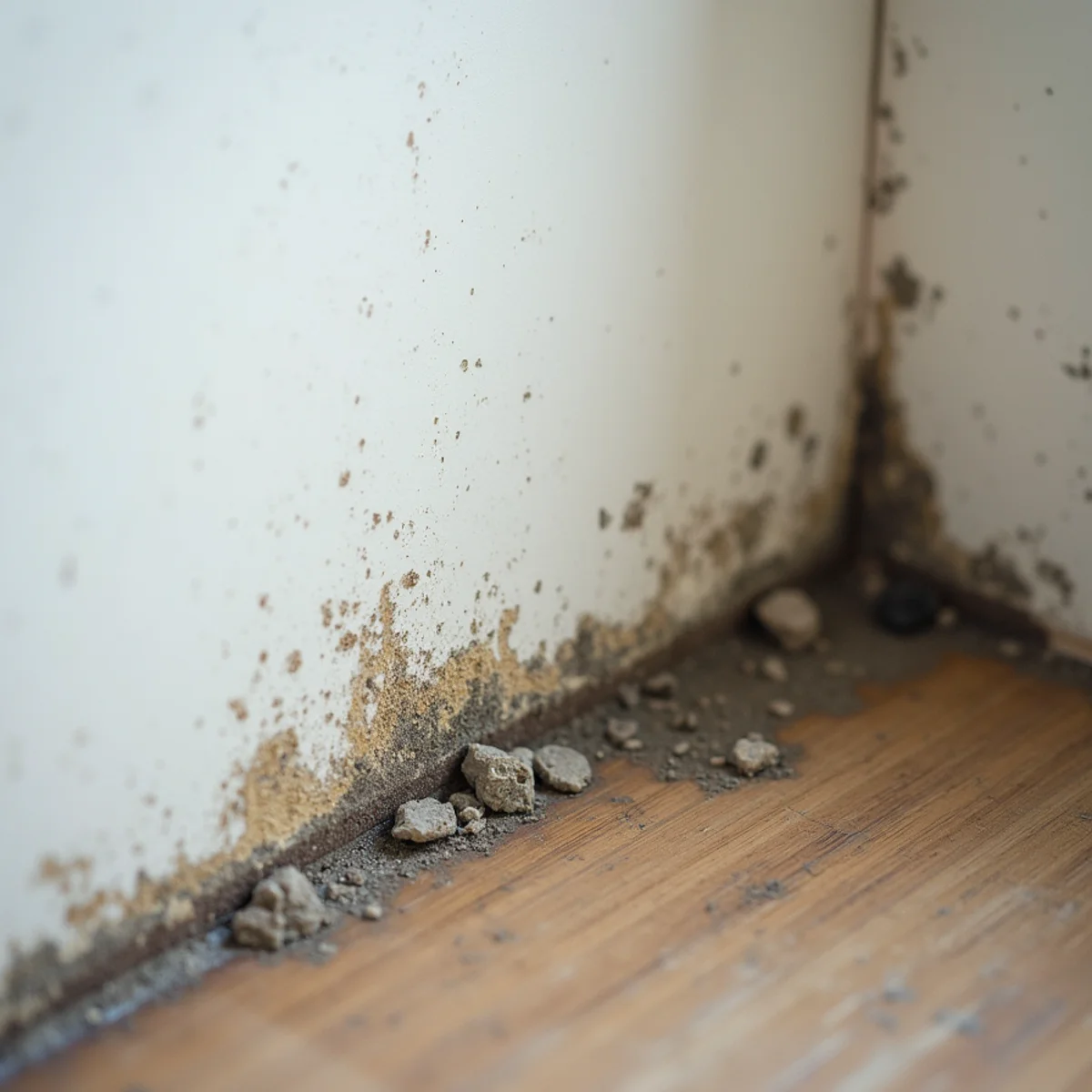
How Fast Does Mold Grow After Water Damage? The 24–48 Hour Rule
Mold doesn’t wait. In Daly City’s damp, foggy climate it can take hold in a day. Here’s the real timeline and how to beat it.
Read article
The “Fog Capital” Problem: How Daly City’s Fog Causes Hidden Moisture and Mold
The fog that defines Daly City also keeps homes damp enough to grow mold you never see. Here’s the local science.
Read articleStructural Drying across Daly City & the Peninsula
We provide structural drying throughout Daly City’s neighborhoods and the surrounding Peninsula — from the fog-belt hills to the coast to the bay. Not sure if we reach you? Call (201) 277-9344 and ask.
Structural Drying questions, answered
Most homes dry in about three to five days, though dense materials, a concrete slab, or Daly City's high marine humidity can add time. We take daily moisture readings and stop only when the numbers confirm the structure has reached the dry standard, not on a fixed calendar. Chasing a deadline instead of a reading is how mold gets missed.
A consumer dehumidifier isn't sized for a water loss and can't reach moisture trapped inside wall cavities or a subfloor. Without moisture meters you also can't confirm the structure is actually dry, only that the surface feels dry — and that gap is exactly where mold problems begin. Proper drying pairs airflow, dehumidification, and daily verification, not one appliance in the corner.
Extraction removes the water you can see and reach; drying removes the water absorbed into framing, drywall, and floors. Skip it and that hidden moisture feeds mold and warps materials long after the visible water is gone. In our fog-belt climate wet framing barely dries on its own, so the trapped water can sit and do damage for weeks.
Air movers and dehumidifiers do draw power while they run, but only for the few days needed to bring the structure to standard. That short cost is far smaller than repairing a mold outbreak or a rotted subfloor later, and drying equipment is a normal, documented part of a covered water claim that we bill directly to your carrier.
We compare moisture readings in the affected materials to readings in unaffected parts of your home that never got wet. When the wet areas match that dry baseline, drying is complete. You get the final numbers in writing before we remove the equipment, so "dry" is a documented measurement rather than an opinion.
24/7 Emergency Response
Need structural drying in Daly City? Call now.
Call now for a free inspection. A real person answers day or night, and we’re on-site in about 60 minutes.