
Water Damage Restoration in San Francisco, CA
Answered live 24/7 Free inspection Direct insurance billing
Get a Free Estimate
Use the form or call our 24-hour hotline at (201) 277-9344.
- 24/7 Emergency Service
- Free On-Site Inspection
- Direct Insurance Billing
- Local Daly City Crews
Water damage restoration in San Francisco, CA
Water Damage Daly City provides 24/7 emergency water damage restoration across the southern San Francisco districts closest to us — Ingleside, Oceanview, the Excelsior, Crocker-Amazon, and the outer avenues of the Sunset. Water is already moving through your walls as you read this, wicking into subfloor and the bottom plates of the framing, and every hour it sits it climbs a little higher. A supply line lets go in a Mission Street flat, a downstairs unit floods off Ocean Avenue, or fog-fed damp in an Ingleside garage finally blooms into visible mold — and the panic feels the same at 2 a.m. either way.
Here is what changes the outcome: mold can colonize wet drywall and framing in 24 to 48 hours, and we answer live and roll a crew toward your door the moment you call. We sit right on the county line at the foot of the 94112, 94132, and 94134 ZIPs, so the blocks around Stonestown Galleria, SF State, and Lake Merced are a short run for our trucks. Our techs arrive with truck-mounted extractors, LGR dehumidifiers, and thermal-imaging cameras to map the moisture before it disappears behind plaster.
We know this housing stock because it mirrors ours: dense rows of pre-war Edwardian flats, marina-style homes over tuck-under garages, and stucco rows built shoulder to shoulder with shared party walls and side yards you can barely walk through. In a stacked two- or three-unit building, one failure on the top floor rides the joists down through every level before a tenant notices the ceiling stain. Call (201) 277-9344 for a free inspection, and we will tell you honestly what is wet, what is salvageable, and exactly what it takes to dry it to standard.
ZIP codes served: 94112, 94132, 94134, 94127

Areas & landmarks we cover
Stonestown Galleria · SF State University · Lake Merced · Ingleside · Ocean Avenue
What makes San Francisco homes vulnerable
Local housing, terrain, and climate shape the water damage we see here.
Edwardian flats and marina-style homes
The districts hugging the Daly City line run heavy with pre-1940 Edwardian flats, marina-style homes stacked over tuck-under garages, and stucco rows along Ocean Avenue and Mission Street. Many still carry their original galvanized supply lines and cast-iron drains, both well past a 50-year service life. Galvanized pipe scales and narrows from the inside until it pinholes or shears at a threaded joint, and in a two- or three-unit building that water follows the floor joists straight down into the flat below.
The same marine layer that shrouds the Sunset
The outer avenues and the ridge above Lake Merced share the fog belt we live in year-round. Cool, saturated air settles against north-facing walls, in ground-floor closets, and in garages that never quite dry between storms. Our hygrometers routinely read elevated humidity in these spaces, which is why a small ignored leak here feeds hidden mold faster than the same leak would in a sunnier, inland neighborhood.
Low ground and high groundwater near Lake Merced
The flats around Lake Merced, Stonestown, and SF State sit on low, sandy ground where the water table runs close to the surface and streets slope toward front doors. When winter rain saturates that soil, garages and ground-floor units take on water from below as well as above, and it recedes slowly once it is inside. We factor that groundwater into the drying plan instead of treating it as a simple spill.
Dense multi-unit blocks and long-hidden leaks
Between Ocean Avenue and the Excelsior, three- and four-unit buildings and student rentals pack tightly together. A drip inside a party wall or a slow supply-line weep can run for months, quietly rotting subfloor and studs, until a brown ceiling ring finally gives it away. Finding it early with thermal imaging and a moisture meter is what saves the original plaster and trim these older buildings are known for.
Common causes of water damage in San Francisco
Corroded galvanized supply and cast-iron drains
Century-old galvanized pipe rusts inward until the pipe wall gives way, often at a threaded joint under household pressure. In stacked flats the release soaks the ceiling assembly below and tracks sideways through the joist bays, so a single break usually means two or three wet units by the time we arrive.
Fog-driven condensation and slow mold
Persistent marine damp collects behind furniture pushed against cold exterior walls, in un-vented bathrooms, and along garage ceilings. Left alone, it holds drywall and baseboard at a wood-moisture content mold thrives on, feeding growth on closet walls and framing long before you catch a musty smell.
Upstairs-unit and party-wall leaks
An overflowing tub, a failed washer hose, or a running toilet in the unit above becomes your ceiling problem within minutes. These crossing losses need fast moisture mapping and photo documentation so responsibility is clear between owners and tenants, and rapid drying so the water does not migrate into shared framing.
Wind-driven rain and tired roof seams
Winter storms push rain into failing flashing, flat-roof membranes, and clogged gutters on these older buildings. Water enters at the top floor, tracks down through insulation and wall cavities, and surfaces as a stain on a ceiling a floor or two below the actual point of entry.
San Francisco homes and water damage
Along the county line, most homes went up between about 1910 and the early 1950s. Westwood Park, Balboa Terrace and Ingleside Terraces hold detached bungalows and period-revival houses from the 1910s and 1920s, many on raised wood foundations with crawl spaces or partial basements. Parkside and the outer Sunset follow the 1930s and 1940s row-house pattern: a living floor set over a street-level garage, with the laundry, water heater and stairs sharing that ground floor. The Excelsior, Oceanview and Crocker-Amazon mix cottages, two-unit flats and later stucco infill, often with rooms added into old garages. For water damage, that means garage-level rooms take water first, buried sewer laterals are frequently original clay or cast iron, and a ceiling leak in a stacked building usually crosses from one household into another.
When water damage tends to happen in San Francisco
November to March: a combined sewer under pressure
San Francisco moves stormwater and sewage through the same pipes. During an intense burst of rain, that shared system can fill faster than it drains, and low-lying garages with floor drains or basement fixtures are where it pushes back first. The most common call is a garage or in-law unit taking on dirty water during the heaviest hour of a storm, which needs sanitizing, not just drying.
June to August: fog season indoors
Summer is the grayest stretch west of Twin Peaks. Cool, damp air settles into ground-floor rooms, closets on west-facing walls and garages that rarely see sun, and moisture condenses on cold concrete and single-pane glass. A small plumbing leak that would dry on its own inland can stay damp for weeks here, which is why musty odors often show up in July rather than January.
Late fall: the first real rain after a dry summer
The first heavy storm of the season finds every gutter and curb inlet packed with leaves, and every roof seam that dried and cracked over the summer. Flat roofs and parapet walls common on flats and row houses tend to leak at this moment. Around the holidays, fuller households and heavier kitchen use also push grease and debris into older cast-iron drains.
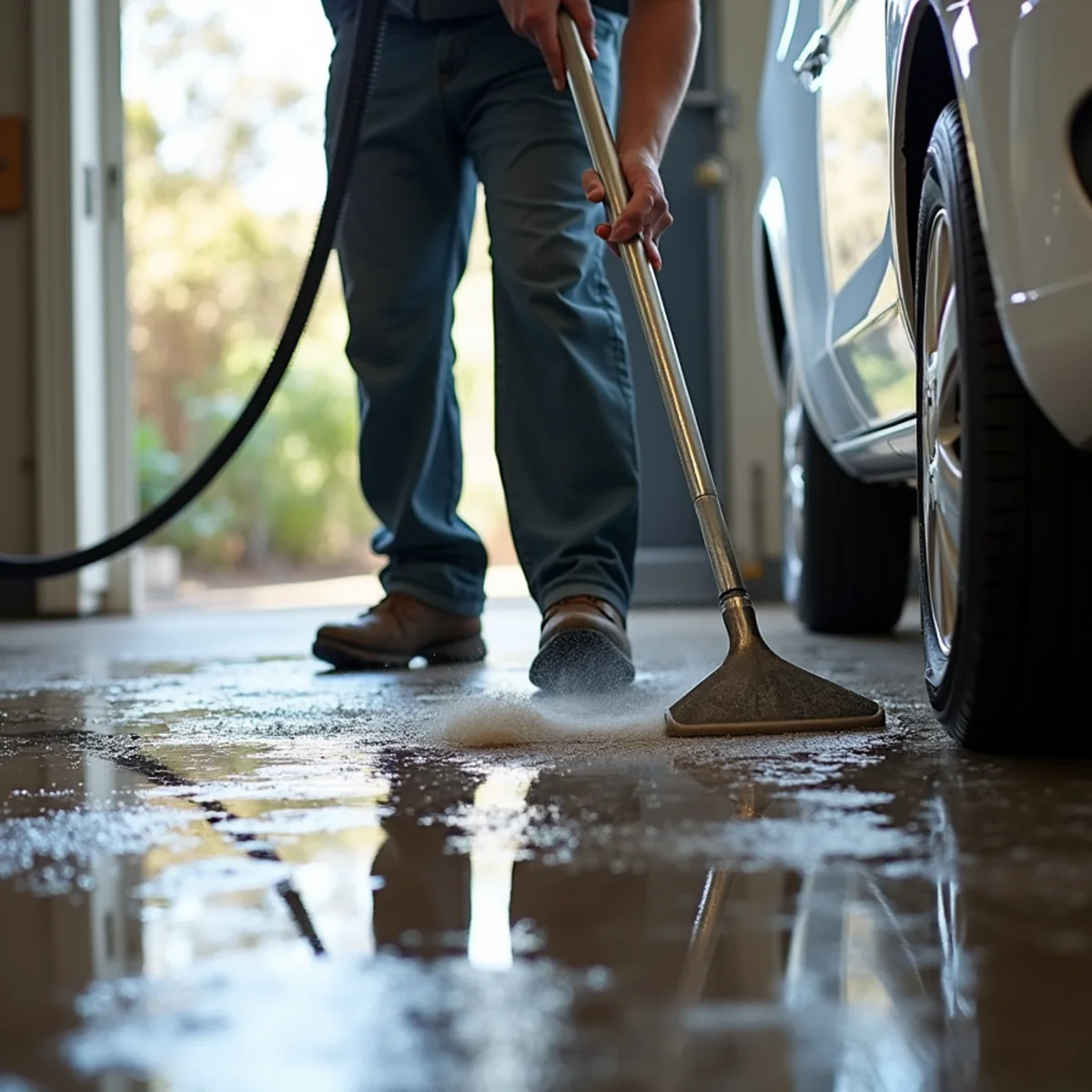
Protecting a San Francisco home from water damage
- Have the sewer lateral camera-inspected if your building is older or drains run slow. SFPUC treats the whole lateral as the owner's responsibility, and a crack or root mass usually shows up on video long before a backup.
- If your garage has ever taken on water during a storm, ask a plumber about a backwater valve, and look into SFPUC's rain-ready resources, which include free sandbags and a Floodwater Grant for eligible flood-protection projects.
- Clear leaves off the curb inlet nearest your door before a forecast storm, and report a blocked drain through 311 instead of waiting for water to reach the garage.
- In a multi-unit building, label the main shutoff and each unit's valves, and make sure every household knows where they are before the first leak happens.
- Keep stored items in garages and ground-floor rooms on shelves or in sealed bins, and run bath fans during fog season to limit the hidden moisture that feeds mold.
Water utility for San Francisco
San Francisco Public Utilities Commission (SFPUC)
SFPUC owns the water mains, the meters and the sewer mains under the street. Report a main break, water bubbling up at the curb, a flooded street or a clogged storm drain through SF311 or by dialing 311, any hour. Water inside your flat after the meter, such as a burst supply line, a leaking water heater or a backup from your own sewer lateral, is on the owner's side.
Why San Francisco chooses Water Damage Daly City
Because we are based right on the Daly City line, our crews reach Ingleside, Oceanview, the Excelsior, and the outer Sunset quickly — we dispatch as soon as you call, any hour, storm or clear, and tell you exactly when to expect us.
Fast response to San Francisco
We’re local, so we reach San Francisco quickly and start extracting water before it spreads — day or night, 24/7.
Drying verified with readings
We measure moisture with meters and thermal imaging and log daily readings, so San Francisco homes are dried to a real target, not a guess.
We bill your insurance directly
We document the loss to insurer standards and work with your carrier, so the claim is one less thing to manage.
We know San Francisco
From the local housing and terrain to the weather that drives leaks and floods, we know what causes water damage here — and how to fix it for good.
Our services in San Francisco
We’re minutes from San Francisco
Because we are based right on the Daly City line, our crews reach Ingleside, Oceanview, the Excelsior, and the outer Sunset quickly — we dispatch as soon as you call, any hour, storm or clear, and tell you exactly when to expect us.
Call (201) 277-9344 any time — a real person answers, and we’ll dispatch a crew right away.
Helpful Reading
What to Do in the First 24 Hours After Water Damage in Your Daly City Home
The first day decides how much you lose. Here’s exactly what to do — and what to avoid — in the first 24 hours after water damage in Daly City.
Read article
The “Fog Capital” Problem: How Daly City’s Fog Causes Hidden Moisture and Mold
The fog that defines Daly City also keeps homes damp enough to grow mold you never see. Here’s the local science.
Read articleNearby Areas We Serve
San Francisco water damage questions
We focus on the southern districts closest to our Daly City base — Ingleside, Oceanview, the Excelsior, Crocker-Amazon, and the outer Sunset — plus the low ground around Stonestown Galleria, SF State, and Lake Merced, covering the 94112, 94132, 94134, and 94127 ZIP codes. If your block sits near the county line, it is a short run for our trucks. Call (201) 277-9344 and we will confirm.
We restore your unit and document every reading — moisture-meter values, thermal images, and photos — so responsibility between owners, tenants, and carriers is clear on paper rather than in argument. We bill your insurance directly and can coordinate with the upstairs owner's carrier so you are not caught refereeing two policies.
Usually less than you fear. We map the exact wet footprint with penetrating and non-penetrating moisture meters and thermal imaging, then dry in place wherever the materials will recover and remove only what will not — which protects the original plaster, lath, and trim that give these older flats their character.
Very fast — our Daly City base sits right on the city line, so Ingleside, the Sunset near SF State, and the blocks around Ocean Avenue are a short drive away. For much of southern San Francisco we are closer than a downtown crew would be.
Yes. We document your San Francisco loss with photos and moisture readings and bill your carrier directly. In two-flat and multi-unit buildings we also help sort out which policy covers what before the work begins.
SFPUC publishes a [100-Year Storm Flood Risk Map](https://www.sfpuc.gov/learning/emergency-preparedness/flood-maps) showing where heavy rain is likely to overwhelm the sewer system and flood properties; it was updated in December 2024 to add flood elevations. Look up your address there, and check the [FEMA Flood Map Service Center](https://msc.fema.gov/portal/search) for federal flood zones. If your property has flooded from the street before, SFPUC's Floodwater Grant may help fund protection such as backwater valves or flood barriers.
It depends where the blockage is. SFPUC owns the sewer main in the street, and it replaces the lower lateral when there is a structural defect, but the property owner is responsible for the lateral overall, including cleaning and inspecting it. Report a street-level overflow to 311. Either way, the water inside your home is contaminated and needs professional [sewage cleanup](/services/sewage-cleanup/), not just a mop and fans.
24/7 Emergency Response
Water damage in San Francisco, CA? We’re on the way.
Call now for a free inspection. A real person answers day or night and dispatches a crew right away.