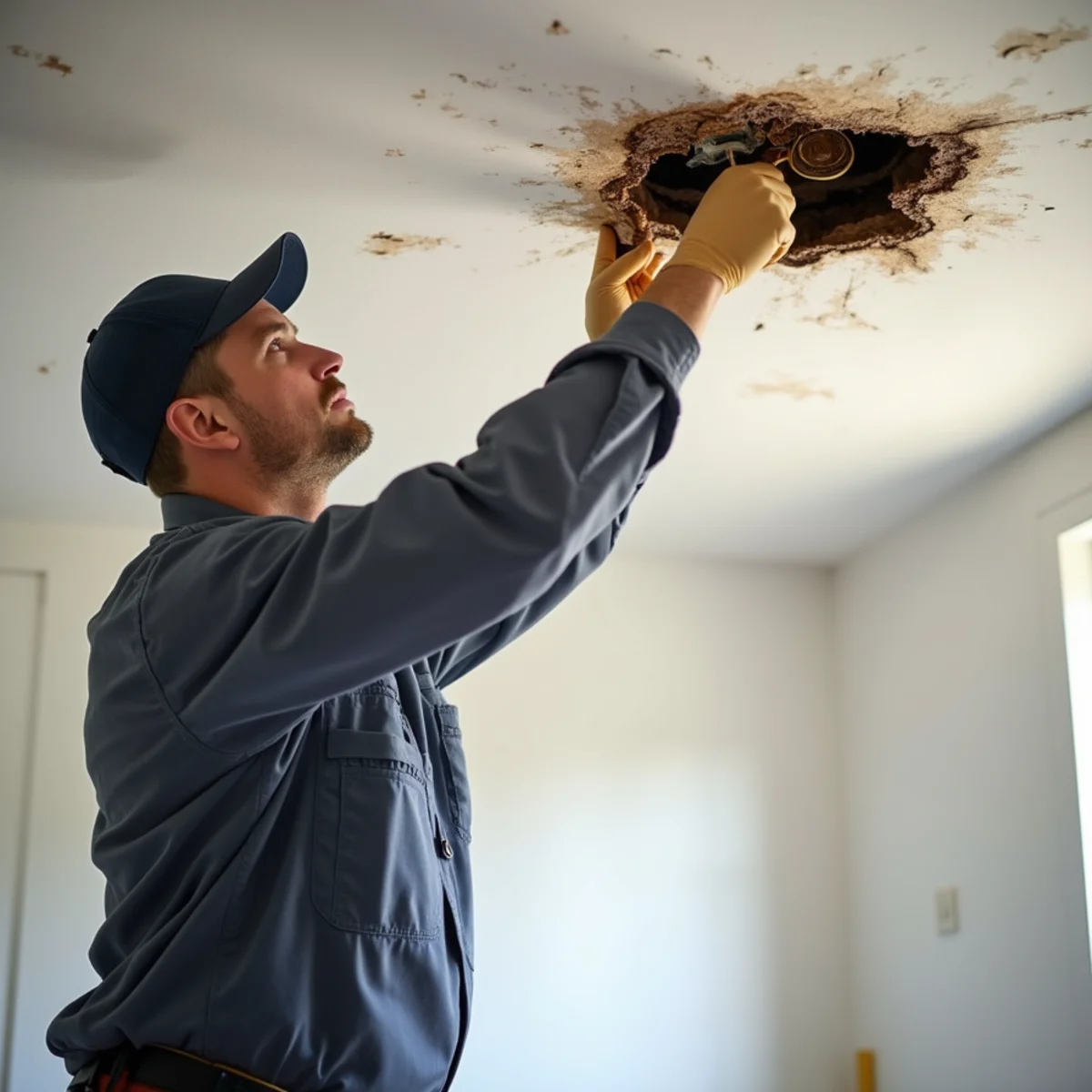
Roof Leak Water Damage Repair in Daly City, CA
On-site in ~60 minutes Licensed & insured IICRC-certified
Get a Free Estimate
Use the form or call our 24-hour hotline at (201) 277-9344.
4.9 / 5 rating
Based on 127 reviews
- IICRC Certified
- Licensed, Bonded & Insured
- 24/7 Emergency Service
- On-Site in ~60 Min
Trusted Roof Leak Water Damage Repair in Daly City
Roof-leak water damage restoration is our 24/7 service for stopping the water a failing roof lets in and drying everything it reached across Daly City. The rain comes in sideways off the Pacific, driven by coastside wind, and it finds the one weak spot that never leaks in a gentle shower. A lifted shingle, tired flashing, a cracked seal around a vent, and suddenly water is tracking into the attic, along a rafter, and out through a growing brown ring on the ceiling below.
A roof leak rarely drips straight down where the ceiling stains. Water runs along the underside of the roof deck and the framing first, soaking sheathing, insulation, and wall cavities on the way, so by the time you see the mark the wet area is already larger than it looks. In Daly City's fog-heavy, marine-layer air, that trapped attic moisture dries painfully slowly and turns into a mold problem that spreads across the plywood sheathing and the joists. Storm after storm, a small leak quietly rots the structure over your head.
We stop the water and dry what it reached. Call (201) 277-9344 and our IICRC-certified crew responds in about 60 minutes to tarp the roof, extract the water, and dry the attic, ceiling, and walls before mold takes hold. We work to the S500 standard, treat any mold to S520, then rebuild the damaged drywall and finishes and bill your insurer directly. One leak, handled end to end.
What’s included
- 24/7 storm response with about 60-minute arrival across Daly City
- Emergency roof tarping to stop water entry until a permanent repair
- Attic inspection to trace the leak path along deck, rafters, and insulation
- Extraction of water pooled above ceilings and inside wall cavities
- Controlled draining of a bulging, water-filled ceiling before it collapses
- Drying of soaked insulation, sheathing, drywall, and framing
- Mold treatment to S520 and full rebuild of damaged ceilings and walls
When to call for roof leak damage
Catching these early keeps a small problem from becoming a major one.
A brown ring or stain on the ceiling
A spreading discolored ring is water that has already saturated the ceiling from above and dried at the edges. The stain marks where the water pooled and dripped, not necessarily where the roof is actually leaking.
A ceiling that sags or bulges
A drooping or bubbling ceiling is holding a pocket of water behind the paint and can give way without warning. Keep clear of the area, move what is beneath it, and get it drained under control fast.
Damp insulation or a musty attic
Wet insulation mats down, loses its R-value, and holds moisture against the framing and sheathing. A musty smell in the attic after rain is an early sign of an active leak and mold beginning on the wood.
Drips or trails that appear only in heavy rain
Wind-driven coastside storms expose leaks a light rain never reveals, forcing water under shingles and flashing that shed a drizzle fine. Water showing up on walls or ceilings only during downpours points to a roof or flashing failure.
Peeling paint or bubbling along a wall or ceiling
Paint that blisters or lifts is trapped moisture pushing out from behind the finish. It often shows up down-slope of the leak, where water finally reaches a surface it can escape through.
Dark streaks or rot on attic rafters and sheathing
Black staining or spongy spots on the plywood deck and rafters mean water has been tracking there over more than one storm. In the fog belt that damp wood dries slowly and is prime ground for spreading mold.
How we handle roof leak damage
- 1
Tarp and stop the entry
Our first move is to stop more water from coming in, so we tarp the affected roof area to buy time for a proper repair once the weather clears. Every gallon we keep out now is drying and demolition we avoid later.
- 2
Trace the leak in the attic
We follow the water back along the roof deck and rafters to find where it truly enters, because the ceiling stain sits down-slope of the actual leak. A thermal-imaging camera and meters show the wet path so we target the right area, not just the visible mark.
- 3
Relieve and extract the water
If a ceiling is holding water we drain it under control from below, then extract the standing and trapped water from the attic, the cavity, and the finishes. Relieving that weight safely prevents a sudden, messy collapse.
- 4
Remove ruined materials
Saturated insulation and swollen, sagging drywall that cannot be dried in place come out, so the cavity behind them can breathe and dry. Wet insulation in particular holds moisture against the framing and has to go.
- 5
Dry the cavity
Air movers and LGR dehumidifiers dry the attic, framing, and ceiling space, with meter checks to confirm the enclosed areas actually reach dry. In Daly City's humid air, mechanical drying is what gets an attic there, since it will not dry on its own.
- 6
Treat mold and rebuild
We address any mold to the S520 standard with HEPA scrubbing and antimicrobial treatment, then rebuild insulation, drywall, and finish so the ceiling looks like the leak never happened. We document the whole loss for direct insurance billing.

What goes into your estimate
Every water loss is different, so we never quote blind. After a free inspection we give you a clear, itemized estimate. These are the factors that move the price:
- The size of the leak and how many storms it soaked through before discovery
- How far the water traveled along framing, sheathing, and ceiling before it showed
- The amount of insulation, drywall, and sheathing that must be removed and replaced
- Whether mold has started on the deck, rafters, or in the attic space
- The height and pitch of the ceiling and the attic access for drying and rebuild
- The extent of ceiling and wall reconstruction, texture, and paint to finish
- Drying time for enclosed attic and cavity spaces in humid, fog-belt conditions
- Whether the permanent roof repair reveals more entry points than the first leak
Why Daly City trusts us for this
We handle the coastside storm season
Wind-driven rain off the Pacific finds roof weak points the rest of the year never tests, and it arrives in the same storms that flood the neighborhood. We respond fast during exactly that weather, when other crews are stretched thin.
We find the real source
Because water travels along framing before it drips, the stain rarely sits under the leak. We trace it in the attic with thermal imaging and meters so drying and repair target the true entry point, not just the visible mark on the ceiling.
We beat the fog-belt mold clock
Daly City's damp marine air keeps attics from drying on their own, so a small leak turns into sheathing mold quietly. We dry aggressively and verify with meters so a roof leak does not become an attic mold remediation job weeks later.
Tarp to finished ceiling, one crew
We stop the water, dry the structure, treat any mold to S520, and rebuild the ceiling, then bill your insurer directly. It is one coordinated project from the emergency tarp to the finish coat instead of several disconnected trades.
Related Services
Helpful Reading
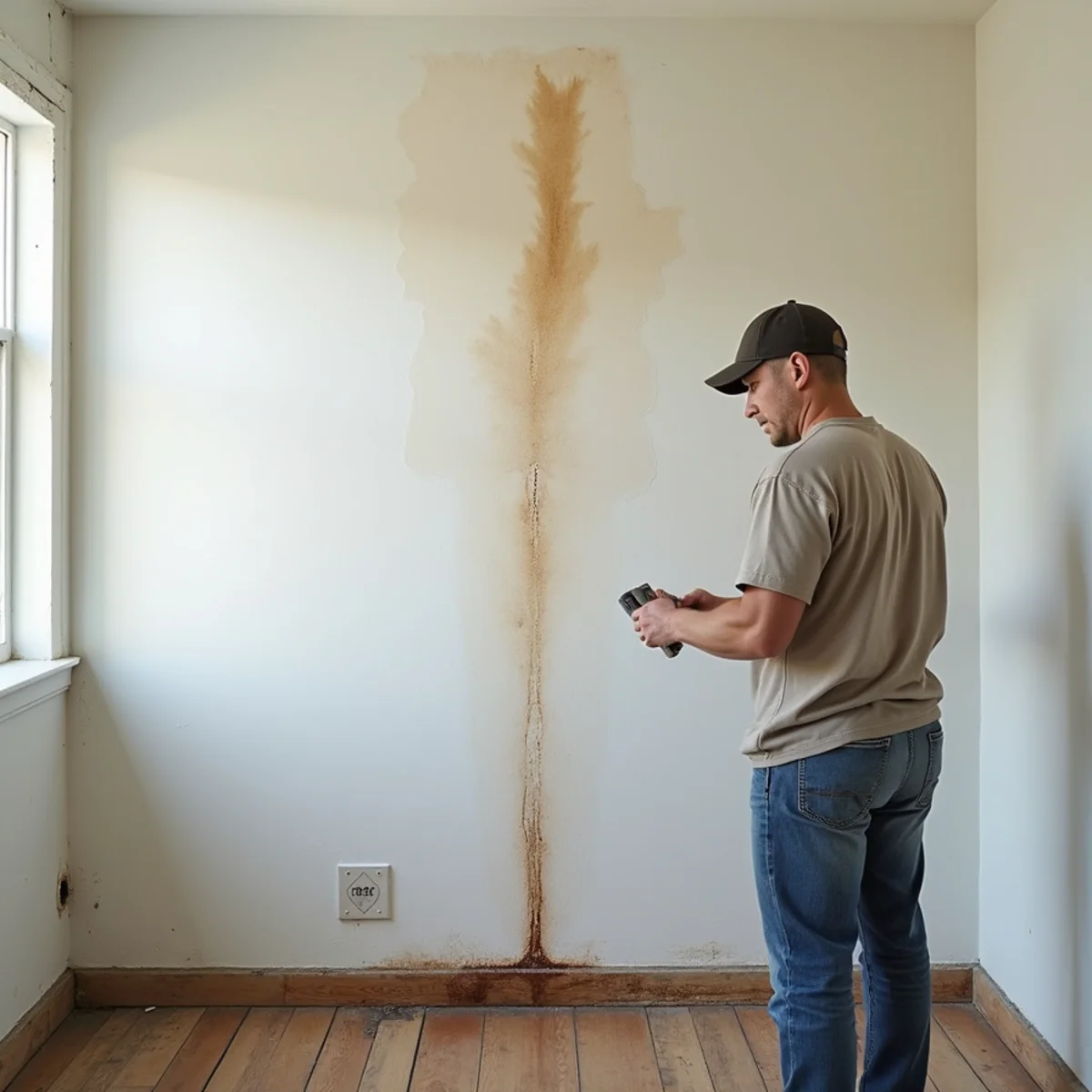
10 Warning Signs of a Hidden Water Leak in Your Home
Most water damage starts small and silent. Catch these ten warning signs early and you can stop a leak before it becomes a rebuild.
Read article
Atmospheric Rivers on the Peninsula: Flood Preparedness for Daly City Residents
The “Pineapple Express” storms are hitting harder and wetter. Here’s how Daly City homeowners can get ahead of the next one.
Read articleRoof Leak Damage across Daly City & the Peninsula
We provide roof leak damage throughout Daly City’s neighborhoods and the surrounding Peninsula — from the fog-belt hills to the coast to the bay. Not sure if we reach you? Call (201) 277-9344 and ask.
Roof Leak Damage questions, answered
Yes. We respond 24/7 in about 60 minutes and tarp the roof to stop water entry even in active weather, working safely from the areas we can reach. Once the entry is contained, we start the interior extraction and set drying equipment, then coordinate the permanent roof repair after the weather breaks. Getting the tarp on during the storm is what limits how far the damage spreads.
Treat it as one. A water-filled ceiling can hold a surprising amount of weight and collapse suddenly, bringing down drywall and whatever is above it. Stay out from under it, move furniture and valuables clear, and if you can safely reach it, place a bucket and pierce a small relief hole at the low point to let the water drain in a controlled way. Then call us to drain, extract, and dry the ceiling before it gives way on its own.
We provide emergency tarping to stop the leak immediately and coordinate with a licensed roofer on the permanent repair, rather than reshingling the roof ourselves. Our core work is the water side of the loss: tracing the leak, extracting the water, drying the attic, ceiling, and walls, treating any mold, and rebuilding the interior damage so it looks like new.
Wind-driven rain gets under shingles and flashing that shed a gentle shower just fine, and it can drive water uphill against the normal flow. That is common on the coast side of the Peninsula, where storms come in hard off the ocean, so a leak can seem to come and go with the weather. It is not gone between storms; it is just waiting for enough wind and volume to find the same weak spot again.
Insurance generally covers the interior water damage when the leak comes from sudden storm damage, like wind-driven rain or a branch that opened the roof, while damage traced to a worn-out roof you deferred is often excluded. The interior repairs and the roof itself are usually treated as two different questions. We document the water damage and its source for your claim and bill your carrier directly.
It is a real risk, because attic insulation and framing hold moisture and Daly City's fog-belt air keeps that space damp long after the rain stops. We use moisture meters and thermal imaging to find wet insulation and sheathing, then dry the cavity and treat any microbial growth to S520 standards. Catching it early is far easier than dealing with an established colony later.
24/7 Emergency Response
Need roof leak damage in Daly City? Call now.
Call now for a free inspection. A real person answers day or night, and we’re on-site in about 60 minutes.