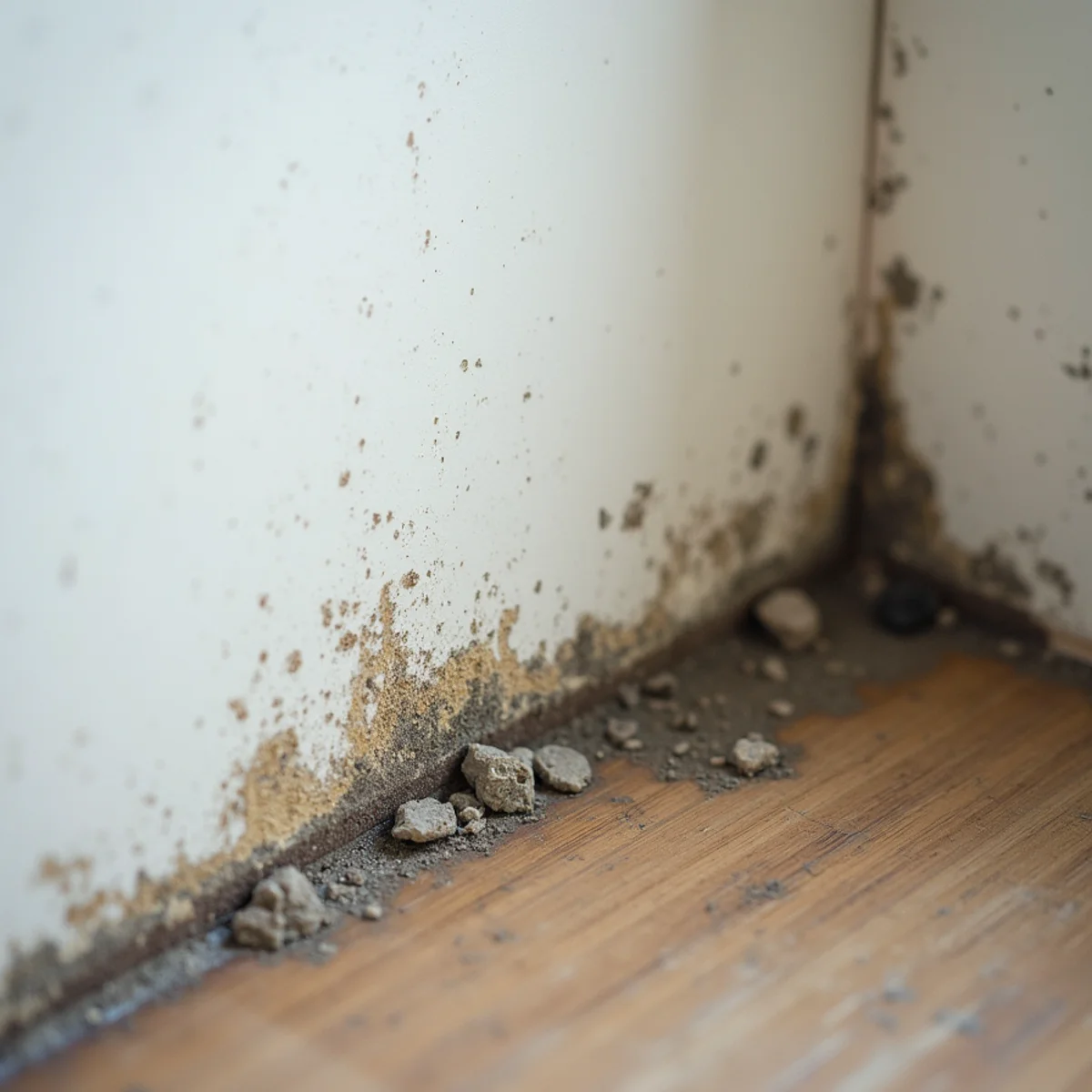
The “Pineapple Express” storms are hitting harder and wetter. Here’s how Daly City homeowners can get ahead of the next one.
To prepare your Daly City home for an atmospheric river, do five things before the clouds arrive: clear gutters and downspouts, grade soil away from the foundation, test your sump pump and add a battery backup, seal low doors and garage thresholds, and stage sandbags at the spots that flooded before. An afternoon of that work prevents most storm flooding we clean up.
The rain isn't what it used to be. A generation ago, a Peninsula winter meant weeks of steady drizzle. Now a single atmospheric river can drop more water on Daly City in one afternoon than we used to see in a month. Storm drains surcharge. Hillside runoff finds the low door. Garages that stayed dry for forty years take on water in an hour. You can't stop the rain, but you can decide whether it ends up in your living room — and if a storm already got inside, our flood damage cleanup crew answers the phone around the clock and rolls with truck-mounted extractors and pumps.
What an Atmospheric River Actually Is
An atmospheric river is a long, narrow band of moisture that streams in off the tropical Pacific — the pattern forecasters nickname the Pineapple Express, because so many of them track back toward Hawaii. Think of it as a river in the sky, sometimes a thousand miles long, carrying as much water as a large surface river. When one stalls over the coast and wrings out against our hills, the totals stack up fast. The National Weather Service ranks these systems on a scale from AR-1, a mostly beneficial soaking, up through AR-4 and AR-5, which are hazardous. Inches of rain in a matter of hours is now a normal winter event on the Peninsula, and the systems that used to be a once-a-decade story arrive most winters.
Why the Peninsula Floods So Fast
Geography works against us. Daly City and the coast sit where wet ocean air hits rising ground, so the rain squeezes out right over our rooftops — a process called orographic lift that concentrates the heaviest totals on the west-facing slopes. Water then runs downhill faster than aging storm drains can swallow it. Low pockets in Broadmoor and Westlake pond up at the curb until the inlet catches up. Hillside neighborhoods like Southern Hills shed sheets of runoff toward the homes below, and a single clogged area drain turns a driveway into a channel. Along the coast in Pacifica, wind-driven rain gets forced up under shingles and around window frames that shed ordinary weather just fine. Add the Colma-area high water table, which leaves the ground already saturated when the next band arrives, and there's nowhere left for the water to soak in.
Start Outside: Gutters, Downspouts, and Grading
Most storm flooding is really a drainage problem in disguise. Water that can't get away from the house goes into it. Before the season starts, walk the outside of your home in daylight and work through the basics — a couple of hours here prevents the losses that take weeks to repair.
- Clear gutters of leaves, needles, and grit so a full trough can actually carry a downpour instead of sheeting over the front edge.
- Add downspout extensions that push roof water at least four to six feet from the foundation, not straight down against the slab where it pools and finds the door.
- Check the grading — soil should fall away from the house on every side. Even a slight backward tilt sends water toward the foundation, and settled beds against mid-century slab homes are a common culprit.
- Reseal gaps around garage and basement doors, window wells, and every point where a pipe or conduit enters the wall; weatherstripping and a fresh bead of exterior sealant are cheap insurance.
- Clear the storm drain and gutter at your curb so the street can drain at the peak of the storm — a leaf-packed inlet backs water up the gutter and toward the low driveways first.
Below the House: Sump Pump and Battery Backup
If your home has a sump pump — common where there's a crawl space or a below-grade room — test it before you need it. Pour a five-gallon bucket into the pit and confirm the float switch trips, the pump runs, and the check valve holds so water doesn't drain back in. Then clear the discharge line where it exits outside. The catch is that atmospheric rivers routinely knock out power exactly when the pump matters most, and a pump with no electricity is just a hole in your floor. A battery backup, or a water-powered backup on homes with reliable municipal pressure, keeps the pit clear through an outage — the difference between a dry floor and a flooded one during a storm that has already cut the lights.
The Valve That Stops a Sewage Backup
When the public sewer surcharges during heavy rain, it can push water and worse back up through the lowest drains in your house — floor drains, tubs, and ground-floor toilets. A backwater valve, installed on your main line by a licensed plumber, lets waste flow out but snaps shut if the flow tries to reverse. It's one of the few upgrades that specifically guards against a Category 3 backup, which under IICRC S500 is treated as grossly contaminated water and is far more hazardous and costly to remediate than clean rainwater — porous materials it touches usually have to be removed, not just dried. If a toilet or floor drain has ever gurgled during a storm, that's the sewer telling you it's under pressure; ask a plumber whether a backwater valve makes sense for your home.
Sandbags, Drains, and the Day-Of Plan
When a big storm is in the forecast, a little day-of prep buys a lot of protection. Sandbags work best two or three courses high, staggered like brick with the open ends folded under and tamped down, backed by a sheet of plastic on the water side to actually turn a flow rather than just slow it.
- Stage sandbags at the low door, the garage threshold, or wherever water crept in during past storms. Daly City and San Mateo County open self-serve sandbag sites before major systems — pick them up early, before the rush empties the piles.
- Move anything valuable off the garage and basement floor onto shelves or pallets, at least a few inches up, and get cardboard boxes off the concrete where they wick.
- Roll back rugs and lift furniture legs onto blocks in rooms that have flooded before.
- Keep area drains, window wells, and the curb inlet clear so water always has somewhere to go besides inside.
- Charge phones and flashlights, keep a wet/dry vacuum staged for the first inch of clean water, and know that anything past that first inch is a call, not a mop.
A Note for Coastside Homes
If you're over the hill in Pacifica, Montara, or Moss Beach, you're fighting wind-driven rain and salt air on top of the sheer volume. Rain gets driven sideways into places vertical rain never reaches — up under the last course of shingles, behind fascia, around the corners of window flashing — and the constant damp keeps materials from drying between systems. Salt-laden air also corrodes fasteners and opens seams over time, so a roof that was tight five years ago may have quiet gaps now. Coastside homes benefit from extra attention to roof flashing, kickout flashing at wall-roof junctions, and window seals. When the wind is howling and the rain is horizontal, our storm damage restoration team handles roof leaks and flooding along the whole coast, with tarping to stop active intrusion before the drying starts.
Preparation is cheaper and calmer than recovery. Spend an afternoon on your gutters, grading, and shut-offs before the next system arrives, and you'll ride out most storms dry. If water does get in, don't wait for it to soak deeper — the clock on wet drywall, subfloor, and framing starts immediately, and fast water extraction is what keeps a wet floor from becoming a gutted room. Call Water Damage Daly City any hour at (201) 277-9344, and we'll be on-site quickly to pump out, dry to a verified standard, and put your home back.
Frequently asked questions
It varies by storm, but a strong atmospheric river can drop several inches over a day or two, with the heaviest bursts falling in just a few hours as the band stalls against our coastal hills. The exact totals depend on how long the system parks over the Peninsula and how much orographic lift wrings out of it. The safe assumption is that any named atmospheric river can overwhelm ordinary drainage — prepare for volume and duration rather than for a specific number, because it only takes one clogged inlet or one inch over the threshold to get water inside.
Usually not. Sump pumps serve crawl spaces and below-grade rooms where water collects in a pit and has to be lifted out. Many mid-century Daly City homes are slab-on-grade and instead rely on good grading, clean gutters, downspout extensions, and door seals to keep water from ever reaching the slab. Where a slab home does get water, it's almost always from surface flow at a door or garage threshold, so your prevention dollars go furthest outside. If you're unsure what your home has, a quick look during our free inspection will tell you what you're actually working with.
It depends on the source and your policy. Water that comes in through a storm-damaged roof or a wind-driven opening is often covered by a standard homeowners policy, while surface flooding that rises from the ground typically falls under separate flood insurance and is excluded from the base policy. Sewer or drain backup usually needs its own endorsement as well. Read your declarations page before the season and ask your agent about flood and backup coverage if you're in a low-lying or coastside area. We bill insurance directly and document the loss — source, category, and moisture readings — to support whichever claim applies.
Get people and pets to safety first, then cut power to the affected area at the panel if you can reach it without standing in water. Move valuables up, place towels or sandbags at the water's entry point, and start removing water with a wet/dry vac if it's shallow and clean. Don't walk through water that may be contaminated or near live outlets. Then call a restoration crew — the sooner extraction and drying start, the less soaks into your subfloor and framing, and the more of your home we can dry in place rather than tear out.