Mold doesn’t wait. In Daly City’s damp, foggy climate it can take hold in a day. Here’s the real timeline and how to beat it.
Mold can begin growing within 24 to 48 hours of a leak or spill — that is how long dormant spores need to activate once they have moisture, an organic food source, and still air. In Daly City's fog belt, where indoor humidity already runs high, that window can be even shorter. Which is why restoration pros treat drying as an emergency, not a chore.
The water you can see is the easy part. The real question is what is happening in the damp materials you cannot see, and how long you have before mold turns a water problem into a health problem. Below is how mold actually gets started, why our coastal climate speeds it up, where it hides in local homes, and how professional drying stops it before it takes hold. If you are already seeing or smelling it, our certified mold removal team can assess the situation and stop the spread.
The 24–48 hour rule, explained
Mold spores are already in your home. They are everywhere — floating in the air, settled on every surface — and they are completely harmless while they stay dry. What they need to grow is a simple recipe: moisture, an organic food source, and a little time. Water damage delivers all three at once. Drywall paper, wood framing, insulation facing, carpet backing, and cardboard are all food. Add moisture, give it a day or two of warm, still air, and dormant spores wake up and become active, spreading colonies.
That 24-to-48-hour window is why we treat every water loss as a drying emergency. It is not that a green fuzz appears fully formed on day two; it is that colonization quietly begins beneath the surface, and once it does, the cleanup changes character — from drying a room to containing, removing, and remediating it. Beat the clock and you often avoid remediation entirely. Miss it, and the job grows.
Why Daly City's fog makes it worse
Daly City is one of the foggiest, dampest spots on the Peninsula, and that marine moisture is a gift to mold. Westlake and St. Francis Heights sit under the marine layer for long stretches of the year, so the baseline humidity inside garages, crawl spaces, closets, and north-facing rooms is already elevated before any leak happens. When water damage adds to a room that never fully dries out on its own, materials release their moisture more slowly and mold gets a longer, wetter runway. It is also why so much local mold is slow and hidden — a garage wall or a bedroom closet on the cool north side can grow it quietly for weeks.
We see the same thing along the coast. In Montara and the Coastside, salt air and near-constant damp keep surfaces from ever drying fully, so even a modest roof or window leak can seed hidden growth behind trim and inside wall cavities. And the instinct to "air the room out" by opening a window usually backfires here — on a foggy day you are pulling more moisture in, not letting it out. Real drying in this climate means controlling the air with dehumidification, not trading it with the outdoors.
Where mold hides after water damage
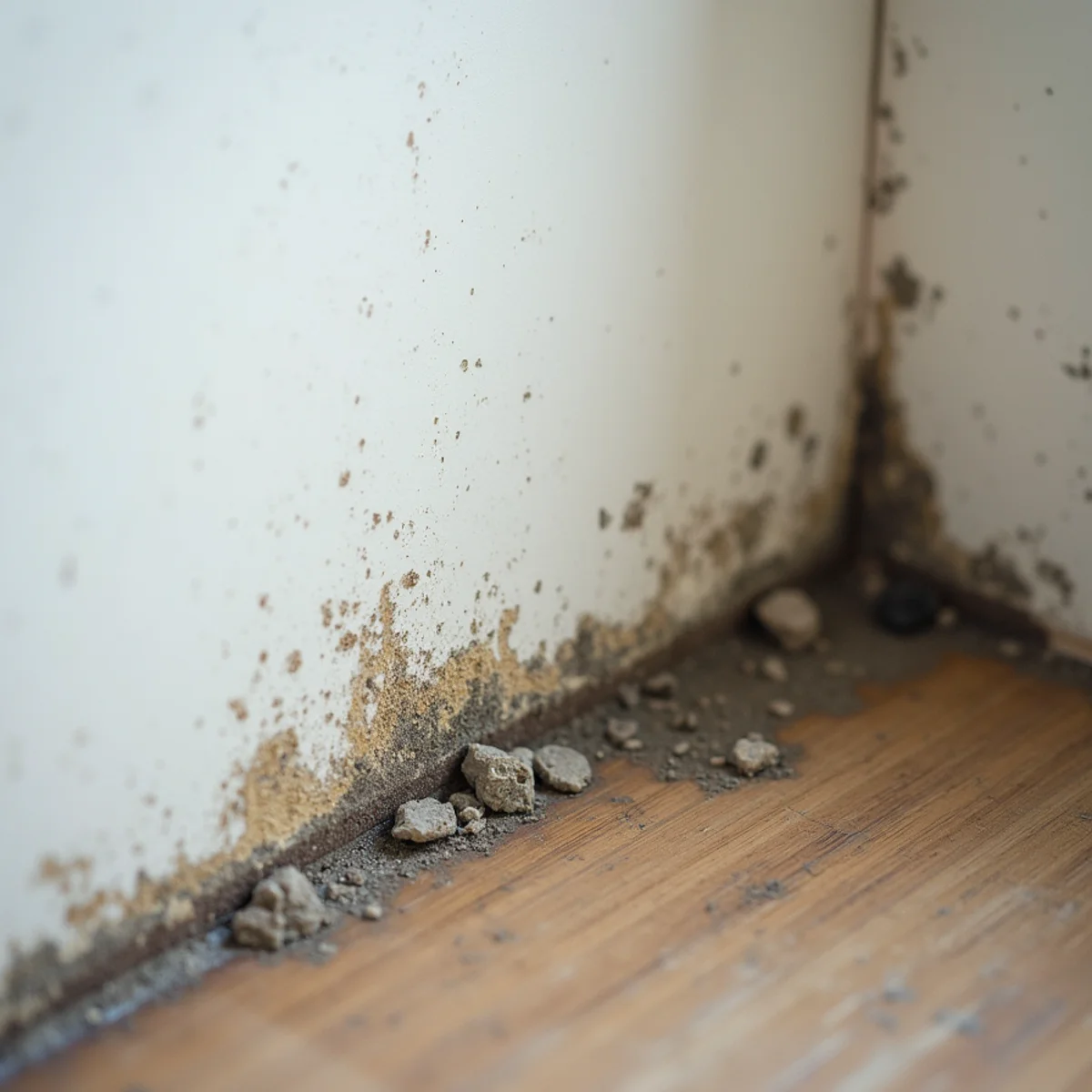
The mold you can see is rarely the whole story. By the time a spot shows on the painted surface, there is usually more growing in the cavity behind it, feeding on the drywall paper from the back. In Daly City homes the hiding spots are predictable once you know where a moisture meter and a thermal-imaging camera tend to light up.
- Inside wall cavities behind baseboards, outlets, and window frames, on the paper backing of the drywall.
- Under flooring — beneath sheet vinyl, laminate, and engineered wood, and down in the subfloor and slab-adjacent underlayment.
- In crawl spaces and under slab-on-grade rooms where damp, still air lingers and never turns over.
- Behind and beneath cabinets, especially the MDF or particleboard base under kitchen and bathroom sinks.
- In closets and garages against cool, north-facing exterior walls that hold condensation.
- Inside HVAC ducts and around registers if the system ran while materials were still wet.
The warning signs to trust
You will often smell mold before you see it — a musty, earthy odor that gets stronger in a closed room or when the heater first kicks on and pushes air across a colony. Other reliable tells: discoloration or staining that spreads or comes back after you paint over it, paint or wallpaper that bubbles or peels, and a room that feels persistently clammy no matter how much you ventilate. Warping baseboards and door casings, or a soft, spongy patch of floor underfoot, point to moisture feeding growth from underneath. Trust the nose and the meter over the eye — visible surface mold is usually the smallest part of the problem.
Pay attention to how you feel, too. Allergy-type symptoms that ease when you leave the house and return when you come home are a classic sign of an indoor mold source. Mold exposure can trigger coughing, congestion, sinus irritation, and worsened asthma, and it can be harder on children, older adults, and anyone with a respiratory condition or a compromised immune system. That is why treating the moisture quickly is about more than protecting the building.
How professional drying prevents mold
Stopping mold is not about mopping the floor and aiming a box fan at it. It is about pulling moisture out of the structure fast enough that dormant spores never activate — which takes the right equipment, real measurement, and a documented target. That is exactly what professional structural drying to the IICRC S500 and S520 standards delivers.
- Map the moisture with penetrating and non-penetrating meters and thermal imaging to find water hidden inside walls and floors.
- Extract standing water and remove saturated, unsalvageable porous materials — wet insulation, carpet pad, and delaminated drywall.
- Set axial air movers and LGR dehumidifiers to pull moisture from the structure itself, not just off the surface.
- Monitor moisture content and humidity daily and log it until materials reach a documented dry standard.
- Confirm dryness with the meter before closing any wall or floor back up — no guessing, no covering wet framing.
Done inside that first day or two, fast water extraction and drying usually keeps a water loss from ever becoming a mold job. Wait too long, and the work expands to include HEPA-filtered containment, negative-air machines, removal of affected materials, and post-remediation clearance.
If your home has been wet for more than a day, or you keep catching that musty smell, do not wait to see what happens — in this fog belt, time is not on your side. Call our Daly City team at (201) 277-9344 for a moisture assessment, and let us stop mold before it starts.
Frequently asked questions
Mold can begin colonizing damp materials within 24 to 48 hours. Warm, humid, still conditions speed it up, which is why Daly City's foggy coastal climate can shorten that window. The colonies do not appear fully formed overnight, but growth starts beneath the surface within a day or two, so fast, thorough drying within that first window is the best defense.
Yes. The persistent marine layer keeps indoor humidity elevated in garages, crawl spaces, closets, and north-facing rooms, so many local homes start damper than average. That higher baseline moisture means water-damaged materials release moisture more slowly and mold has a longer window to establish. It is also why opening a window on a foggy day tends to add moisture rather than remove it.
Surface bleaching may lighten a stain, but it usually leaves the root growth inside the porous material and, more importantly, leaves the moisture source unaddressed — so it comes back. Bleach also does not reach the drywall paper or framing where colonies actually live. Anything beyond a small surface spot, or any mold inside walls, flooring, or HVAC, calls for professional assessment and containment-based remediation.
Most people describe a musty, earthy, damp odor — sometimes compared to old books or a wet basement — that intensifies in a closed room or when the heating first turns on and moves air across it. If a room smells musty even when it looks clean, there is often hidden growth behind walls, under flooring, or in the HVAC worth investigating with a moisture meter before it spreads.
Drying the structure thoroughly within 24 to 48 hours usually prevents mold from establishing. The key word is thoroughly. Surface drying is not enough, because moisture trapped in wall cavities, under flooring, and in the subfloor can keep feeding growth you cannot see. Professionals dry to a measured moisture target and confirm it before closing anything up, which is what truly closes the door on mold.