Plumber, restoration company, or insurance — the order you call them in can save you thousands. Here’s the right sequence.
When your home floods, call in this order: first handle safety and shut off the water, then call a certified water damage restoration company, then a licensed plumber to fix the source, then your insurance carrier to open the claim. Restoration comes before the plumber because the drying clock is already running and the water — not the pipe — is what is destroying your home.
In the moment the sequence feels like a coin toss, but it genuinely matters. Call in the wrong order and you lose time while water keeps wicking into walls, or you make a move that complicates your claim. Below is the call order certified pros actually recommend, and why each call sits where it does. Our emergency water damage crew answers a live phone 24/7 and is typically on-site in Daly City within about an hour.
Call 1: Safety and utilities (before any company)
Your very first calls are not to a business at all. If anyone is in danger, or if water is pouring near your electrical panel and you cannot safely cut power, that is a 911 situation. If you smell gas, leave the house and call PG&E from outside — do not flip any switch on your way out. If you can safely reach your main water shutoff, close it now. Stopping the source outranks every phone call you are about to make, because until the water stops, everything else is temporary.
- Life safety first: get people and pets to a dry, safe area on stable footing.
- Shut off the main water valve if you can reach it safely — clockwise until it stops.
- Cut power to wet rooms at the breaker, or call the utility if the panel is wet.
- Do not wade into water that reaches outlets, the panel, or appliances.
- Only then start dialing companies.
Call 2: The restoration company — and why it comes first
Once you are safe and the water is off, call a certified water damage restoration company before the plumber or the insurer. This surprises people, so here is the logic. A restoration company is the one team equipped to stop the damage from getting worse right now — extraction, structural drying, and containment to keep clean water from crossing into dry rooms. Just as important, they document the loss to insurance standards from the very first minute: category of water, class of damage, moisture-meter readings, and photos that map exactly what was wet and when.
Put simply, a plumber fixes the pipe; a restoration company saves the house around the pipe. Those are different jobs, and only one of them is time-sensitive to the hour. A cracked fitting will wait an afternoon; a saturated subfloor will not. Getting professional water extraction started early is what keeps a one-room loss from becoming a whole-floor loss, and it is what starts the drying clock ticking down before mold can start ticking up.
Call 3: The plumber — to fix the source, not the damage
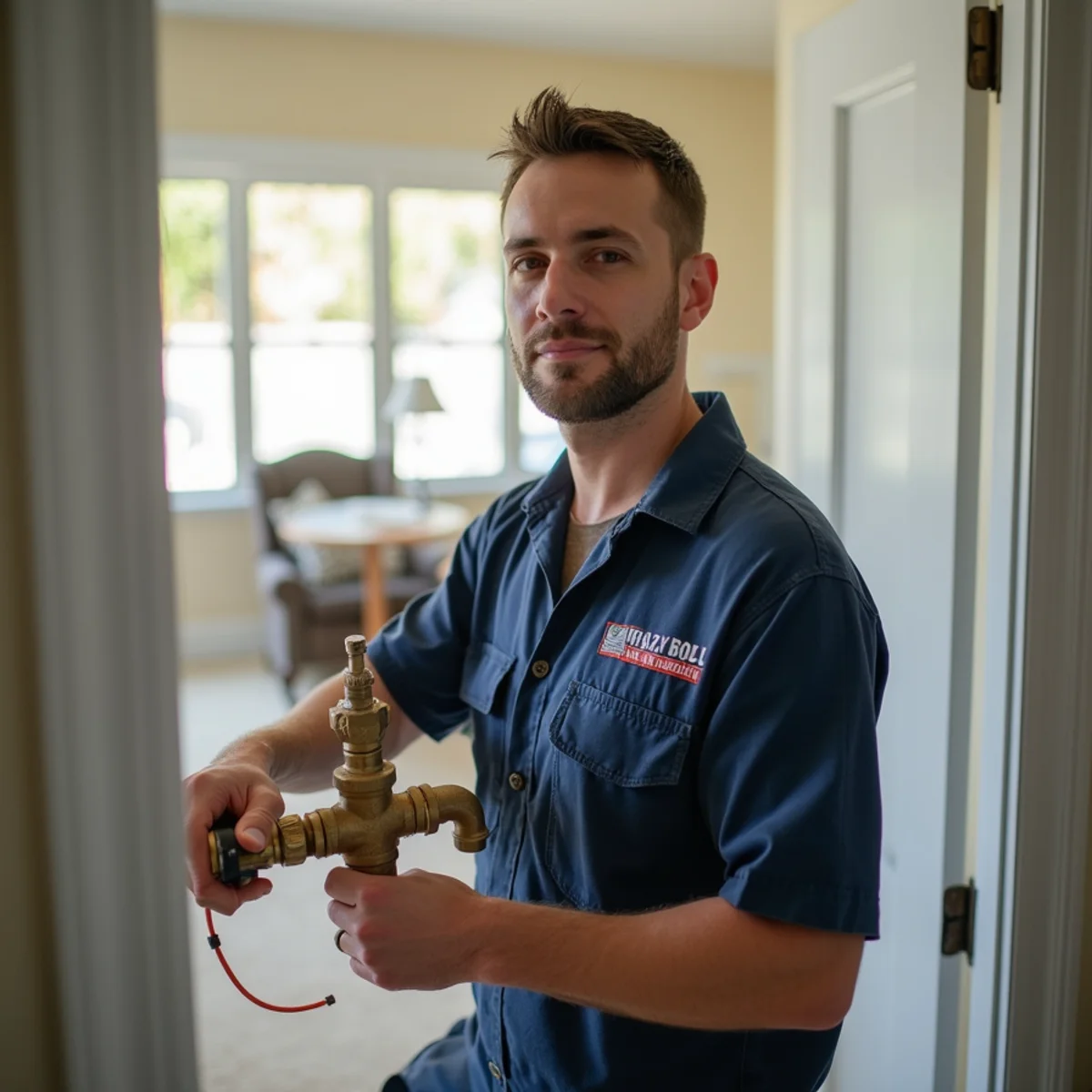
If a pipe, water heater, angle stop, or fixture failed, you will need a licensed plumber to repair or replace it. In many Daly City neighborhoods that is routine work: the mid-century Doelger tract homes are still running on 60- to 70-year-old galvanized supply lines and cast-iron drains that corrode from the inside until a pinhole becomes a burst. But understand the boundary of the plumber's job — they stop the leak and make the plumbing sound again. They do not extract water from your subfloor, dry your wall cavities, or remediate mold. Those belong to the restoration crew.
Often the sequence overlaps in practice: you can call the plumber right after the restoration company so both arrive close together, the restoration team handling the water and structure while the plumber handles the pipe. If your water is coming up through a floor drain or a toilet rather than down from a supply line, stop and treat it as contaminated — that is Category 2 or 3 water. Lean on professional sewage and flood cleanup with proper protective equipment and EPA-registered disinfectant rather than a mop and a pair of gloves.
Call 4: Your insurance company — timing that helps your claim
Call your insurer once the immediate crisis is controlled and you have started documenting — usually the same day, within the first few hours. Report the loss, get a claim number, and ask what your policy requires for mitigation and whether you carry a water-backup endorsement. Here is the part owners miss: most policies actually obligate you to take reasonable steps to prevent further damage, which is precisely what calling a restoration company accomplishes. Waiting to "let the adjuster see it untouched" can work against you. Many restoration companies, ours included, bill your carrier directly and speak the adjuster's language, so looping them in early makes the entire claim run smoother.
- Handle safety and shut off the water.
- Call a certified restoration company to start mitigation and documentation.
- Call a licensed plumber to repair the source.
- Call your insurance carrier to open the claim and note the claim number.
- Keep photos, receipts, and the claim number together in one place.
A Daly City and Peninsula reality check
Flooding here rarely happens at a convenient hour. Winter atmospheric rivers — the "Pineapple Express" — dump inches of rain on the Peninsula in a single afternoon, hillside runoff finds the low corner of a sloped lot in Southern Hills or St. Francis Heights, and a shared-wall leak in a Serramonte condo or townhome sends water straight into the unit below before anyone upstairs notices. Whether you are in Daly City proper or up in South San Francisco or the Hillside neighborhood, the call order does not change: safety, restoration, plumber, insurance.
When water is rising and you are not sure where to start, start with a phone call to people who do this every day. Reach our Daly City team any time at (201) 277-9344 — we will talk you through finding the shutoff, tell you exactly what to photograph, and roll a certified crew to your door with extractors and dehumidifiers on board.
Frequently asked questions
A plumber fixes the failed pipe, but the water is already in your floors and walls, and that is the time-sensitive problem. A restoration company stops that damage from spreading with extraction and drying, and documents the loss for your claim from the first minute. Both are needed — the restoration crew just addresses the emergency that gets worse by the hour, while a cracked fitting can wait an afternoon.
Report the loss the same day, once safety is handled and you have started documenting. Most policies require you to take reasonable steps to prevent further damage, so starting mitigation quickly and opening the claim promptly both work in your favor. Ask about your deductible and whether you carry a sewer or water-backup endorsement while you have the adjuster on the line.
No — policies generally expect you to mitigate further damage promptly, and delaying can actually count against you. The key is to document thoroughly with photos and video before and during cleanup. A certified restoration company records moisture readings, water category, and damage to the exact standards adjusters look for, so the work strengthens your claim rather than muddying it.
Treat drain or toilet water as contaminated Category 2 or 3 water and keep people and pets well away from it. It can carry bacteria and requires proper protective equipment, extraction, and disinfection — porous materials it soaks usually have to come out. This is a job for professional cleanup, not a mop and bucket. Call a certified restoration company right after ensuring safety.