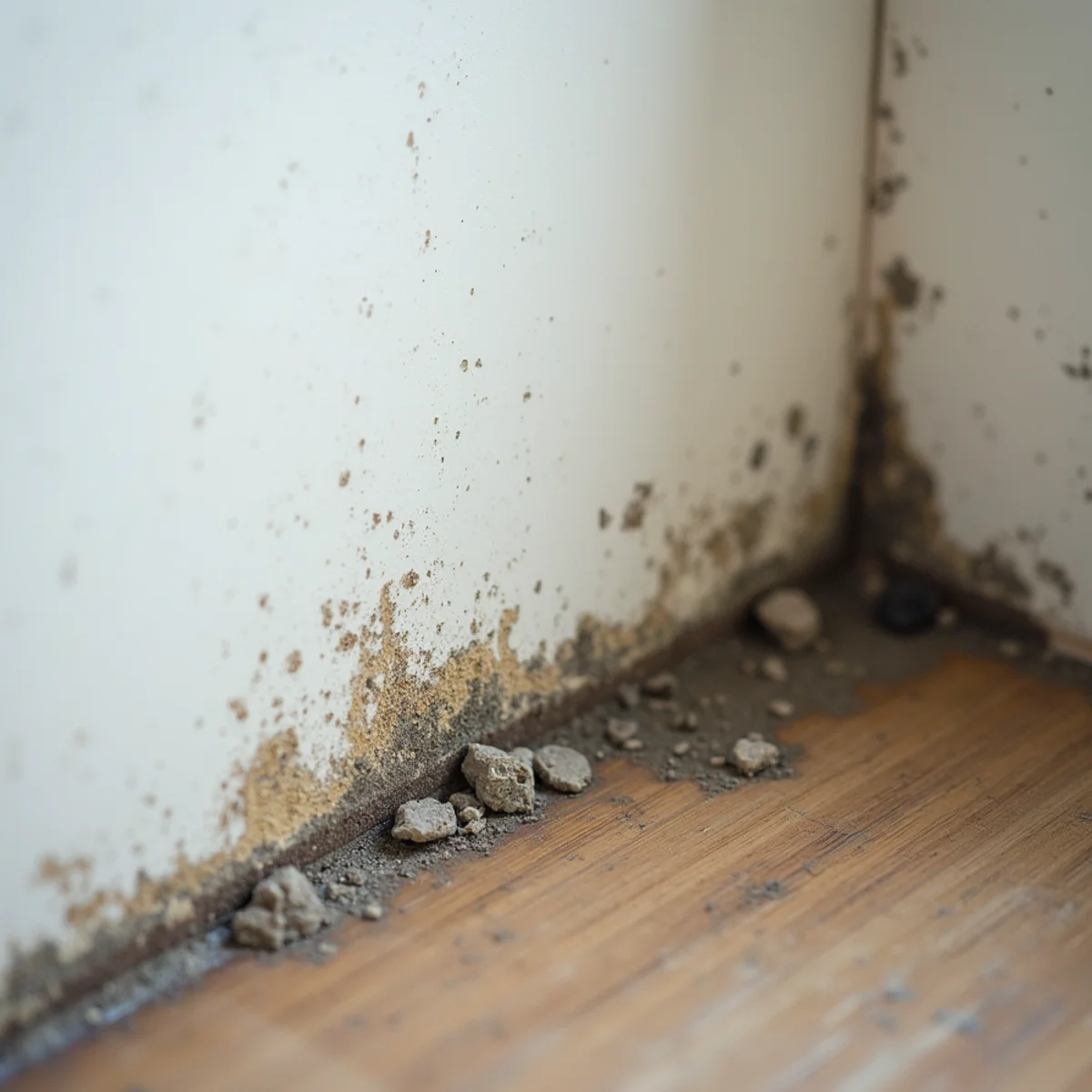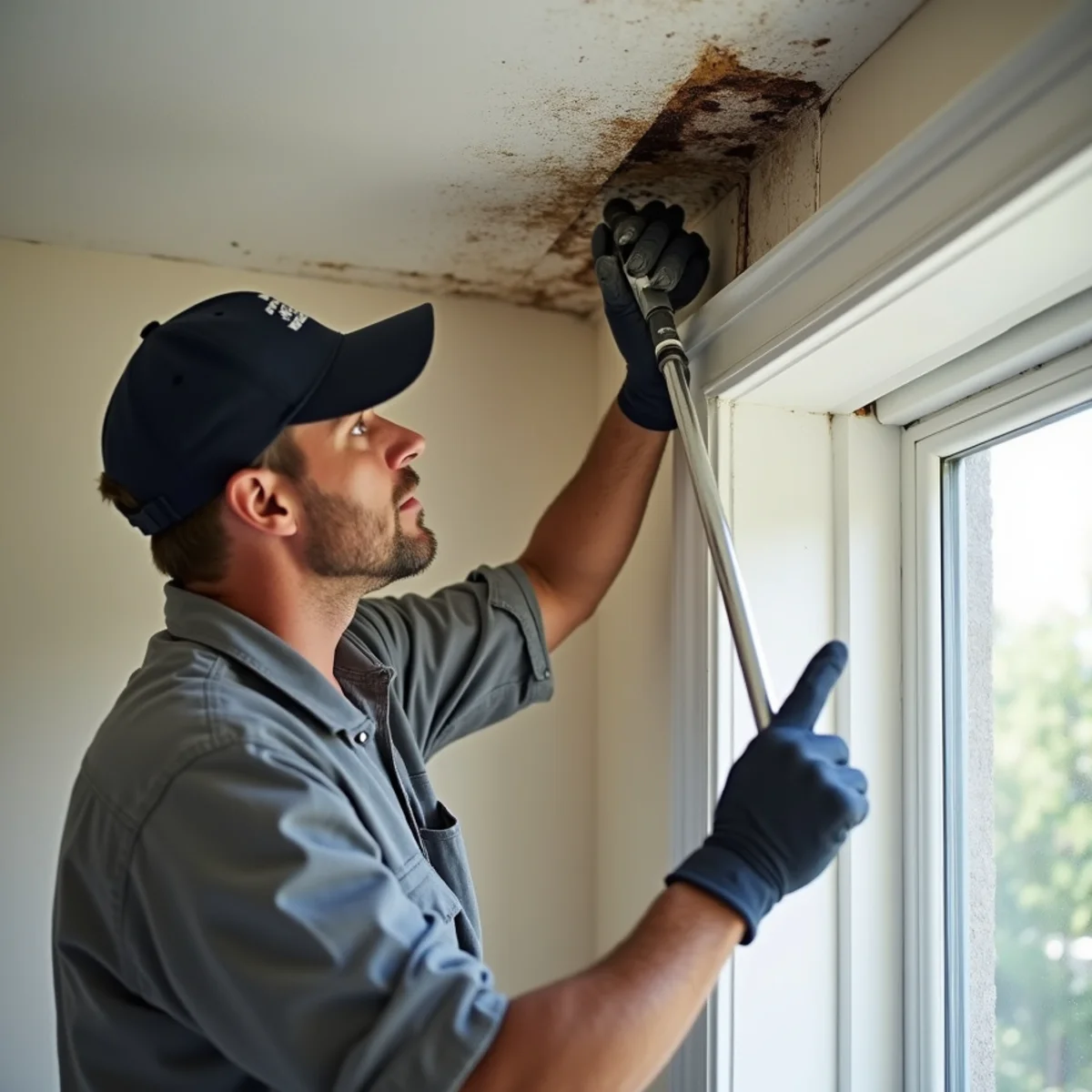
A ceiling stain is a message from whatever sits above it. Here is how to read it, test whether it is still wet, and decide what happens next.
A water stain on the ceiling means water reached the drywall or plaster at some point, either from a leak above (a bathroom, the roof, an attic air handler, a pipe) or from condensation. It is not always an emergency, but it always deserves a check: a stain that is growing, soft to the touch, or sagging is an active problem, while a dry, stable stain may be an old event that still needs its cause confirmed before any repair.
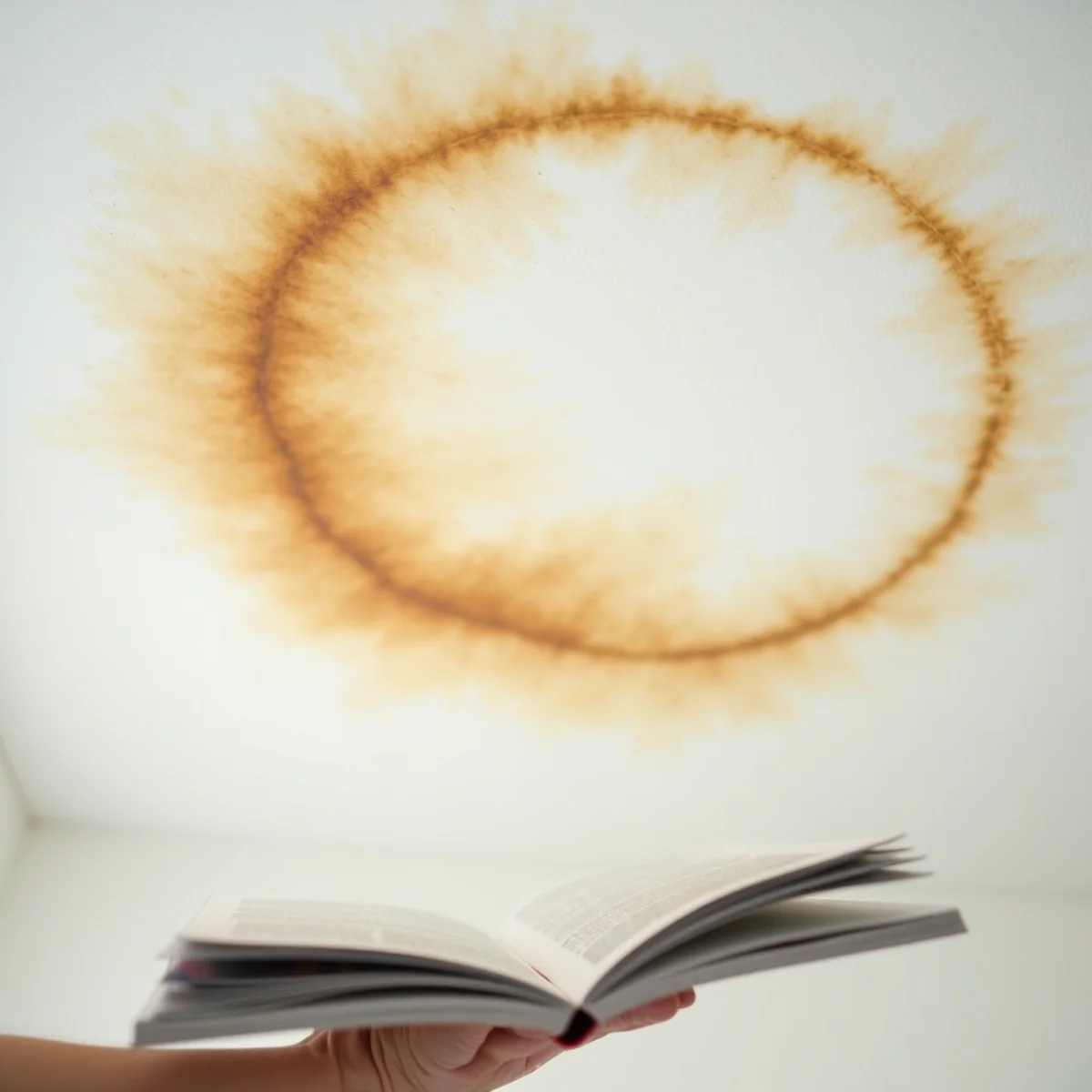
The brown or yellow ring you see is mostly minerals and tannins carried out of the drywall, wood framing and dust as the water evaporated. That is why stains often look darkest at the edge. It is also why the visible ring is usually smaller than the area that actually got wet. If the ceiling is soft, bulging or dripping, skip ahead to the safety section and then call for ceiling water damage repair so the source and the saturated material are handled together.
Should You Worry About a Water Stain on Your Ceiling?
Worry in proportion to what the stain is doing. A faint ring that has not changed in a year, sits under a bathroom that was re-caulked since, and reads dry on a moisture meter is a cosmetic job. A stain that appeared recently, darkens after showers or rain, or comes back after being painted means water is still arriving. Ongoing moisture in a ceiling cavity feeds mold on the back of the drywall and on joists, can rust fasteners and light-fixture boxes, and eventually weakens the board enough to sag. The EPA's moisture guidance recommends drying water-damaged materials within 24 to 48 hours to prevent mold growth, so an active stain is a short-clock problem.
What Causes a Water Stain on the Ceiling? Start With What Is Above It
The fastest diagnosis is geography. Stand under the stain and work out what sits directly above it, then a few feet in each direction, because water often travels along a joist or pipe before it drops.
Under a bathroom or kitchen
This is the most common pattern. Typical sources are a failed wax ring under the toilet, cracked grout or caulk at a tub or shower, a leaking shower valve or drain, or a supply line under a vanity or sink. A useful clue is timing: if the stain gets wetter only after someone showers, suspect the tub surround or drain; if it stays damp all the time, suspect a pressurized supply line. In many Doelger-era homes the living floor sits over the street-level garage, so bathroom and kitchen leaks show up first on the garage ceiling, where they are easy to miss for months.
Under the roof or attic
Stains near exterior walls, around chimneys, skylights or plumbing vent pipes, or that grow after a storm point to the roof. Wind-driven coastal rain pushes water under flashing and through cracked vent boots that stay dry in calm weather, which is why a roof leak may only show during certain storms. If that is the pattern, roof leak water damage repair covers both the opening and the wet insulation and drywall below it.
Under an HVAC air handler, furnace or ductwork
High-efficiency furnaces and heat-pump air handlers produce condensate water, and when the drain line clogs or the drain pan rusts through, that water lands on the ceiling below. Uninsulated metal ducts in a cold attic can also sweat. A stain near a supply register or directly under an attic unit is a strong hint.
Near an exterior wall or window
Stains along the ceiling edge of an outside wall often trace back to a window head, a deck ledger, siding gaps or a gutter overflowing behind the fascia. Water enters the wall, runs down to a header, and spreads sideways into the ceiling.
Ceiling water stain but no leak
When nothing above is plumbed and the roof is sound, condensation is the usual answer. Warm, moist indoor air from showers, cooking and drying laundry rises into a cool attic and condenses on the underside of the roof sheathing or on nails, then drips onto insulation and drywall. In the fog belt this is common: long stretches of damp marine air, attics with blocked soffit vents, and bath fans that vent into the attic instead of outdoors all add up. These stains tend to be scattered small spots or a spread-out shadow rather than one sharp ring, and they are worse in late winter.
| Where the stain is | Likely source | First check |
|---|---|---|
| Under a bathroom | Toilet seal, tub or shower surround, drain, supply line | Does it get wetter after showers or flushes? |
| Under the roof, near a vent or chimney | Flashing, vent boot, damaged shingles | Does it change after rain or wind? |
| Under an attic furnace or air handler | Clogged condensate line or rusted drain pan | Is the pan holding water or the line backed up? |
| Edge of an exterior wall or window | Window head, siding, gutter overflow | Is the stain worse on the storm-facing side? |
| Scattered spots, top floor, no plumbing above | Attic condensation | Is there frost or dampness on the attic sheathing or nails? |
Old Stain or Active Leak? How to Tell
This is the question that decides everything else, and you can make real progress on it yourself:
- Press gently around the stain with a fingertip. Firm board is a good sign; soft, spongy or cool-and-damp board means water is present now.
- Trace the outer edge of the stain lightly in pencil and write the date beside it. Check again in a few days and after the next rain or heavy shower. Any growth past the line means the leak is active.
- Use the fixtures above on purpose. Run the shower for ten minutes, fill and drain the tub, flush the toilet several times, then recheck the stain and the pencil line.
- If you own an inexpensive pin or pinless moisture meter, compare a reading in the center of the stain with a reading on clean ceiling a few feet away. A clearly higher number in the stain means it is still wet.
- Look in the attic if you can do it safely, stepping only on joists. Wet or matted insulation, dark streaks on the sheathing, or a rusty drain pan above the stain answer the question quickly.
A stain that is dry, stable and traceable to a source that has already been fixed is a cosmetic repair. Anything else is an active leak, and the ten warning signs of a hidden water leak are worth reading alongside this check, because a ceiling stain is often one of several clues.
What to Do Right Now
- If water is dripping, put a bucket under it and move furniture, rugs and electronics out of the area.
- If water is near a light fixture or ceiling fan, switch that circuit off at the breaker and leave the fixture alone.
- Stop using the bathroom or appliance above until the source is known. If you suspect a supply line, close the fixture shutoff or the main valve.
- Photograph the stain with something for scale, and keep photos of the pencil-line checks. They help with any insurance claim.
- For condensation stains, run bath and kitchen fans, keep the attic hatch closed, and check that bath fans vent outdoors.
Why Painting Over a Water Stain Is the Wrong First Move
Ordinary latex paint does not hold back water stains; the tannins bleed through within days, so the stain reappears. More importantly, painting hides the only evidence you have that a leak is still running. The right order is: fix the source, confirm the drywall and framing are dry with a meter, replace any board that is soft or moldy, then seal the stained area with a stain-blocking primer (shellac-based or oil-based primers are the usual choice) before matching the ceiling paint and texture. Priming a damp ceiling traps moisture behind a sealed film, which is a reliable way to grow mold you cannot see.
When It Needs a Professional
- The stain is growing, soft, sagging or dripping.
- You cannot identify the source, or the source is inside a wall or ceiling cavity.
- There is a musty smell or visible mold on the ceiling surface or in the attic.
- The stain is near wiring, a light fixture or a smoke detector.
- It is a condo or a unit with neighbors above, where the source may be in someone else's space.
A hidden source is where non-invasive leak detection earns its keep: thermal imaging and moisture mapping find the wet area and the path the water took, so only the necessary section of ceiling gets opened.
What Ceiling Water Damage Repair Usually Involves
Scope depends on how wet the cavity got. A small, dry, sound stain is a prime-and-paint job once the source is fixed. A wet but firm ceiling can often be dried in place with air movers and dehumidifiers, sometimes with small holes drilled to vent the cavity. Sagging, crumbling or moldy board, and soaked insulation above it, are cut out and replaced, then the new drywall is taped, textured and painted to match. For more on that decision, see our guide on whether wet drywall can be saved.
Not sure whether your ceiling stain is old or active? Call (201) 277-9344 for a free inspection. We will meter the ceiling, trace the source, and tell you plainly whether you are looking at a paint job or a repair.
Frequently asked questions
Not necessarily. The brown color comes from minerals and tannins left behind as water dries, and a single short event that dried quickly may never grow mold. The risk rises when the ceiling stayed wet for more than a day or two, when the stain keeps getting rewetted, or when insulation above it stayed damp. Fuzzy spots, black or green speckling, or a musty smell near the stain are the warning signs. If any of those are present, the back side of the drywall and the framing above it should be inspected, not just the painted surface.
Yes. Water can sit in insulation or on top of the drywall for days before it soaks through enough to show, and some stains only become visible as the material dries and the minerals concentrate at the edge. That delay is why a stain sometimes appears after a storm has passed or several days after a plumbing repair. A meter reading tells you whether the area is still wet today, which matters more than when the stain first showed up.
It depends on the cause and the policy. Many California policies cover sudden and accidental water damage, such as a supply line that bursts, but exclude damage from long-term seepage, wear and tear, or poor maintenance. Roof leaks are often judged on whether the opening was caused by a covered event like wind. Document the stain, the source and the date you noticed it, then read our guide to [filing a water damage insurance claim](/blog/how-to-file-water-damage-insurance-claim/) before you call your carrier.
A lightly wet ceiling under controlled drying with air movers and dehumidifiers is usually a matter of days, while a saturated ceiling with wet insulation above it takes longer and often means removing the insulation. Without equipment, a ceiling cavity can stay damp much longer than the surface suggests. The finish line is a meter reading that matches unaffected drywall nearby, not the stain looking dry. Our article on [how long water damage takes to dry](/blog/how-long-does-water-damage-take-to-dry/) covers the variables in more detail.