Sewage water carries bacteria and viruses. Before you touch anything, read these safety steps.
If sewage backs up in your home, treat it as a biohazard, not a mess. Get everyone and every pet out of the area, avoid all contact with the water, stop using every drain, shut off the HVAC, and call a certified crew before you touch anything. Do not mop it, and do not try to disinfect it yourself.
A sewage backup is not a plumbing inconvenience. When wastewater rises through a floor drain, a toilet, or a shower — carrying whatever was moving through the sewer line with it — you're looking at Category 3 water, the most contaminated class the IICRC defines. It can carry bacteria, viruses, and parasites, and the risk is real for anyone who touches the water or breathes the aerosols coming off it.
The instinct is to grab a mop and a bottle of bleach and start. Don't. The right first move is to put distance between your family and the contamination and keep yourself out of contact until it's handled the right way. Here's how to stay safe in the minutes and hours after a backup, and why this is one job you genuinely should not take on yourself.
First, understand what you're dealing with
The IICRC — the standards body our technicians are certified under — sorts water damage into three categories by how contaminated it is. Category 1 is clean water from a broken supply line. Category 2, "gray water," is dirty but not grossly contaminated, like a washing-machine or dishwasher discharge. Sewage is Category 3, "black water," and it's handled as a biohazard for good reason: it can carry E. coli and other bacteria, hepatitis A and other viruses, and parasites, any of which can cause serious illness through skin contact, hand-to-mouth transfer, or breathing contaminated mist. Time makes it worse. Under S500, category isn't fixed — clean or gray water left standing degrades toward Category 3 as bacteria multiply and temperature rises, which is one reason a backup is never something to sit on overnight.
The immediate safety steps
- Get everyone out of the affected area first — especially children, older adults, pregnant family members, and anyone with a weakened immune system or a respiratory condition.
- Keep pets well clear; animals are drawn to the smell and track contamination room to room on their paws.
- Do not touch the water or any wet surface with bare skin, and don't walk through it and then across dry flooring — you'll spread it on your shoes.
- Stop using every drain, toilet, sink, tub, and water-using appliance in the house so nothing sends more water toward the backup.
- Shut off the water supply to the affected fixture, or the main, if water is still rising.
- Turn off your HVAC system at the thermostat so it doesn't pull contaminated air into the ductwork and carry it through the house.
- Crack a single window in the affected room to ventilate that space, but keep interior doors closed to contain the air.
- Call a certified sewage cleanup crew before you attempt any cleanup — the sooner the extraction starts, the less soaks in.
Don't run the HVAC, and don't spread the air
A running furnace or air handler will draw the contaminated, odor-heavy air off the backup and push it through the whole house by way of the ducts, seeding bedrooms and living space with aerosols and settled contamination that are far harder to clean than the puddle itself. Shut it off at the thermostat and leave it off. Close the doors to the affected room and open just one window there, rather than throwing the house wide open — the goal is containment, keeping the bad air in one place instead of drafting it everywhere. When we arrive, we build on that with real containment: poly barriers and negative-air machines with HEPA filtration that hold the contaminated zone under negative pressure so nothing migrates while we work.
Why DIY sewage cleanup is genuinely dangerous
This is not a job for a mop, a shop vac, and a jug of bleach. Household bleach doesn't reliably disinfect porous materials, a shop vac can't extract contaminated water safely or fully, and neither touches the real hazard — what you can't see. Pathogens survive on surfaces for days. Black water wicks up into the paper face of drywall and down into subfloor and pad, well past the visible edge of the spill. And every trip across the house with a wet mop spreads contamination on your shoes and tools. Porous materials that soaked up Category 3 water — carpet, pad, drywall, insulation, MDF trim — generally have to be cut out and disposed of, not cleaned, because there's no way to verify they're truly decontaminated inside. Professional sewage cleanup means containment, extraction with truck-mounted equipment, controlled removal of unsalvageable materials, HEPA vacuuming and antimicrobial treatment of what stays, and disinfection to IICRC S500 — followed by thorough water extraction and drying so nothing stays wet long enough to become the next problem.
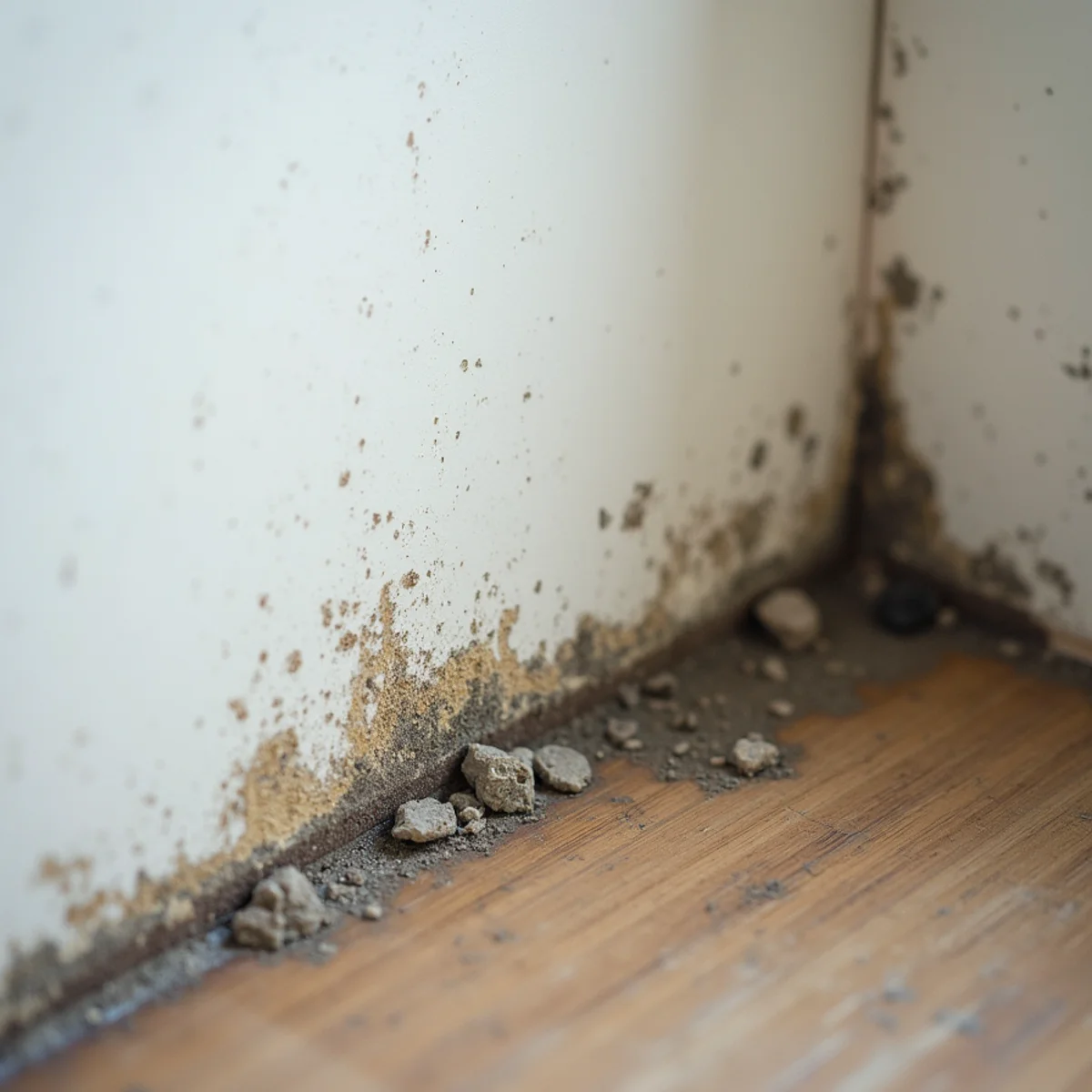
Left wet, that same material becomes a mold problem within 24 to 48 hours, which is why mold removal and remediation is often folded into a complete sewage recovery. Fast, certified response beats a weekend of scrubbing that leaves contamination behind the baseboards and moisture in the subfloor — the two things a mop can never reach.
Why older Daly City neighborhoods see more backups
Backups usually start in the sewer lateral — the pipe that carries waste from your house to the city main. In Original Daly City around Top of the Hill, some of the oldest homes in town still run vintage clay or cast-iron laterals that crack, sag into low spots that hold water, and open at the joints for tree roots to invade — and roots are the single most common cause of a blocked lateral. In Colma, a high water table and creek influence can saturate the ground and overwhelm lines during heavy rain, pushing water back up through the lowest fixtures in the house. Atmospheric-river storms make both worse by loading the entire system at once, faster than it can drain.
If sewage has backed up in your home, treat it as the emergency it is: get everyone clear, keep out of all contact, and call for certified help right away. We answer live 24/7, arrive in about 60 minutes, and handle the entire job — containment, extraction, controlled demolition of unsalvageable materials, disinfection to standard, and structural drying — so your home is genuinely safe again, not just dry on the surface. Call Water Damage Daly City at (201) 277-9344.
Frequently asked questions
It's genuinely hazardous, and caution is the correct response. Sewage is Category 3 "black water" that can carry bacteria, viruses, and parasites capable of causing serious gastrointestinal and respiratory illness through contact or inhaled aerosols. Keeping people and pets away and avoiding contact until certified technicians arrive isn't overcautious — it's exactly what the standards call for.
No. Household bleach doesn't reliably disinfect porous materials like drywall, carpet, and subfloor, and it does nothing about the water that has wicked into the structure past the visible edge. Contaminated porous materials generally have to be removed, and proper disinfection needs EPA-registered antimicrobials, containment, and protective equipment — not a mop and a spray bottle.
The usual causes are a blocked or root-invaded sewer lateral, a collapsed or cracked old pipe, grease and debris narrowing the line, or a city main overwhelmed during heavy rain. Older Daly City homes still running original clay or cast-iron laterals, and low-lying, high-water-table areas like Colma, see it most.
Standard homeowners policies often exclude sewer or drain backup unless you've added a specific backup endorsement, so it's worth checking your declarations page now rather than after a loss. When there is coverage, thorough documentation matters. We photograph and moisture-map everything, itemize what has to be removed and why, and bill most carriers directly to keep the claim moving.