
Water Damage Restoration in Visitacion Valley, San Francisco, CA
Answered live 24/7 Free inspection Direct insurance billing
Get a Free Estimate
Use the form or call our 24-hour hotline at (201) 277-9344.
- 24/7 Emergency Service
- Free On-Site Inspection
- Direct Insurance Billing
- Local Daly City Crews
Water damage restoration in Visitacion Valley, San Francisco
When the rain comes hard, the flatter blocks of Visitacion Valley are where the water wants to sit. There is nowhere for it to run off quickly, so it pools against foundations, backs up at clogged street drains, and works its way into garages and ground-floor rooms. What starts as a puddle in the driveway at dinnertime can be an inch of standing water in the house by morning.
Visitacion Valley is a San Francisco neighborhood — not Daly City — tucked between McLaren Park and the Cow Palace in the city's southeast corner, near the Bayshore flats and the county line. Its low-lying, relatively flat terrain is the local wrinkle: unlike the steep hills that surround it, the valley floor does not shed water on its own. Heavy storms and overwhelmed storm drains push runoff toward homes on the low blocks along Leland Avenue and Bayshore Boulevard, and the older housing stock's aging plumbing adds hidden indoor leaks on top of the outdoor water.
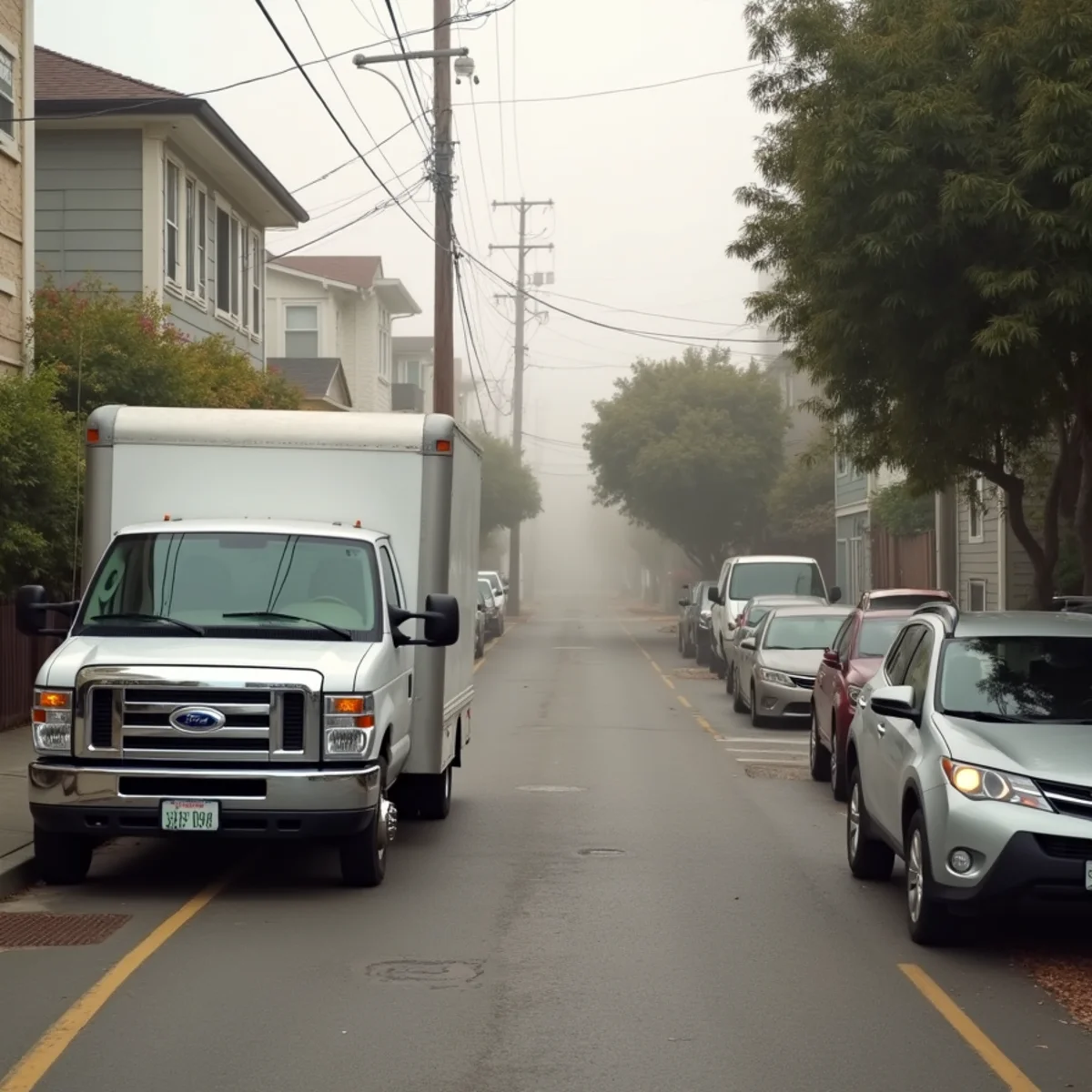
We are a local restoration crew based nearby in Daly City, a quick run to Visitacion Valley by way of the Bayshore corridor. Call (201) 277-9344 at any hour and a live voice answers. We arrive with submersible pumps and truck-mounted extractors to move the standing water fast, then air movers and LGR dehumidifiers to dry the structure — and when it is storm or drain water, we sanitize what the flooding touched to standard rather than sealing contamination inside a drying wall.
ZIP codes served: 94134
Areas & landmarks we cover
McLaren Park · Cow Palace · Leland Avenue · Bayshore Boulevard
What makes Visitacion Valley homes vulnerable
Local housing, terrain, and climate shape the water damage we see here.
Flat, low-lying blocks
Much of Visitacion Valley sits on the flat valley floor rather than a hillside, so water does not shed away the way it does on the surrounding slopes. In a hard rain, runoff collects on the low blocks and finds the nearest garage door or ground-floor opening instead of draining to the street, which is why the same handful of addresses tend to flood storm after storm.
Drainage and storm exposure
When the storm drains along Leland Avenue and Bayshore Boulevard clog with debris or simply back up under a heavy load, the water has nowhere to go and pools against foundations. The neighborhood's proximity to the Bayshore flats means the water table sits high here too, so groundwater and surface runoff both play a part in what we end up pumping out of a garage.
McLaren Park and the Cow Palace
The neighborhood wraps around the southern edge of McLaren Park and sits beside the Cow Palace arena near the Daly City border. Runoff coming down off the park's higher ground adds to the load on the valley's flatter streets during a big storm, concentrating water on the low blocks that can least afford it.
Common causes of water damage in Visitacion Valley
Storm flooding and pooling runoff
Heavy winter rain and atmospheric-river systems overwhelm the flat terrain and the clogged street drains, sending water toward garages and ground-floor rooms. We pump out the standing water, extract what has soaked into flooring and the lower walls, and dry the structure with air movers and dehumidifiers before it can rot framing or grow mold in the days that follow.
Drain backups
When area and street drains cannot keep up, water backs up into low garages and basements from below. Because backed-up storm and sewer water can carry sewage and other contaminants, we treat it as a Category 3 health hazard — extract it, remove the ruined porous materials, and sanitize the space with an EPA-registered antimicrobial before drying.
Groundwater and foundation seepage
On the low-lying blocks, saturated ground pushes moisture through foundation walls and slab-on-grade floors from underneath. It shows up as a persistently damp garage floor, white efflorescence crusting on the concrete, and a musty smell in ground-floor rooms — we dry it out and address the moisture path where the construction allows.
Aging indoor plumbing
The older homes here still carry decades-old supply and drain lines that leak and burst like anywhere else in the city. Combined with the outdoor water risk, a hidden pipe leak in a Visitacion Valley home tends to stay damp longer in the low, humid air, so prompt drying matters even more here to stay ahead of mold.
Visitacion Valley homes and water damage
Visitacion Valley spans a wider range of construction than most of southern San Francisco. Early-1900s cottages remain near Leland Avenue, 1940s and 1950s stucco homes line the streets climbing toward McLaren Park, and small single-family houses fill the pocket along Bayshore Boulevard known as Little Hollywood. Large public housing sites are being rebuilt, and new townhomes and condominiums are rising on former industrial land near Bayshore. Those differences change the water risks. The older hillside homes are raised over garages and ground-floor rooms that sit near or below the street, while many newer buildings rest on concrete slabs and stack units over one another, so a single failed riser or window flashing defect can reach several homes and bring an HOA into the claim.
When water damage tends to happen in Visitacion Valley
Southerly storm winds
The strongest winter storms tend to arrive with gusty southerly winds, and in the open southeast of the city those gusts drive rain hard against south-facing walls, garage doors and sliding glass doors. Water gets past worn door sweeps and dried-out window caulk, and it is easy to mistake for a roof leak until you notice it only happens on windy storm days.
Windy summers and clogged drains
Visitacion Valley sees more sun than the fog belt, but summer afternoons are windy, and that wind piles leaves, dust and litter into curbside catch basins, area drains and gutters. Months of buildup go unnoticed until the first storm of fall, when the drains that should carry runoff away from the flatter blocks are already half blocked.
A new building's first wet winters
Newer townhomes and condos usually reveal construction defects during their first heavy rains. Gaps in window and deck flashing, door thresholds set too low, or roof drains that were never connected show up as stained drywall under a window or a wet patch beside a sliding door. Tracking where and when it happens helps the HOA and builder find the cause.

Protecting a Visitacion Valley home from water damage
- Look up your address on the SFPUC's 100-Year Storm Flood Risk Map so you know whether your block is in a mapped deep-flooding area before storm season.
- Pick up free sandbags through San Francisco Public Works ahead of a forecast storm if your garage door faces a low street.
- Adopt the storm drain in front of your house through the city's Adopt a Drain program and clear it after windy days and before rain.
- In a townhome or condo, read the HOA documents now to see who maintains windows, decks and plumbing risers, so a leak does not stall over who calls whom.
- Keep tools, paper records and electronics off the floor of a ground-level garage; use shelving or plastic bins set on blocks.
Water utility for Visitacion Valley
San Francisco Public Utilities Commission (SFPUC)
Visitacion Valley's water and combined sewer are SFPUC systems. The SFPUC's searchable 100-Year Storm Flood Risk Map shows whether your block is expected to see deep flooding in an intense storm. Report standing water on Leland Avenue or Bayshore Boulevard, a sewer backup from the street or a clogged catch basin through 3-1-1. Properties just over the line in Brisbane or Daly City have different providers, so check your bill.
Why Visitacion Valley chooses Water Damage Daly City
We reach Visitacion Valley quickly by way of the Bayshore corridor from our Daly City base and dispatch a crew to homes near McLaren Park or Leland Avenue as soon as you call, even in the middle of a storm. Call (201) 277-9344 and we roll out at once — storm nights are exactly when we expect the phone to ring.
Fast response to Visitacion Valley
We’re local, so we reach Visitacion Valley quickly and start extracting water before it spreads — day or night, 24/7.
Drying verified with readings
We measure moisture with meters and thermal imaging and log daily readings, so Visitacion Valley homes are dried to a real target, not a guess.
We bill your insurance directly
We document the loss to insurer standards and work with your carrier, so the claim is one less thing to manage.
We know Visitacion Valley
From the local housing and terrain to the weather that drives leaks and floods, we know what causes water damage here — and how to fix it for good.
Our services in Visitacion Valley
We’re minutes from Visitacion Valley
We reach Visitacion Valley quickly by way of the Bayshore corridor from our Daly City base and dispatch a crew to homes near McLaren Park or Leland Avenue as soon as you call, even in the middle of a storm. Call (201) 277-9344 and we roll out at once — storm nights are exactly when we expect the phone to ring.
Call (201) 277-9344 any time — a real person answers, and we’ll dispatch a crew right away.
Helpful Reading
What to Do in the First 24 Hours After Water Damage in Your Daly City Home
The first day decides how much you lose. Here’s exactly what to do — and what to avoid — in the first 24 hours after water damage in Daly City.
Read article
Atmospheric Rivers on the Peninsula: Flood Preparedness for Daly City Residents
The “Pineapple Express” storms are hitting harder and wetter. Here’s how Daly City homeowners can get ahead of the next one.
Read articleVisitacion Valley water damage questions
The neighborhood sits on flatter, low-lying ground, so rainwater does not drain away quickly the way it does on the surrounding hills. When the street and storm drains back up under a heavy rain, runoff pools against foundations and pushes in through garage doors and ground-floor openings — and a high local water table means saturated soil adds to it from below.
It can be. Backed-up storm and sewer water may carry sewage, bacteria, and other contaminants, so we treat it as a Category 3 health hazard rather than clean water. We extract it, remove the porous materials that cannot be disinfected, and sanitize the area with an EPA-registered antimicrobial before drying, instead of sealing contamination behind a dry-looking wall.
Yes. Storms are when we are busiest, and we run to Visitacion Valley from our nearby Daly City base by the Bayshore corridor, which tends to stay passable when other routes flood. A real person answers (201) 277-9344 around the clock and dispatches a crew right away, even on the worst nights, with a real arrival estimate on the phone.
We cover Visitacion Valley regularly. It sits just across the line from Daly City near McLaren Park, the Cow Palace, and Leland Avenue, so it is well within the area our crews serve every day. You get a local team that already knows the neighborhood, not a franchise dispatched from across the region.
Visitacion Valley has a lot of older homes stepped along the hillside toward Bayshore Boulevard, and their aging plumbing and finished ground-floor rooms are the usual sources of damage. On top of that, the low-lying blocks near the valley floor take on storm and drain water in heavy rain, which can push gray or black water into garages and lower levels. We handle both the clean-water pipe failures and the dirtier storm-related flooding, drying and disinfecting as the situation calls for.
The SFPUC runs a Floodwater Grant Program for San Francisco property owners who have experienced flooding from the public right-of-way or sewer backflow during heavy rain. You submit an interest form describing the flooding, the grant team visits the property, and you receive an assessment of possible projects, which can include flood barriers and backflow protection, before formally applying. Details and current terms are on the SFPUC's [Floodwater Grant Program page](https://www.sfpuc.gov/programs/grants/floodwater-grant-program).
In most condo and townhome communities, the association maintains common elements such as risers, roofs and exterior walls, while each owner handles their own unit's fixtures and interior finishes. The governing documents decide where that line falls. Stop the water if you can, notify the HOA in writing and photograph everything. Our [condo water damage service](/services/condo-water-damage/) covers drying when more than one unit is wet.
24/7 Emergency Response
Water damage in Visitacion Valley, San Francisco? We’re on the way.
Call now for a free inspection. A real person answers day or night and dispatches a crew right away.