The fire is out and the questions start. Here's what to do, and what to leave alone, in the first three days, from the fire department's report to the first call with your insurer.
After a house fire, stay out until the fire department says it's safe, find everyone a place to sleep, and call your insurer the same day. Then secure the property against weather and break-ins, document everything before anything is cleaned or thrown away, and get the firefighting water out of the structure. Leave the soot, the HVAC system, and anything exposed to heat or smoke alone until a professional has assessed it.
The first days after a fire are disorienting, and the house is still changing: smoke residue keeps settling, firefighting water keeps moving into ceilings and subfloors, and the clock on corrosion and mold is running. What follows is a practical order of operations, drawn from guidance by the U.S. Fire Administration, the American Red Cross, and the California Department of Insurance, plus what we see on fire damage restoration jobs. If the flames stayed in one room but smoke traveled through the house, our smoke damage restoration page covers that side of recovery.
The First 72 Hours at a Glance
- Stay out until the fire department clears re-entry, and get medical care for anyone hurt.
- Line up a safe place to stay with family, friends, or the Red Cross.
- Get the incident details from the fire department before crews leave.
- Call your insurance company, get a claim number, and ask about living expenses.
- Secure the property: board up openings, tarp the roof, and let police know the house will be empty.
- Photograph and video every room before anything is moved or cleaned.
- Start extraction and drying of the firefighting water.
- Retrieve essentials only when it's safe, and leave soot-covered surfaces alone.
Hour One: Safety and Re-Entry
The American Red Cross is direct about this: stay out of a fire-damaged home until local fire authorities say it's safe to go back in. Hidden hot spots can rekindle, floors and stairs may be weakened, and the air inside can still hold smoke and fine soot. The USFA's recovery guide adds that floors and walls may not be as sound as they look, and that the soot and dirty water left behind can contain things that make people sick.
When you're cleared to go in, keep visits short, wear sturdy shoes, gloves, and a well-fitted N95-type mask, and keep children out. Frightened pets can bite or scratch; the USFA suggests leaving them with family, a friend, or a veterinarian while you're visiting or cleaning the house.
Utilities
Firefighters check whether water, electricity, and gas are safe, and they'll have unsafe utilities shut off or disconnected before they leave. Don't turn them back on yourself. Gas service should be restored by the utility, and wiring, panels, and outlets exposed to heat or water should be checked by a licensed electrician before power returns to those circuits.
Get the Fire Department's Incident Information
Your insurer will want to know which agency responded and the incident number. Ask the officer in charge for it before the crews leave, or at least note the date, time, and address so the record can be found later. In Daly City, fire and emergency response is provided by the North County Fire Authority, which also serves Brisbane and Pacifica; in the southern San Francisco neighborhoods, it's the San Francisco Fire Department. Call the responding agency's non-emergency line and ask how to request a copy of the fire incident report. Procedures differ, and if the cause is still being investigated, the report may take longer to obtain.
The USFA's printable After the Fire guide (FA-46) includes a one-page form for exactly this: the fire department's name and non-emergency number, the incident report number, the investigator's name, and your insurance policy number. Filling it in on day one saves a lot of searching later.
Call Your Insurer the Same Day
Report the loss as soon as you can, and write down the claim number, the adjuster's name, and every call. Questions worth asking on that first call:
- Is the damage covered, and what is my deductible?
- Does my policy cover living expenses while we can't stay in the house, and can you advance some of it now?
- Do you want me to use particular vendors for board-up, cleaning, or contents, or can I choose?
- What do you need from me before the adjuster's visit?
Temporary housing and additional living expenses
If the home isn't safe to live in, the "loss of use" or additional living expenses (ALE) part of a homeowners or renters policy may cover the extra cost of living elsewhere. The California Department of Insurance's residential property claims guide lists examples such as temporary housing, food costs, extra transportation to work or school, relocation and storage, and furniture rental, and notes that insurers usually advance money for these costs. Keep every receipt: you'll have to account for them, and advances count toward your final settlement.
If you need help tonight
Contact your local Red Cross chapter through its disaster relief and recovery services page. The USFA's guide points families toward the Red Cross, the Salvation Army, faith groups, and community organizations for help with food, clothing, medicine, and a place to stay, which matters most if you don't have insurance.
Secure the Property
A burned house is open to weather and to people. To vent smoke and check for hidden fire, firefighters often break windows and cut holes in the roof or walls. That's part of saving the house, but it leaves openings. Plywood over windows and doors and a tarp over roof openings keep rain and fog out and discourage break-ins. On the west side of Daly City and along the coast in Pacifica, wind-driven rain can push water through an open roof quickly, so tarping shouldn't wait for the adjuster's visit.
The CDI guide says policies may not cover additional damage if reasonable steps weren't taken to protect the property, and that insurers reimburse reasonable temporary repair costs when you keep receipts. It also advises against extensive permanent repairs before the adjuster has seen the damage. Board-up and tarping are exactly the temporary repairs that guidance describes. While you're at it, let the local police know the home will be vacant, and notify your mortgage lender or landlord.
Document Everything Before It's Moved
- Walk every room with video, including rooms that look untouched, and narrate what you see. Smoke damage in a closet or a back bedroom is easy to miss later.
- Photograph ceilings, the insides of cabinets and closets, HVAC registers, and the outside of the house, including the board-up.
- Don't throw anything out until the adjuster says it's fine; the CDI guide says this directly. Set ruined items aside and photograph them instead of hauling them to the curb.
- Start a contents list by room with brand, model, approximate age, and where you bought each item. Receipts, bank statements, and old photos help establish value.
- Keep a claim diary of calls, names, dates, and what was agreed.
Our guide on how to file an insurance claim is written around water losses, but its documentation steps carry straight over to a fire claim.
What Not to Do After a House Fire
- Don't wipe soot. Dry soot grinds into paint and fabric when you wipe it, and oily soot smears. Water and household cleaners can set stains permanently.
- Don't run the furnace or HVAC system. It pulls soot into the ductwork and blows it into rooms that weren't affected. Leave it off until the system and ducts have been inspected and cleaned.
- Don't use electronics or appliances that got wet or were exposed to heat or heavy smoke. Moisture and residue inside can cause shorts, so have them checked first.
- Don't eat food that was exposed. The Red Cross advises discarding any food exposed to heat, smoke, or soot. Replace medications that were exposed to high heat, and ask a pharmacist if you're unsure.
- Don't turn utilities back on yourself.
- Don't paint over smoke stains or use air fresheners to hide the smell. Odor sealed under paint tends to come back, and fragrance only masks it.
- Don't wash or dry-clean smoke-damaged clothing in bulk before checking with your adjuster; some fabrics need specific treatment, and the adjuster may want to see them first.
The Water Damage Nobody Expects
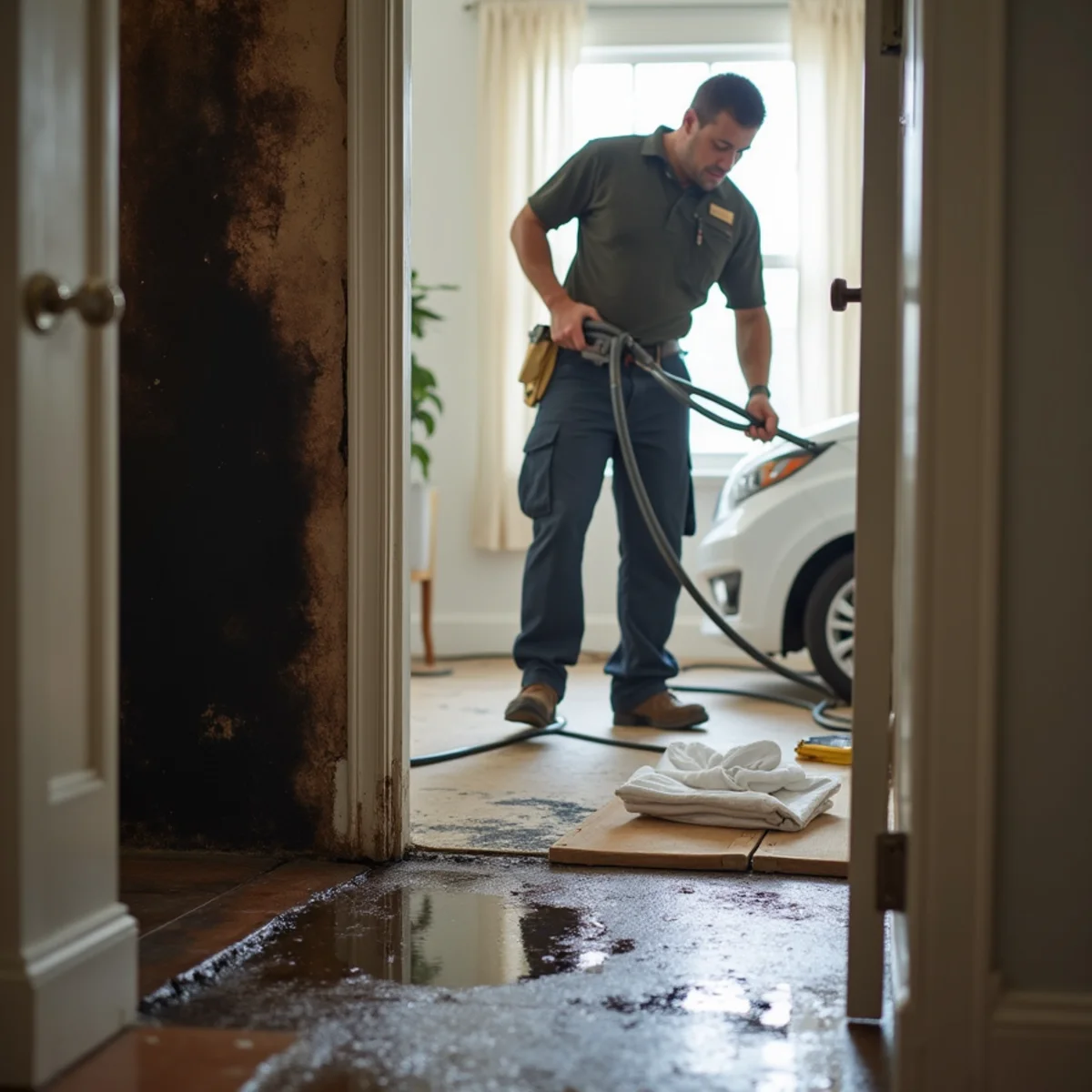
Most fire scenes are also water damage scenes. Hose streams and sprinkler heads put a lot of water into a house in a few minutes, and it goes where gravity takes it: into carpet and pad, down inside wall cavities, through ceilings into the rooms below, and into subfloors and crawl spaces. The EPA advises drying water-damaged areas within 24 to 48 hours to prevent mold growth. That window applies after a fire too, and it's easy to lose while everyone's attention is on the burn damage.
That's why fire restoration usually starts with extraction and structural drying, not soot cleaning. Wet, soot-laden drywall and insulation near the fire are generally removed; materials farther away that only got wet can often be dried in place if drying starts promptly.
Smoke, Soot, and That Smell
Smoke doesn't stay in the room where the fire was. It moves with heat and air pressure into closets, attic spaces, wall cavities, and ductwork, and leaves residue on surfaces that look clean. What kind of residue you get depends on what burned and how hot the fire was, and the right cleaning method depends on the residue.
| Residue | Usually from | What it's like | Why DIY cleaning backfires |
|---|---|---|---|
| Dry soot | Fast, hot fires burning paper and wood | Fine and powdery; goes airborne easily | Wiping grinds it into paint and fabric; it needs dry-sponge or HEPA-vacuum removal first |
| Wet (oily) soot | Slow, smoldering fires burning plastics and synthetics | Sticky, smeary, with a strong odor | Smears and spreads; needs degreasing cleaners matched to the residue |
| Protein residue | Kitchen fires that cook off food | Nearly invisible film, yellowish discoloration, stubborn odor | Easy to miss until the smell won’t leave; often needs specialty cleaners and sealing |
| Fuel-oil soot | An oil furnace or boiler malfunction (puff-back) | Dense, oily black film | Spreads through the HVAC system; usually needs professional cleaning of surfaces and ducts |
Soot residue can also be corrosive. Left on metal fixtures, appliance finishes, and some glass and stone, it can cause pitting and discoloration that gets harder to reverse over time, which is one reason early cleaning matters.
Getting smoke odor out
Odor lives in the residue and in porous materials, so real deodorization starts with removing the source: cleaning surfaces, removing charred materials, and cleaning the ductwork and replacing filters. What's left is treated with HEPA air scrubbing and methods such as thermal fogging or hydroxyl generators, and cleaned framing is often sealed before the rebuild to lock in any trace odor. Our odor removal service explains those methods in more detail.
Your Belongings: What to Pull Out and What to Leave
Contents often take longer than the structure. Furniture, clothing, books, electronics, and keepsakes usually sort into three groups: clean on site, pack out for specialized cleaning, or document as a loss. A contents pack-out moves salvageable items out of the house, inventories them room by room with photos, and cleans them off site while the structure is repaired, which also gives your adjuster an organized list to work from.
If you can safely retrieve a few things in the first days, prioritize medications, glasses and hearing aids, IDs and insurance papers, phones and chargers, keys, and irreplaceable photos or documents. The USFA's guide includes a list of records to replace if they were lost, from driver's licenses and passports to birth certificates, Social Security cards, and insurance policies.
When Can You Move Back In?
It depends on how far the fire, smoke, and water reached. A contained kitchen fire with light smoke elsewhere may mean days away from home; a fire that damaged framing, the roof, or the electrical system means a longer rebuild with permits. The general sequence is the same either way: stabilize and dry, clean or remove fire-damaged materials, deodorize, then rebuild. Utilities need to be cleared, smoke alarms working, and the air free of lingering odor before the house is comfortable to live in again. Once the inspection is done, your contractor should be able to give you a phased plan, and your adjuster will want that plan to track living expenses.
If you've had a fire in Daly City or nearby on the Peninsula, call Water Damage Daly City at (201) 277-9344 once the fire department has released the property. We'll do a free inspection, board up and tarp what needs it, start on the firefighting water before mold gets a foothold, and give you and your adjuster a written, room-by-room plan for soot, smoke odor, contents, and the rebuild.
Frequently asked questions
Only if the fire department says so, and even then it depends on the air and the utilities. A small, contained fire can still leave fine soot throughout the house, and smoke residue can irritate eyes and airways, especially for children, older adults, and people with asthma. If the power or gas was shut off, soot is visible beyond one room, or a smoke smell persists, staying elsewhere until cleaning is done is usually the more comfortable and cautious choice.
Without treatment it can linger for a long time, because odor-causing residue settles into drywall, insulation, carpet, upholstery, and ductwork and keeps releasing smell, especially on warm or damp days. Airing the house out helps only a little. The smell typically goes away for good only after the residue is cleaned or removed, the remaining odor is treated with methods such as HEPA air scrubbing, thermal fogging, or hydroxyl generators, and porous framing is sealed before the rebuild.
For anything beyond a small area, it's better not to. Dry soot smears when wiped, oily soot spreads, and household cleaners and water can drive residue deeper into paint and drywall, turning a cleanable surface into one that needs repainting or replacing. If you have to touch things before professionals arrive, wear gloves and a mask and limit it to retrieving what you need. A technician can test the residue and use dry sponges, HEPA vacuums, or degreasers suited to it.
Smoke damage from a fire next door often falls under the fire and smoke provisions of a homeowners policy, but the details depend on your policy and the insurer's assessment. Report it promptly, photograph residue and odor-affected areas (window sills, HVAC filters, and fabrics often show it first), and keep receipts for any cleaning or temporary relocation. Your adjuster may ask for a professional inspection to confirm how far the residue reached inside your home.