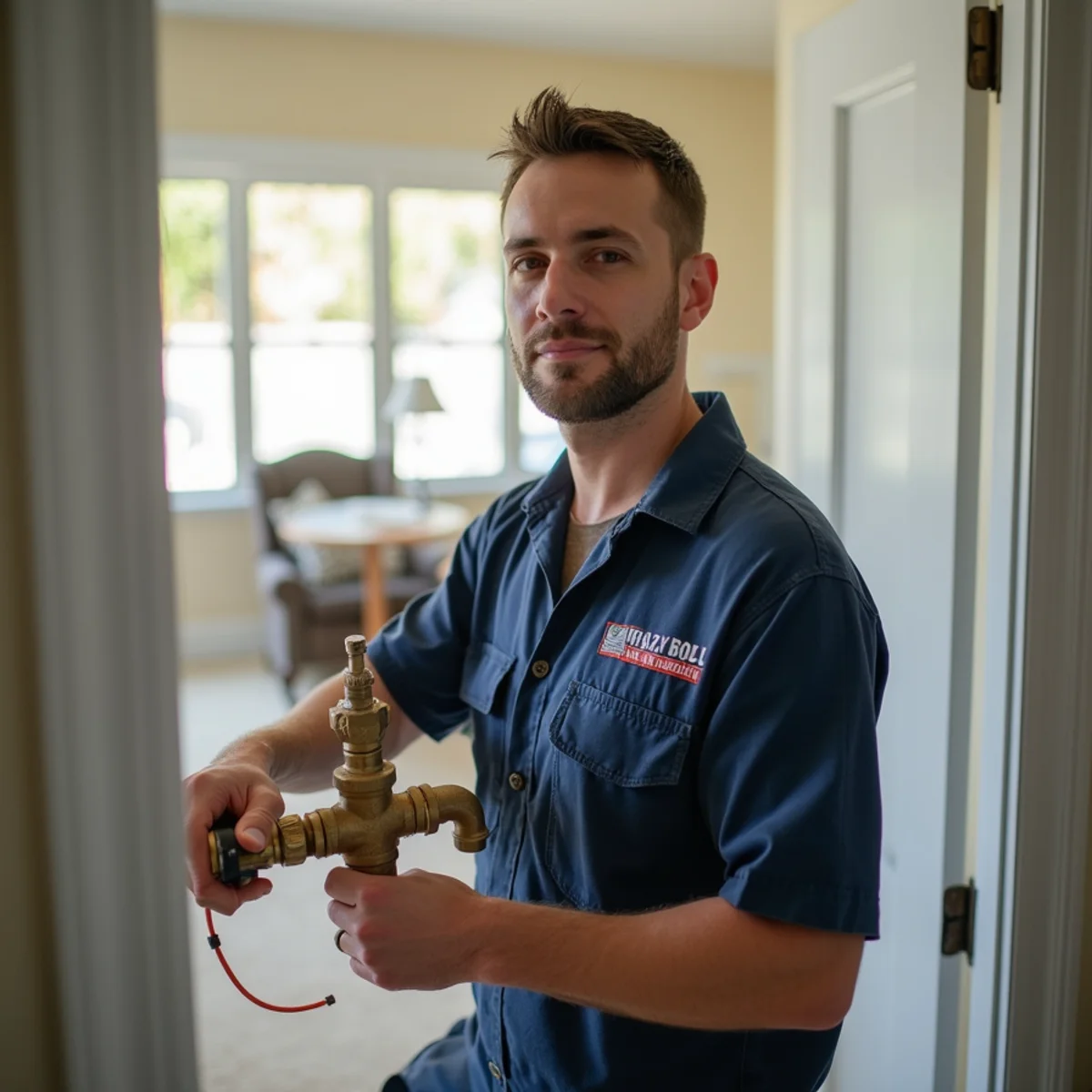
Warm floor spots, a spiking water bill, the sound of running water — Westlake’s slab homes have a hidden leak problem.
A slab leak is a leak in a water or drain line running through or beneath the concrete slab your house sits on. You catch it by its trail, not the water itself: a warm spot underfoot, a water bill that jumped for no reason, the faint sound of running water when everything's off, and damp or buckling flooring. In Westlake's mid-century homes, it's one of the most common calls we get.
Some water damage announces itself. A slab leak does the opposite. It happens under the concrete, out of sight and out of earshot for a while, and by the time the signs surface it has often been leaking for weeks — quietly saturating the subgrade and wicking up into your floors. That head start is exactly what makes it costly when it's missed.
The good news is that slab leaks leave a trail if you know how to read it, and they can be caught early, before they undermine flooring or feed mold under the house. Here's how they start, how they show themselves, and what finding and fixing one actually involves — the detection, the plumbing, and the drying that has to follow.
What a slab leak is
Many Daly City homes are built slab-on-grade — the house sits on a poured concrete slab rather than over a basement or a tall crawl space, and the copper or galvanized water lines and cast-iron drains run through or beneath that concrete. A slab leak is simply a failure in one of those embedded pipes. On the pressurized supply side, it can force water up through cracks in the slab and the flooring above; on the drain side, it seeps out below and saturates the soil under the house. Mid-century homes get them for a few reasons that stack on top of each other: original pipe that's corroded for decades, minor settling and shifting of the slab over the years, abrasion where a copper line rubs against concrete or rebar with every pressure cycle, and — this is the Bay Area — seismic movement that stresses and shears rigid old pipe. The San Andreas Fault runs right along the Daly City coast near Mussel Rock, and even small ground movement, repeated over decades, adds up to real strain on lines cast in concrete.
The warning signs of a slab leak
Slab leaks are subtle, but they're rarely fully silent. Watch for these, and take two or more together seriously:
- A warm spot on the floor — a hot-water line leaking under the slab heats the concrete and the finish above it, and you can often feel it barefoot before anything else shows.
- An unexplained jump in your water bill with no change in how you use water — a supply-side slab leak runs 24 hours a day.
- The sound of running or trickling water inside a wall or under the floor when every faucet and appliance is off.
- Cracked, buckling, cupping, or unexpectedly damp flooring, or tile and grout that have come loose over a specific area.
- A drop in water pressure as the leak bleeds off supply before it reaches your fixtures.
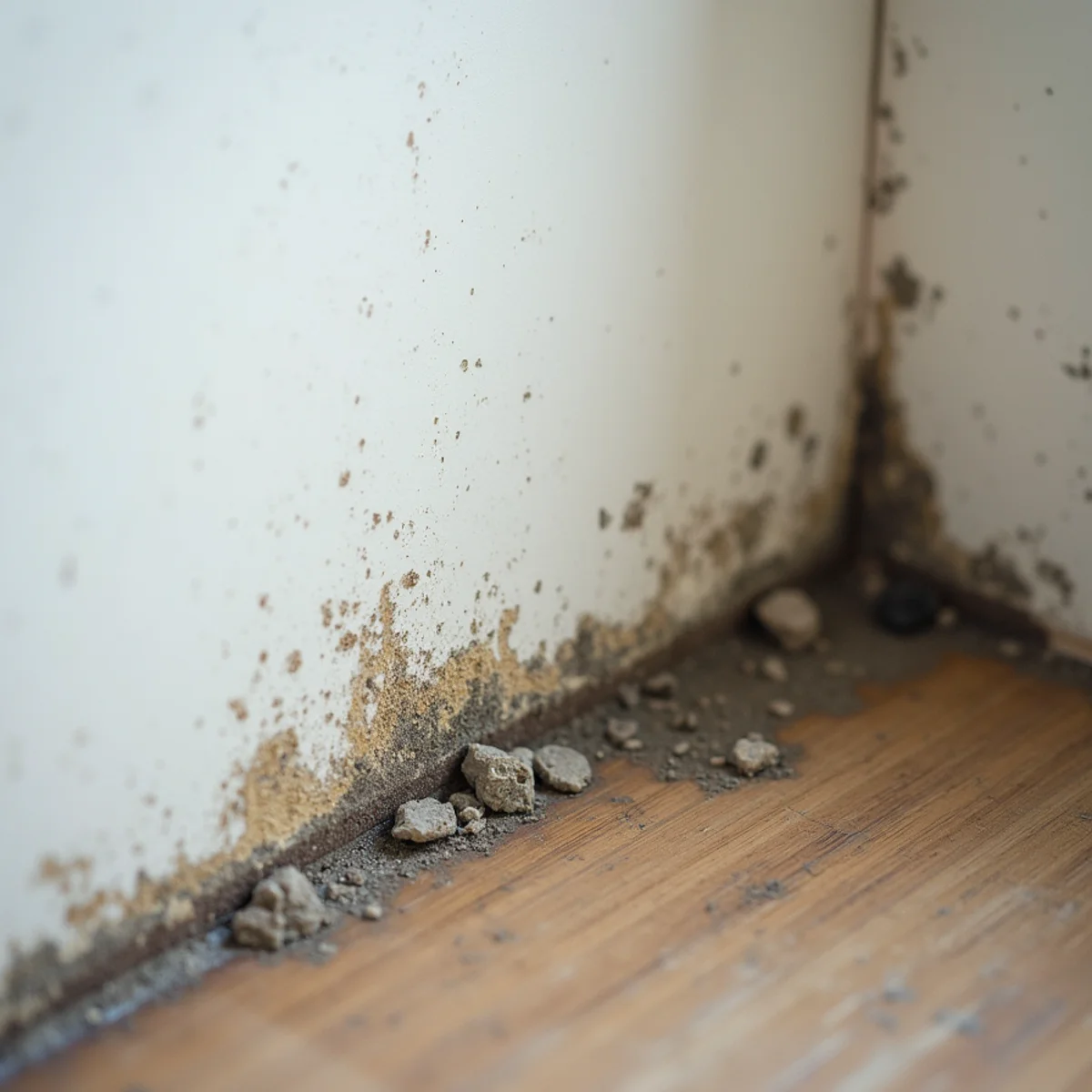
- A persistent musty smell or mold at the base of walls and along baseboards, fed by moisture wicking up out of the slab.
How a slab leak is detected
You don't find a slab leak by breaking up the floor and hoping. It's located first, then accessed in exactly one spot. Certified technicians use electronic acoustic listening equipment — sensitive microphones that pick up the hiss of pressurized water escaping under the concrete — to narrow the leak to within inches. Thermal-imaging cameras read the temperature signature of a hot-water leak spreading through the slab, and penetrating and non-penetrating moisture meters map how far the dampness has already traveled through flooring, subfloor edges, and the base of the walls. On a supply-side leak, a plumber may also pressure-isolate the hot and cold lines to confirm which one is failing. Pinpointing the exact spot is what keeps the repair small — you open the slab in one place instead of chasing it across the room. Fast, accurate detection is the first step in any slab leak water damage job, and it's what protects the rest of your floor from unnecessary demolition.
What repair and restoration involve
Once the leak is located, the plumbing fix is one of a few options: opening the slab at the leak to repair that section directly, rerouting the affected line above ground or through the walls to bypass the failed run, or, on a badly corroded system, a full repipe so you're not back in a year. That's the plumbing side. The restoration side is just as important and often overlooked, because a slab leak has usually left water in the flooring, the cut edges of subfloor, baseboards, and the lower few inches of drywall. That water has to come out and the structure has to be dried to a documented standard, or you've simply traded a leak for a mold problem behind the new finishes. The work typically runs like this:
- Locate and confirm the leak with acoustic, thermal, and moisture equipment before anything is opened.
- Coordinate the plumbing repair, reroute, or repipe to stop the source for good.
- Extract standing and absorbed water from flooring and affected materials with truck-mounted and portable extractors.
- Dry the slab, subfloor, and walls with air movers and LGR dehumidifiers, monitored daily with moisture meters until readings return to the home's dry standard — not just until it looks dry.
- Repair and rebuild — flooring, baseboards, drywall, and paint — back to pre-loss condition.
That drying and rebuild stage is where professional water extraction and full water damage restoration do the heavy lifting. "Dry" isn't a look or a smell — it's a moisture reading that matches unaffected material elsewhere in the house, and the leak is only truly fixed when the slab, subfloor, and framing around it read dry and sound again.
Why Westlake and its neighbors see so many
Westlake is the textbook case: thousands of slab-on-grade tract homes built in the same era, on the same kind of foundation, with the same aging galvanized supply and cast-iron drain lines cast right into the concrete. Add coastal ground moisture that keeps the subgrade damp and decades of small seismic movement from the nearby fault, and slab leaks become almost predictable here rather than surprising. The same holds in nearby areas like the Crocker neighborhood, where 1950s homes sit on comparable foundations with comparable pipe. It isn't that these are bad houses — they're good, old houses with old pipe in the least convenient place there is to reach it.
A slab leak rewards paying attention. Catch it at the warm-spot-and-high-bill stage and the fix stays contained to one opening in the slab; miss it and the water works its way into your floors, walls, and the soil under the foundation. If any of these signs sound familiar, don't wait to see whether they pass on their own — they don't. Call Water Damage Daly City at (201) 277-9344 for a free inspection. We locate the leak precisely, coordinate the repair, and dry your home back to solid.
Frequently asked questions
No. A slab leak is inside or beneath the concrete foundation and has to be pinpointed with acoustic and thermal equipment before anyone opens the slab — guess wrong and you break up floor for nothing. The detection, the plumbing repair or reroute, and the structural drying that follows all require professional tools and training. What you can do is watch for the signs and call early.
A few signs point specifically to the slab: a warm spot on the floor from a hot-water line, the sound of running water with everything shut off, damp or buckling flooring over one area, and a high water bill with no visible leak at any fixture. Any one alone can have another cause, but together they point down. Professional detection confirms it and marks the exact spot.
Left long enough, it can. Water escaping under the slab erodes and softens the supporting soil, which can let the concrete crack, settle, or shift, and it keeps the slab and the framing above it damp enough to invite rot and mold. Catching the leak early and drying the structure to standard is what prevents it from becoming a structural repair instead of a plumbing one.
Coverage varies by policy. Many California policies help with the resulting water damage and the cost to access the leak — the "tear-out and access" — even when they exclude the pipe repair itself, and sudden failures are usually treated more favorably than slow, long-term seepage that went unaddressed. Thorough documentation matters here. We moisture-map and photograph everything and bill most carriers directly.