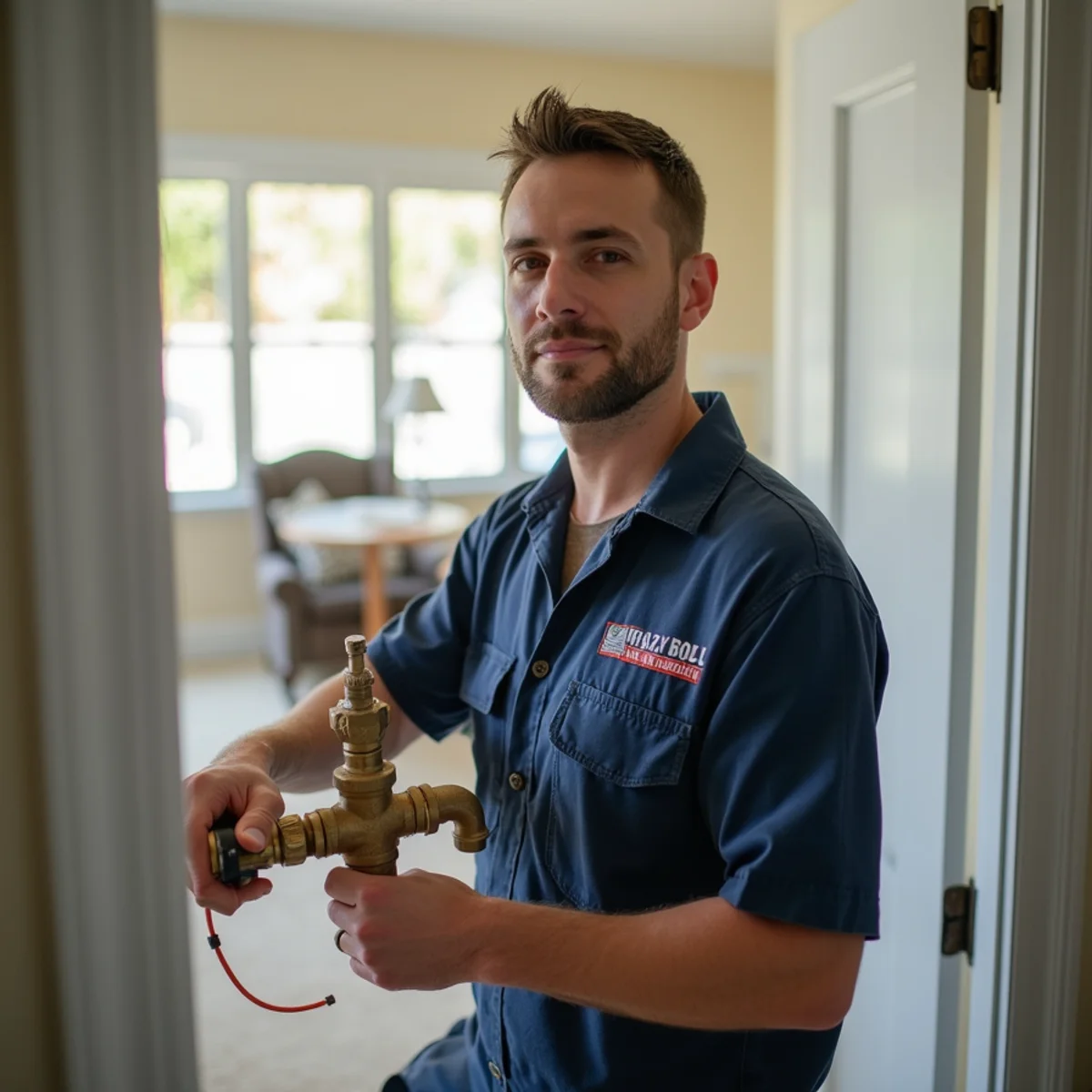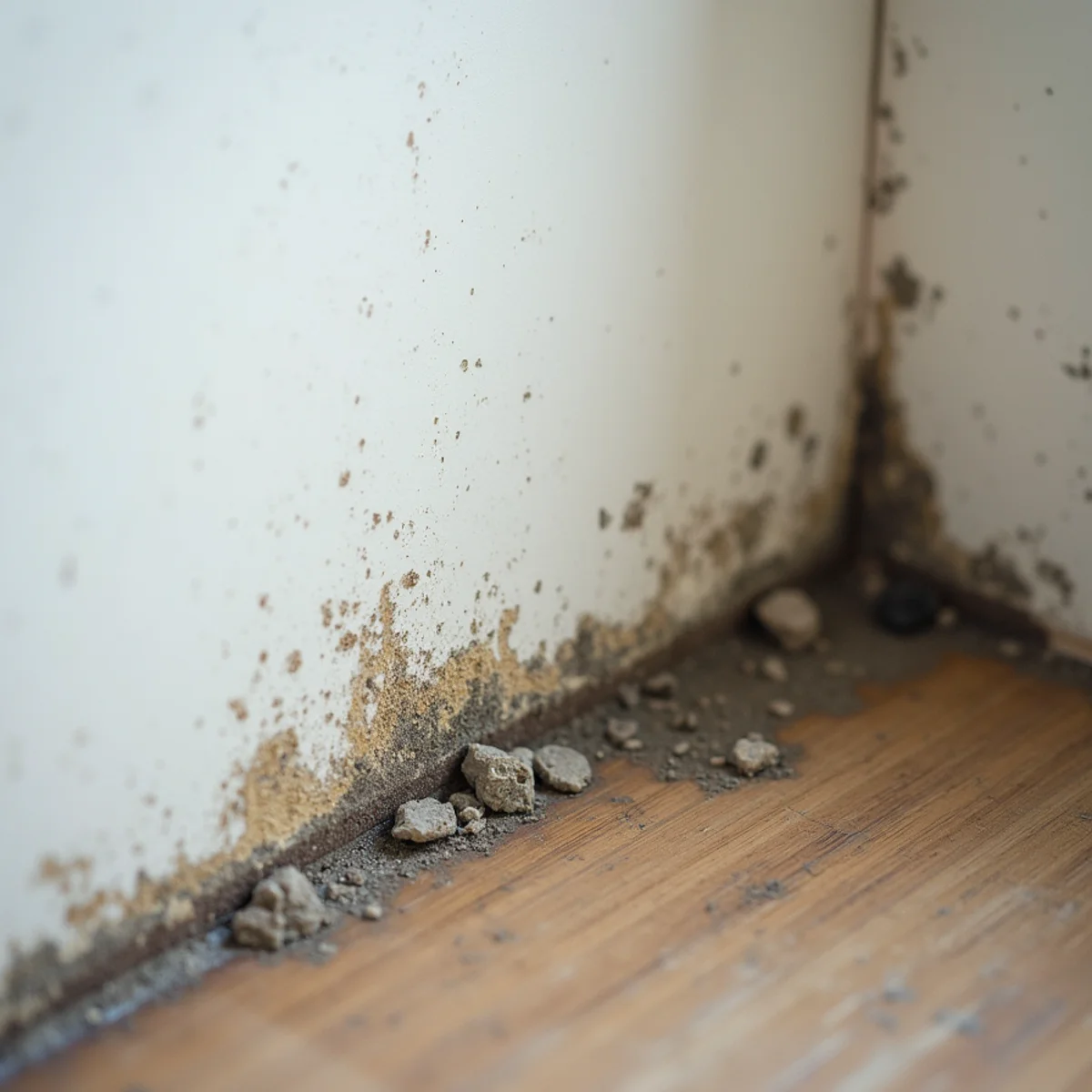
The “Little Boxes on the hillside” are aging in unison — and their original plumbing is reaching the end of the line all at once.
Doelger homes have a plumbing problem baked into their birthday. The galvanized-steel supply lines and cast-iron drains put in during the late 1940s and 1950s are now more than seventy years old, past their service life, and corroding out on roughly the same schedule across every street. When one lets go, it's rarely random — it's the neighborhood's plumbing aging in step.
If you've driven the hills of Westlake, you know the view: row after row of near-identical houses stepping up the slope, painted in that famous mix of colors. Henry Doelger built thousands of them, fast and affordable, and they gave the "Little Boxes" song its name. They're solid, well-framed homes. But they share a build date, and that means they share an expiration date on the parts nobody thinks about until water is coming through the ceiling.
The pipes are the part that comes due first. A Doelger home built in 1952 runs original plumbing that was never engineered to last this long, and across Westlake and the older tracts those systems are reaching the end of their run at once. That's not bad luck striking house after house. It's arithmetic — same materials, same crews, same few years in the ground.
Built together, failing together
When an entire tract goes up in the same handful of years with the same materials and the same plumbers, the whole neighborhood ages as one. The galvanized supply lines that were code then all began corroding on the same clock. The cast-iron drain lines all started rusting and scaling at the same rate. So when your neighbor two doors down has a burst, it isn't an isolated event — it's a preview of your own timeline. We see it on the ground: clusters of failures on the same block, in the same floor plan, within a season or two of each other, because the pipe in the wall is the same age and thickness house to house.
Two aging systems, two different failures
Doelger-era homes carry two separate plumbing systems reaching the end at the same time, and they fail in opposite ways — one loud and fast, one slow and quiet.
The supply side — the pressurized pipes bringing clean water to your fixtures — is galvanized steel. Over the decades the zinc coating wears off and the steel corrodes from the inside out, so the bore fills with rust and scale. That's why your water pressure has probably fallen over the years, and why the hot side, which corrodes faster, is often weaker than the cold. Eventually the rust eats through the pipe wall and you get a pinhole leak or an outright burst. Because the line is under constant pressure, a supply failure floods a room quickly, and that's when emergency burst pipe cleanup matters most — every minute the main stays open is more water into the structure.
The drain side — cast iron — fails more slowly and far more quietly. It rusts from both faces, scales up until the flow chokes, then cracks and sags at the low points, letting water seep out under floors. In slab homes that seepage goes into or beneath the concrete, so a failing drain line becomes a slab leak that shows up as damp, warm, or discolored flooring long before you ever trace it to the pipe. A drain failure won't announce itself the way a burst does — it just quietly feeds moisture into your subfloor for weeks.
Warning signs your original plumbing is near the end
- Water pressure that has gradually fallen over the years, or hot-side pressure noticeably weaker than the cold — the classic signature of a galvanized bore closing up with scale.
- Rusty, brown, or metallic-tasting water, especially the first draw after the house has sat unused for a few hours.
- Recurring small leaks at threaded fittings, or stains that keep reappearing on the same patch of ceiling or wall after you've painted over them.
- Slow drains throughout the house, gurgling, or intermittent sewer odor — signs the cast-iron drains are scaling and cracking.
- Visible corrosion, flaking, rust weeping, or a damp mineral crust on exposed pipe in the garage or crawl space.
- Damp, warm, or discolored spots on the floor of a slab home, or baseboards that stay cool and moist to the touch.
Repipe or repair?
When a single fitting fails, a spot repair can make sense. But on a seventy-year-old galvanized system, patching one pinhole often just shifts the pressure to the next-thinnest section, and you're back at it a few months later — a pattern many Westlake owners know from the inside. That's why a lot of them eventually decide a whole-house repipe, swapping the corroded galvanized for copper or modern PEX, is more sensible than chasing leaks one at a time. There's no single right answer, and we won't pretend there is: it depends on how much original pipe is left, whether you've had repeated failures, water quality, and what the plumber's evaluation finds. What we can tell you from experience is that after a failure, the drying and rebuild matter as much as the pipe fix. Water that reached wall cavities, subfloor, and insulation has to be dried to a documented standard and rebuilt properly, or the repair traps moisture behind new finishes — that's where water damage repair comes in.
What to do when a line fails
The sequence is the same whether it's a supply burst or a drain failure: stop the water at the main, keep power away from any standing water, move valuables clear, document the damage, and get a certified crew out fast to extract and dry before mold starts within a day or two. This pattern is so common in Westlake and around Original Daly City that we keep crews positioned to reach these neighborhoods inside about 60 minutes. If you're not sure whether a stain or a drop in pressure is the start of a bigger failure, a free inspection with moisture meters and a thermal-imaging camera settles it — we can read whether a wall or subfloor is actively wet before it becomes an emergency.
The Little Boxes have held up remarkably well for homes their age, but their original pipes are living on borrowed time, and they're running out of it together. Know your warning signs, know exactly where your shut-off is, and never ignore a leak that keeps coming back to the same spot. If a pipe has already failed, or you want the damage from one handled fast and dried right, call Water Damage Daly City at (201) 277-9344. We know these homes street by street.
Frequently asked questions
Galvanized-steel supply pipe typically lasts around fifty to seventy years, and much of Daly City's Doelger housing is now well past that window. The original pipe in a 1950s home has usually outlived its expected service life, corroding shut from the inside the whole time, which is why failures across these neighborhoods are clustering now rather than spreading out evenly.
Not always, but on an aging galvanized system a single failure is often the first of several, because the entire network corroded on one timeline and to a similar thickness. Patching one spot commonly just moves the weak point down the line. Many owners weigh a full repipe against a run of spot repairs; a plumber's evaluation after a failure, looking at how much original pipe remains, helps you decide honestly.
Very likely. Galvanized pipe corrodes from the inside, and the rust and scale steadily narrow the bore, choking flow year over year. The hot side usually goes first because heat speeds corrosion. Gradually falling pressure — especially hot weaker than cold — is one of the most reliable signs that original galvanized supply lines are near the end of their life.
Many mid-century Daly City homes, including much of the Doelger stock, are slab-on-grade. That matters because a supply or drain line failing under the concrete becomes a slab leak, which is harder to spot and shows up as damp, warm, or buckling flooring rather than an obvious gush. Detection there takes acoustic and thermal equipment, not just a look under the sink.