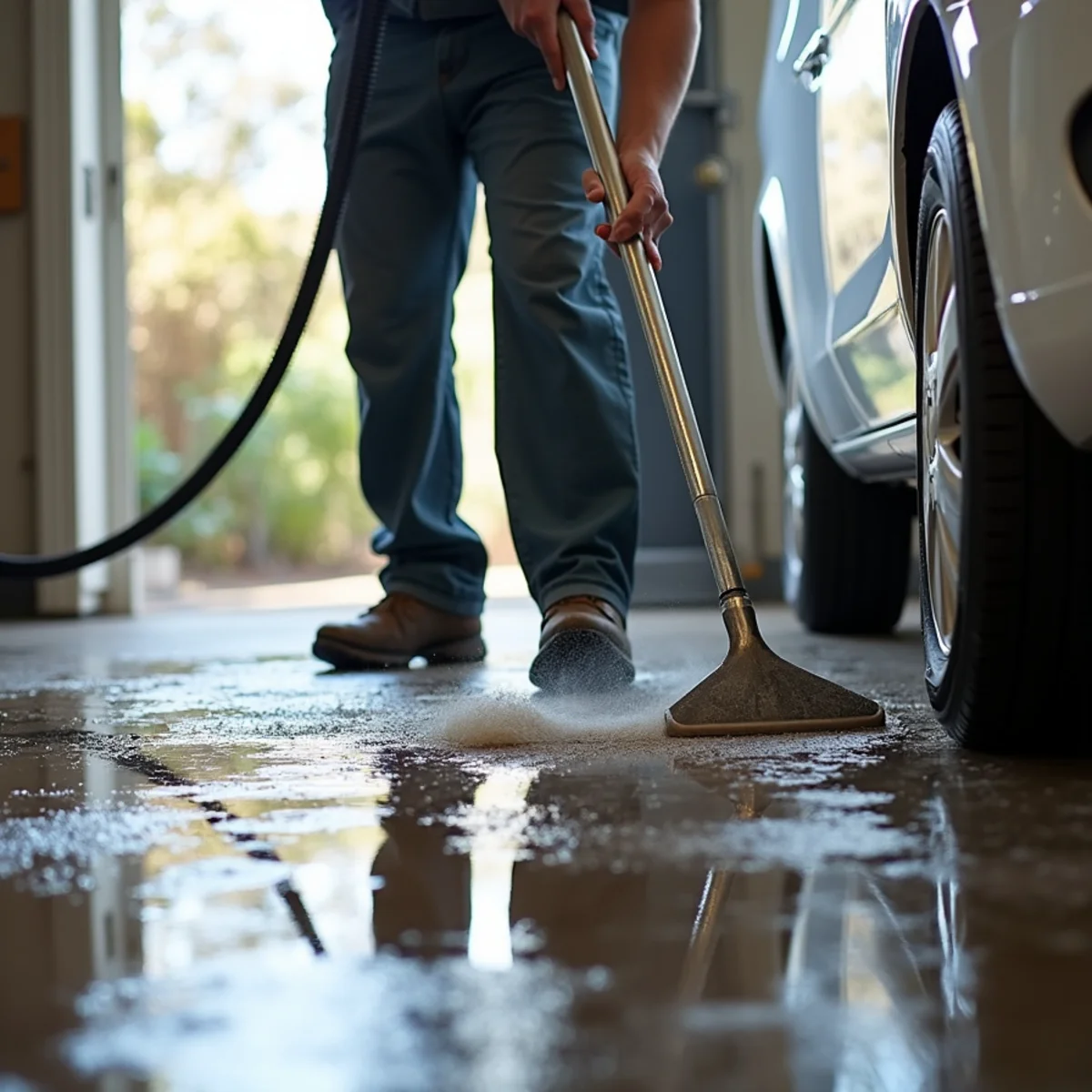
Flooded Basement Cleanup in Daly City, CA
Answered live 24/7 Free inspection Direct insurance billing
Get a Free Estimate
Use the form or call our 24-hour hotline at (201) 277-9344.
- 24/7 Emergency Service
- Free On-Site Inspection
- Direct Insurance Billing
- Local Daly City Crews
Trusted Flooded Basement Cleanup in Daly City
Flooded basement cleanup means pumping out the water, removing wet materials that cannot be saved, drying the concrete slab and the bottom of the walls, and sanitizing anything the water touched, before mold or odor sets in. Few homes in Daly City have a classic full basement, but plenty have a space that floods like one: the downstairs in-law unit or junior ADU, the finished room behind the garage, the lower level of a hillside split-level, or a garage-level bedroom in a southern San Francisco house. Water Damage Daly City handles lower-level flooding 24/7 across Daly City, South San Francisco, San Francisco, and the rest of the Peninsula.
Lower levels flood for predictable reasons, and each one changes the cleanup. Storm runoff pours down sloped driveways and pools against the garage door. On hillside lots, saturated soil pushes water through slab joints and the seam where the wall meets the foundation. Floor drains that sit lower than the street sewer can back up during heavy rain or a blocked lateral, bringing sewage into the room — a job for sewage cleanup, not just drying. A failed water heater, washer, or sump or ejector pump can flood the space from the inside. A lower-level slab dries slowly, carpet and pad over concrete hold water against it, and the drywall and bottom plates along the walls wick it upward, so a room that looks dry after a shop vac often is not.
We start with safety, because water near outlets, baseboard heaters, and appliances on a lower level is an electrical hazard, and floor-drain water should be treated as sewage. Then we extract, remove what the water category and moisture readings say must go, dry the slab and wall assemblies to a measured standard, and sanitize. If the water came from outside or the sewer, we also point out the prevention steps that fit your property; our Daly City flooding guide covers the storm side. A plain garage flood or a wet crawl space have their own pages. Call (201) 277-9344 for an inspection and help shutting off power and water safely.
What’s included
- 24/7 response with submersible pumps for deep water and truck-mounted extraction for carpet, pad, and shallow water
- Safety first: guidance on shutting off power to the lower level and checking water heaters and furnaces before anyone wades in
- Water category assessment, with sewage-level containment and protective gear when water came from a floor drain or toilet
- Removal of saturated carpet, pad, and drywall at measured flood-cut heights so wall cavities can dry
- Slab and bottom-plate drying with dehumidifiers, air movers, and wall-cavity drying where needed
- Cleaning and antimicrobial treatment of the slab, framing, and remaining surfaces before anything is closed up
- Moisture logs and photos for your insurance claim, plus prevention recommendations based on how the water got in
When to call for flooded basement cleanup
Catching these early keeps a small problem from becoming a major one.
Rain running down the driveway into the lower level
Homes with a garage or lower room at the bottom of a sloped driveway collect storm runoff when a trench drain clogs or overflows. Water then crosses the garage slab and enters the finished space through the interior door or along the shared wall.
Water seeping through the slab or wall base
On hillside lots, saturated soil during long storms builds hydrostatic pressure against below-grade walls and slabs. Water appears at cold joints, cracks, and the base of the walls, often without any visible leak above.
A floor drain backing up
When the drain in a laundry room or lower level sits below the street sewer, a blocked lateral or a storm-loaded sewer main can push water back up through it. That water carries sewage and needs Category 3 handling, not just a mop and fan.
Water heater, washer, or pump failure
Water heaters and laundry equipment are often installed on the lowest level. A ruptured tank, a split washer hose, or a sump or ejector pump that stops during a storm can put a large volume of water on the floor quickly.
Wet carpet over concrete
Carpet and pad laid over a slab trap water against the concrete and are rarely salvageable after a flood from outside or a drain. Even clean water can leave the pad holding moisture long after the carpet surface feels dry.
A musty smell in the downstairs unit
A lingering damp odor after the water is gone means moisture is still in the slab, bottom plates, or wall cavities. In the fog belt, lower levels already run humid, and leftover moisture gives mold the conditions it needs.
What to do before our crew arrives
Safe, simple steps that limit the damage while help is on the way.
- 1
If water came up through a floor drain, toilet, or shower on the lower level, stop using every sink, toilet, and the washer upstairs until the line is checked, since each use adds to the backup.
- 2
Check whether the sump or ejector pump has power; a tripped breaker or GFCI outlet is a common reason a pump stops during a storm.
- 3
Carry boxes, electronics, and bedding from the lower level up to a dry floor rather than stacking them higher in the same room.
- 4
Do not relight a water heater or furnace that sat in water; leave gas appliances off until a technician checks the controls.
- 5
If someone lives in the lower unit, help them move out what they need for a few nights, because drying and removal can make the space unlivable for a while.
- 6
Avoid running a household shop vac on extension cords across wet concrete; leave deep or dirty water for pumps.
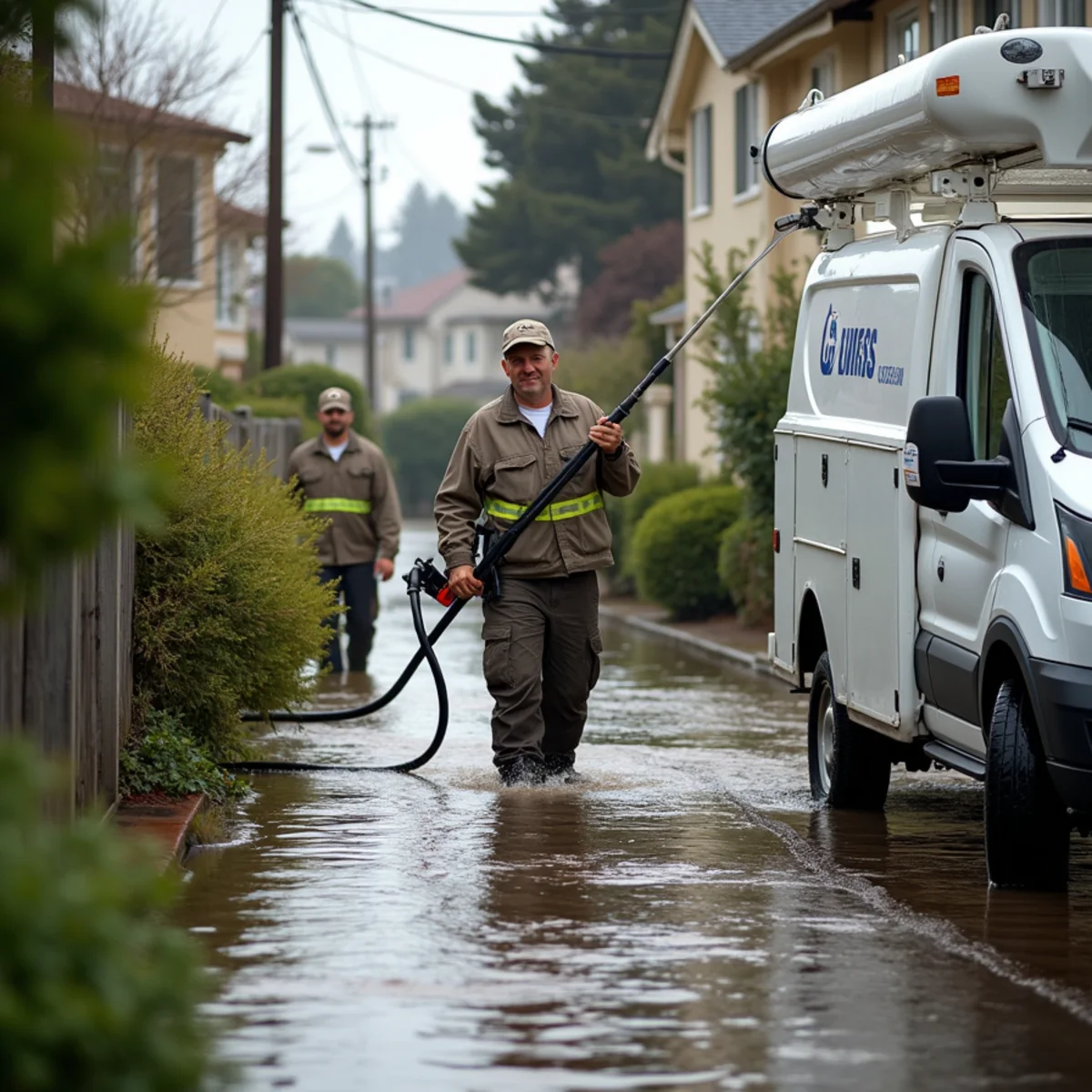
How we handle flooded basement cleanup
- 1
Make the space safe and stop the water
We confirm power to the affected area is off, check gas appliances that may have been reached by water, and identify where the water came from. If a pump has failed or a drain is still backing up, we stabilize the inflow before extraction starts.
- 2
Determine the water category
Water from a supply line is handled differently from storm runoff or a floor-drain backup. Outside flood water and sewer backup are treated as contaminated, which changes protective gear, containment, and what can be saved.
- 3
Pump out and extract
Submersible pumps remove deep water, and truck-mounted extraction pulls water from carpet, pad, and the slab surface. We move or block up furniture and contents so the floor underneath can be cleared.
- 4
Remove non-salvageable materials
Carpet pad, carpet exposed to contaminated water, wet insulation, and drywall that wicked water are removed with clean flood cuts above the wet line. Exposing the bottom plates and wall cavities is what lets them dry instead of trapping moisture behind new finishes.
- 5
Clean and sanitize
The slab, framing, and remaining surfaces are cleaned and treated with an antimicrobial. When sewage was involved, this step follows the IICRC S500 approach for contaminated water before any drying equipment is set.
- 6
Dry the slab and wall assemblies
Dehumidifiers and air movers are positioned to dry the concrete, bottom plates, and lower wall framing, with wall-cavity drying where needed. Concrete releases moisture slowly, so we take daily readings and keep drying until the slab and framing reach dry standard.
- 7
Verify, document, and plan prevention
We confirm final readings, provide the moisture log and photos for your claim, and explain what would reduce the risk of a repeat, such as a backwater valve, a cleared trench drain, a pump alarm, or regrading near the foundation.
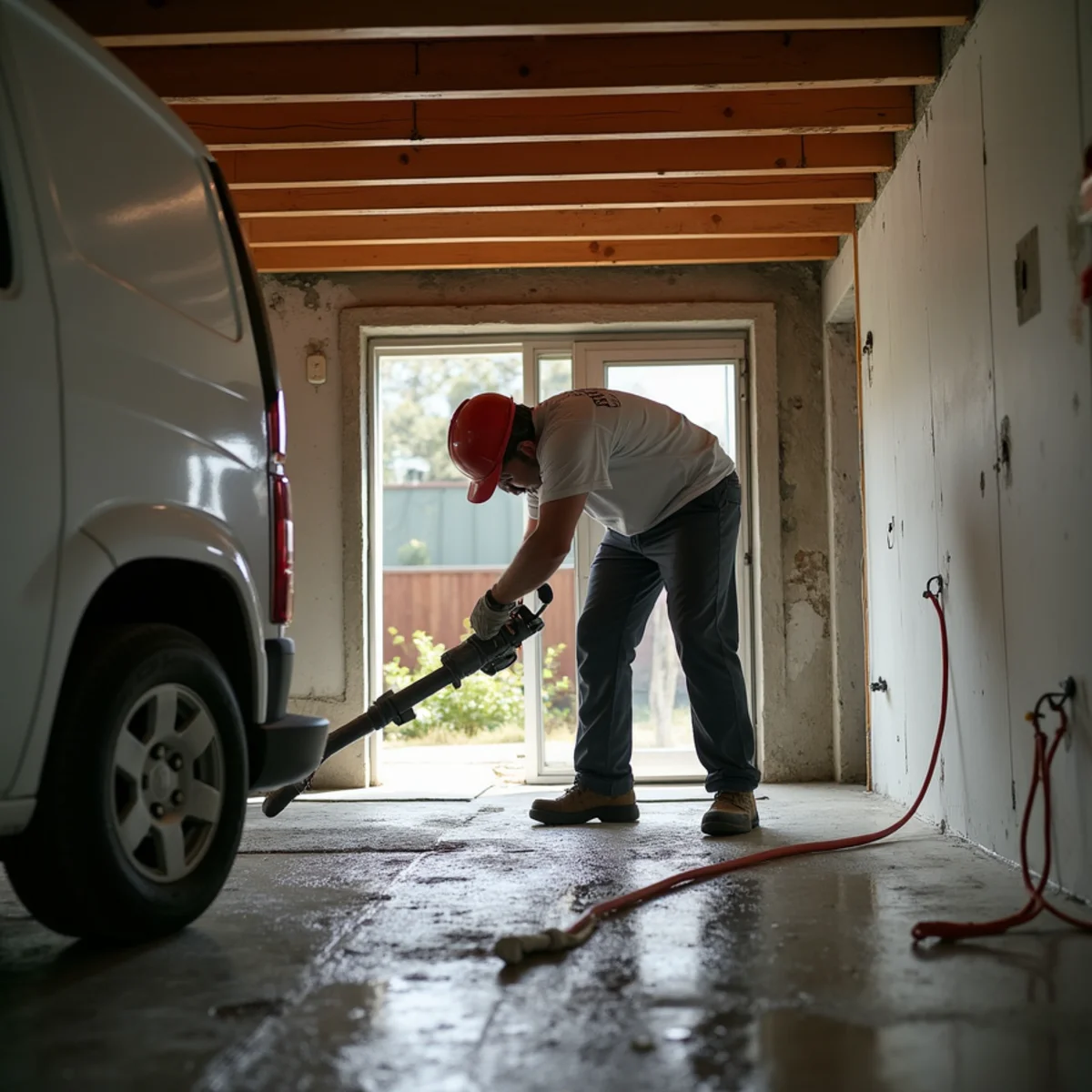
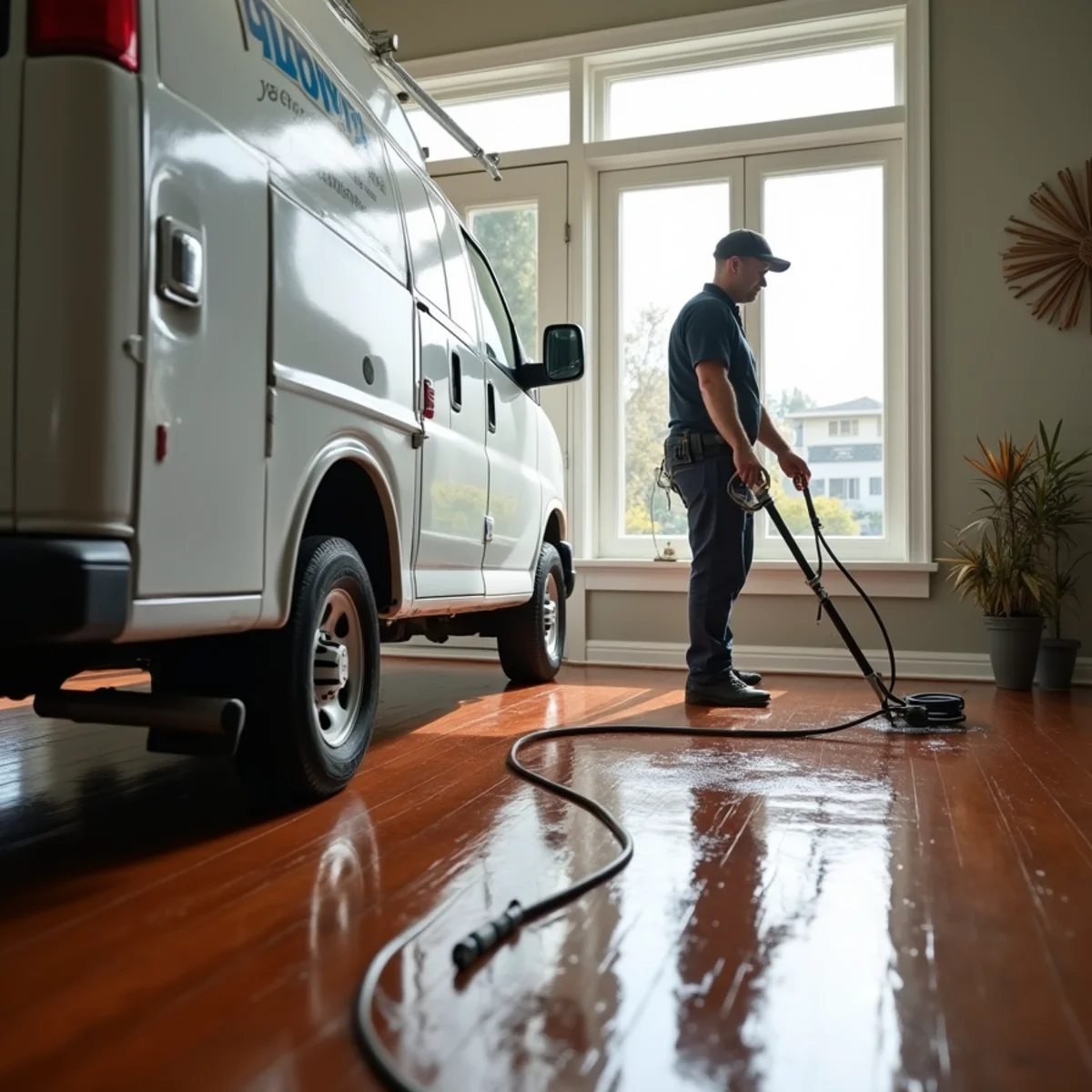
How long flooded basement cleanup takes
Pump-out and removal of wet carpet, pad, and drywall usually happen on the first visit or two. Concrete is the slow part: a slab releases moisture gradually, so drying a lower level tends to take longer than drying an upstairs room with the same amount of water. Clean water from a burst line or appliance moves fastest. Storm water and sewer backup add cleaning and disinfection before drying starts, and seepage through the slab can stretch the schedule if the ground outside stays saturated between storms. Rebuild of an in-law unit is scheduled once readings show the slab and bottom plates are dry.
How to keep it from happening again
- If your lower level has a toilet or shower below the street sewer, ask a plumber about a backwater valve and have it inspected each fall.
- Test the sump or ejector pump before the rainy season by filling the pit until the float trips, and add a high-water alarm you can hear upstairs.
- Raise the water heater, furnace, and washer on platforms where space allows, and keep stored items on plastic shelving rather than the slab.
- Use vinyl plank, tile, or sealed concrete instead of carpet and pad in below-grade rooms, and choose moisture-resistant drywall for the bottom course.
- Clear the trench drain at the bottom of a sloped driveway before each forecast storm and after leaves drop.
What goes into your estimate
Every water loss is different, so we never quote blind. After a free inspection we give you a clear, itemized estimate. These are the factors that move the price:
- The water source and category, since storm runoff and sewer backup require containment, protective gear, and more material removal than a clean supply leak
- The square footage of the lower level and whether it is finished living space, storage, or a mix
- The depth of the water and how long it stood before extraction began
- Flooring over the slab, such as carpet and pad, laminate, vinyl plank, or tile
- How high water wicked up the drywall and whether insulation is wet
- The number of drying days needed for the slab and framing to reach dry standard
- The volume of contents that need to be moved, cleaned, or packed out
Why Daly City trusts us for this
Built for Peninsula lower levels
In-law units behind the garage, split-level hillside homes, and garage-level rooms in southern San Francisco all flood in specific ways. We know where water hides in each layout and how slab-on-grade construction dries.
Sewage handled as sewage
If the water came up through a drain or toilet, we treat it as Category 3 from the start, with containment and proper removal of porous materials, not a quick extraction and a fan.
Drying verified with meters
Concrete and bottom plates can look dry while still holding moisture. We take readings against unaffected reference materials and keep equipment running until the numbers say the space is dry.
Prevention advice that fits the cause
A backwater valve does not stop driveway runoff, and a sump pump does not stop a washer hose failure. We tell you which fix matches how the water actually got in.
Related Services
Helpful Reading
Daly City Flooding Guide: Why Streets Flood, Who Supplies Your Water, and Who to Call
Most Daly City flooding comes from storm drains that can’t keep up, not from rivers. Here’s where it happens, which utility serves you, and who to call for what.
Read article
Atmospheric Rivers on the Peninsula: Flood Preparedness for Daly City Residents
The “Pineapple Express” storms are hitting harder and wetter. Here’s how Daly City homeowners can get ahead of the next one.
Read articleFlooded Basement Cleanup across Daly City & the Peninsula
We provide flooded basement cleanup throughout Daly City’s neighborhoods and the surrounding Peninsula — from the fog-belt hills to the coast to the bay. Not sure if we reach you? Call (201) 277-9344 and ask.
Flooded Basement Cleanup questions, answered
For a lower level flooded by a burst pipe or appliance, getting the water out quickly limits damage. If the flooding came from saturated soil and water is still high outside, pumping a deep below-grade space too fast can let outside water pressure stress the walls or floor, so the water level is lowered gradually. In most Peninsula lower levels with a few inches of water, prompt extraction is the right call once power is off and the source is controlled.
Not until power to the area is off. Water near outlets, power strips, baseboard heaters, or appliances can be energized. If you cannot reach the electrical panel without stepping in water, stay out and call the utility or an electrician. Wear boots and gloves, assume floor-drain water contains sewage, and check gas water heaters and furnaces before relighting anything. If you smell gas, leave the house and call the gas utility from outside.
It depends on the water source and how long it sat. Carpet soaked by clean supply water and extracted quickly can sometimes be dried and cleaned, though the pad underneath is usually replaced. Carpet and pad exposed to storm runoff, groundwater, or sewage backup are generally removed, because contaminated water soaks into the backing and fibers in ways cleaning cannot reliably reverse. Carpet over concrete is also harder to dry than carpet over a wood subfloor.
It depends on where the water came from. A sudden internal failure, such as a burst pipe or water heater rupture, is commonly covered under a standard homeowners policy. Surface water from storms is typically excluded and requires separate flood insurance. Sewer or drain backup is often excluded unless your policy has a backup endorsement, and sump pump failure may fall under that same endorsement. Check your declarations page or ask your agent.
Match the fix to the cause. For sewer backup through a floor drain, a backwater valve on the sewer lateral is the standard prevention step. For driveway runoff, keep trench drains and catch basins clear before storms and confirm they discharge to an adequate outlet. For seepage, improve grading and drainage near the foundation. For pump-dependent spaces, add a high-water alarm and battery backup. For appliances, replace rubber washer hoses with braided ones and install leak sensors.
Garage flood cleanup focuses on the garage itself: the slab, stored contents, and the lower drywall. Flooded basement cleanup is for finished or semi-finished lower-level living space, such as a downstairs in-law unit, a split-level family room, or a garage-level bedroom, where flooring, drywall, insulation, and furnishings are involved. The two often go together when water enters the garage and then crosses into adjoining rooms, and we handle both on the same visit.
24/7 Emergency Response
Need flooded basement cleanup in Daly City? Call now.
Call now for a free inspection. A real person answers day or night and dispatches a crew right away.