A leak from the unit above raises one urgent question: whose problem is it? Here’s how condo and HOA responsibility really works.
When water damages a condo or townhome, responsibility usually splits three ways — the unit owner, the homeowners association, or a neighbor whose unit caused it — depending on where the water started, what it damaged, and how your CC&Rs draw the line between common area and your unit. This is general education, not legal advice; your own documents and policy control.
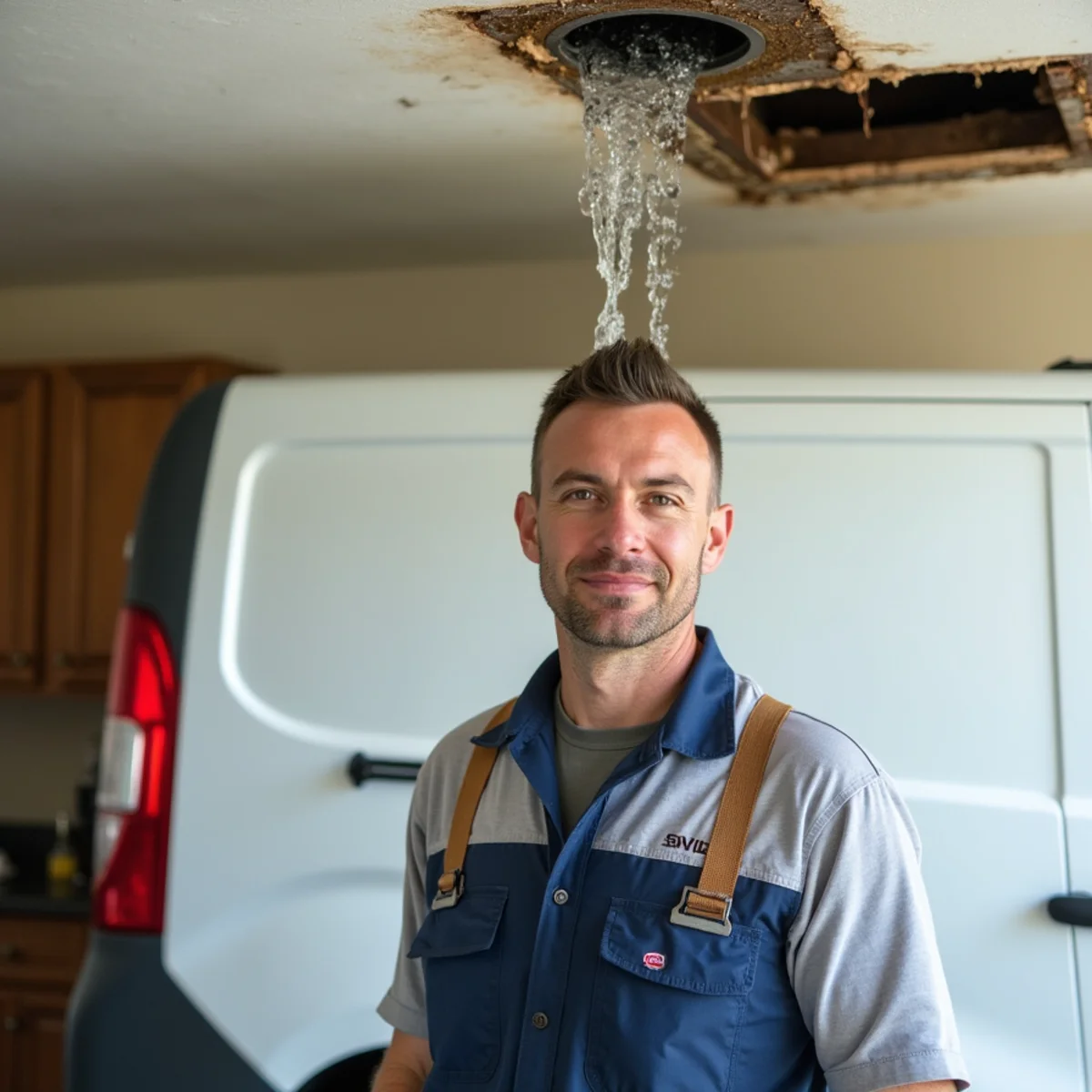
The stain appeared on your ceiling overnight, and it's growing. The water is coming from the unit above yours — you can hear it. Now the questions pile up faster than the water itself: Is this your problem or your neighbor's? Does the HOA pay? Whose insurance? And who's supposed to call someone before the drywall gives way? Condo and townhome water damage is rarely a simple question of blame, and the answer lives in documents most owners have never read closely. Understanding how responsibility usually splits helps you act fast and avoid the standoff that lets damage spread. If you own in a shared building anywhere from Serramonte to the condos along the San Francisco line, this is worth knowing before you need it.
Three Possible Parties, One Leak
When water damages a condo, responsibility usually falls to one of three parties: you as the unit owner, the homeowners association, or a neighbor whose unit or actions caused the loss. Which one depends on three things — where the water came from, what it damaged, and what your governing documents say about the line between common area and your unit. A roof leak, a failed pipe inside a shared wall, and a burst supply line under your own sink can produce the same brown stain on your ceiling while landing on completely different sides of that line. That's why the first job after stopping the water is figuring out the source, not guessing at fault. Trace it wrong and you can spend weeks fighting the wrong party while the moisture keeps working.
What the CC&Rs and "Walls-In" Mean
Your CC&Rs (the Covenants, Conditions and Restrictions) and bylaws define who maintains what. The common shorthand is "walls-in": the association generally handles the building structure, roof, foundation, and shared systems, while you handle everything from the interior surface of your walls inward — flooring, cabinets, fixtures, and often the pipes and branch lines that serve only your unit. A pipe inside a shared wall that feeds several units is frequently the HOA's; the supply line under your sink or the hose behind your washer is almost always yours. Where it gets genuinely murky is the in-between — a shutoff valve, a shared drain stack, a slab penetration — and the exact boundary is written in your documents. Not every association draws it in the same place, so read yours before a loss forces you to read it in a hurry.
Master Policy vs. Your HO-6
There are usually two insurance policies in play. The association carries a master policy that covers the building and common areas. You should carry an HO-6 condo policy that covers your belongings, interior improvements, and personal liability. When a ceiling leaks, the master policy might cover the structure while your HO-6 covers your damaged floors and possessions — or the split may fall differently depending on the cause and your CC&Rs. Two adjusters can end up standing in the same room looking at the same ceiling water damage, each pointing to the boundary in their own policy. It matters which kind of master policy your building carries: an "all-in" (or "all-inclusive") policy covers original fixtures and even improvements, while a "bare walls" policy stops at the studs and leaves everything inside to your HO-6. Reading which type your building carries — before a loss — tells you how much coverage really sits on your shoulders.
The Deductible Surprise: Loss Assessment
Here's the part that catches owners off guard. Master-policy deductibles on multi-unit buildings can be large — sometimes an order of magnitude larger than a typical homeowner's — and the association may pass a share of that deductible, or of a loss the master policy doesn't cover, back to the affected owners as a "loss assessment." That assessment can land on your desk even when the leak wasn't your fault. Many HO-6 policies offer loss assessment coverage as an inexpensive add-on for exactly this reason, and some also let you insure against the master-policy deductible specifically. If you own in a condo or townhome, it's worth confirming you carry both before a claim, not after the assessment letter arrives.
Steps to Take When Water Hits Your Unit
- Stop the source if you safely can, or ask the upstairs neighbor to shut off their water; if you can't reach either, cut the building supply.
- Photograph and video everything — the source, the path, and every wet surface — before you move or dry anything.
- Notify your HOA or property manager in writing, not just by phone. An email creates a timestamp and a paper trail the master policy will want.
- Open a claim with your own HO-6 insurer, even if you're sure the HOA's policy applies. You can always withdraw it; you can't un-miss a reporting deadline.
- Bring in a restoration crew quickly to stop the spread. Drying doesn't wait for the paperwork to settle, and mold can start within a day or two.
- Keep a written log of who you spoke to, when, and what they said — board members, managers, adjusters, and the neighbor.
A Serramonte Reality Check
In Serramonte's 1970s and 80s condos and townhomes, stacked units and shared walls mean one failed water heater or supply line can touch two or three homes at once, with the water traveling along the floor assembly and dropping into whoever is below. Property managers and boards here deal with this regularly, and the smoothest outcomes come from moving fast and documenting hard rather than waiting to assign blame. We work alongside HOAs, managers, and multiple adjusters routinely, and our water damage restoration crews are used to coordinating access across several units, drying them on one plan, and handing the association a single clear scope. For larger buildings and mixed-use properties, our commercial water damage team handles the same coordination at scale, after hours and with direct insurance billing.
The fastest way to lose money in a condo water loss is to wait — for the neighbor to admit fault, for the board to decide, for an adjuster to call back — while the water keeps soaking into shared walls and the mold clock runs. Get the drying started, get everything documented, and let responsibility sort itself out on paper. If water is spreading in your unit right now, call Water Damage Daly City at (201) 277-9344. We'll stabilize the damage today and give you the moisture readings and photo record you'll need for whichever policy ends up paying.
Frequently asked questions
Not automatically. In California, a neighbor is generally responsible only if the damage resulted from their negligence — say, an overflowing tub left running, or a known leak they ignored. If a pipe failed suddenly and without warning through no fault of theirs, fault may not attach to anyone, and each party's own coverage may end up handling their own damage. Your own HO-6 typically responds to your loss regardless, and your insurer can pursue the neighbor's carrier afterward if negligence exists. This is general information, not legal advice; your CC&Rs and the specific facts control.
Notify both promptly, and put it in writing. Tell your HOA or property manager so they can involve the master policy and address any common-area source like a shared pipe or the roof, and open a claim with your own HO-6 insurer in case the loss falls to you. Acting on both fronts early keeps you from missing a reporting deadline while the parties sort out responsibility. The order matters less than the timing — same day, in writing, to both — and a restoration crew can be on-site drying while those conversations are still happening.
It's an add-on to a condo HO-6 policy that helps pay your share when the association passes along its master-policy deductible or an uncovered loss to owners as an assessment. Because master-policy deductibles on multi-unit buildings can be very large, a single shared water loss can generate an assessment that dwarfs what you'd expect. For a modest premium, many condo owners find the coverage well worth it, and some pair it with a separate endorsement for the master deductible itself. Ask your agent whether your policy includes loss assessment and what its limit is.
Yes. We coordinate access, scope, and documentation with boards, managers, and multiple adjusters all the time, especially in Serramonte's condos and townhomes where a single leak crosses several units. We can bill insurance directly, provide one consolidated scope and set of moisture readings for the association, and keep every affected owner informed as the drying and repairs progress — so you're managing one crew and one paper trail instead of three.